Watch Park Avenue: Money, Power & The American Dream (2012) Online Free
Loading Cinehub...
If income inequality were a sport, the residents of 740 Park Avenue in Manhattan would all be medalists. This address boasts the highest number of billionaires in the United States.
More Like This
Finding the Money
FINDING THE MONEY follows economist Stephanie Kelton on a journey through Modern Money Theory or “MMT”. Kelton provocatively asserts the National Debt Clock that ticks ominously upwards in New York City is not actually a debt for us taxpayers at all, nor a burden for our grandchildren to pay back. Instead, Kelton describes the national debt as simply a historical record of the number of dollars created by the US federal government currently being held in pockets, as assets, by the rest of us. MMT bursts into the media with journalists asking, “Have we been thinking about how the government spends money, all wrong?” But top economists from across the political spectrum condemn the theory as “voodoo economics”, “crazy” and “a crackpot theory”. FINDING THE MONEY traces the conflict all the way back to the story we tell about money, injecting new hope and empowering countries around the world to tackle the biggest challenges of the 21st century: from climate change to inequality.
2024

Three Songs for Benazir
The story of Shaista, a young man who—newly married to Benazir and living in a camp for displaced persons in Kabul—struggles to balance his dreams of being the first from his tribe to join the Afghan National Army with the responsibilities of starting a family. Even as Shaista’s love for Benazir is palpable, the choices he must make to build a life with her have profound consequences.
2021

Torn Apart: Separated at the Border
Two mothers who were each separated from their children in the United States for months after fleeing from danger in their homelands to seek asylum work with pro-bono lawyers and volunteers to reunite with their kids who have been placed thousands of miles away from them with little access to communication.
2019

The Bubble
Diving deep into the true causes of the Great Recession, the financial crisis of the 2010s, renowned economists, investors and business leaders explain what America is facing if we don't learn from our past mistakes. Is the economy really improving or are we just blowing up another Bubble?
2018

Here I Am
A top executive who can't bear to regard himself as a loser, even after nearly dying in the New York marathon; a woman unable to cope with the loss of her wealthy status after her divorce; and an ambitious financial couple confronted with their unresolved family matters. Every Sunday, in their upper class Bloemendaal church, the cutting sermons of reverend Ad van Nieuwpoort shake their faith and existence to the core. What drives people to be crushed by the weight of their ambitions?
2017
From the Ashes
Capturing Americans in communities across the country as they wrestle with the legacy of the coal industry and what its future should be under the Trump Administration. From Appalachia to the West’s Powder River Basin, the film goes beyond the rhetoric of the “war on coal” to present compelling and often heartbreaking stories about what’s at stake for our economy, health, and climate.
2017

I Am Another You
Through the eyes of a young drifter who rejects society's rules and intentionally chooses to live on the streets, Chinese filmmaker Nanfu Wang explores the meaning of personal freedom – and its limits.
2017

Meet the Trumps: From Immigrant to President
The remarkable true story of Donald Trump's family history - one of the most extraordinary immigration success stories ever told - and what it reveals about the United States' 45th President
2017
Generation Zero
An examination of the causes of the global economic crisis which began in 2008, studying how decades of social changes have influenced financial systems and practices.
2010
Capitalism: A Love Story
Michael Moore comes home to the issue he's been examining throughout his career: the disastrous impact of corporate dominance on the everyday lives of Americans (and by default, the rest of the world).
2009
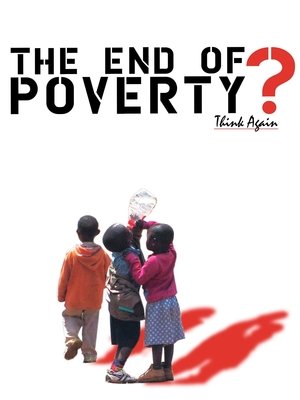
The End of Poverty?
The End of Poverty? asks if the true causes of poverty today stem from a deliberate orchestration since colonial times which has evolved into our modern system whereby wealthy nations exploit the poor. People living and fighting against poverty answer condemning colonialism and its consequences; land grab, exploitation of natural resources, debt, free markets, demand for corporate profits and the evolution of an economic system in in which 25% of the world's population consumes 85% of its wealth. Featuring Nobel Prize winner Amartya Sen and Joseph Stiglitz, authors/activist Susan George, Eric Toussaint, Bolivian Vice President Alvaro Garcia Linera and more.
2008
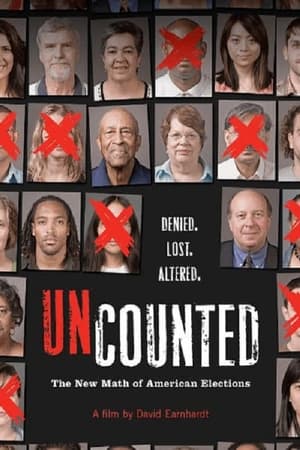
Uncounted
UNCOUNTED exposes how the election fraud that altered the outcome of the 2004 election led to even greater fraud in 2006 and now looms as an unbridled threat to the outcome of the 2008 election. The controversial film examines in factual, logical, and yet startling terms how easy it is to change election outcomes and undermine election integrity across the U.S. Beyond increasing the public's awareness, UNCOUNTED inspires greater citizen involvement in fixing a broken electoral system.
2008
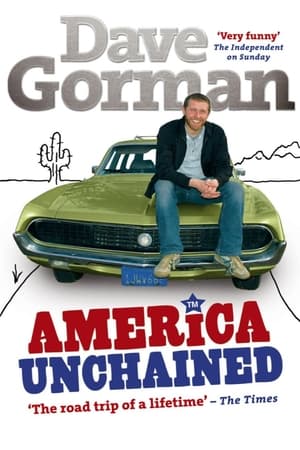
America Unchained
British Comedian Dave Gorman travels across America without supporting the 'Man'. In other words, no Holiday Inns, no Best Westerns and no Comfort Suites. No Shells, no Arcos and no BP gas stations. No MacDonalds, no Starbucks and no chains of any kind. Just Mom & Pop business all the way.
2007

Sicko
A documentary about the corrupt health care system in The United States whose main goal is to make profit even if it means losing people’s lives. "The more people you deny health insurance, the more money we make" is the business model for health care providers in America.
2007
Maxed Out
Maxed Out takes us on a journey deep inside the American debt-style, where everything seems okay as long as the minimum monthly payment arrives on time. Sure, most of us may have that sinking feeling that something isn't quite right, but we're told not to worry. After all, there's always more credit!
2006
Money as Debt
Paul Grignon's 47-minute animated presentation of "Money as Debt" tells in very simple and effective graphic terms what money is and how it is being created
2006

Tarnation
Filmmaker Jonathan Caouette's documentary on growing up with his schizophrenic mother -- a mixture of snapshots, Super-8, answering machine messages, video diaries, early short films, and more -- culled from 19 years of his life.
2003

Bowling for Columbine
This is not a film about gun control. It is a film about the fearful heart and soul of the United States, and the 280 million Americans lucky enough to have the right to a constitutionally protected Uzi. From a look at the Columbine High School security camera tapes to the home of Oscar-winning NRA President Charlton Heston, from a young man who makes homemade napalm with The Anarchist's Cookbook to the murder of a six-year-old girl by another six-year-old. Bowling for Columbine is a journey through the US, through our past, hoping to discover why our pursuit of happiness is so riddled with violence.
2002
Who’s Counting? Marilyn Waring on Sex, Lies and Global Economics
This documentary profiles economist and writer Marilyn Waring. In extensive interviews, Waring details her feminist approach to finances and challenges commonly accepted truths about the global economy. The filmmakers detail Waring's early rise to political prominence and her successful protests against nuclear arms. Waring also speaks candidly about wartime economies, suggesting that government policies tend to marginalize the fiscal contributions of women.
1995

Roger & Me
A documentary about the closure of General Motors' plant at Flint, Michigan, which resulted in the loss of 30,000 jobs. Details the attempts of filmmaker Michael Moore to get an interview with GM CEO Roger Smith.
1989