Watch Meet the Trumps: From Immigrant to President (2017) Online Free
The remarkable true story of Donald Trump's family history - one of the most extraordinary immigration success stories ever told - and what it reveals about the United States' 45th President
Cast
Donald Trump, Fred Trump, Ivana Trump, Barack Obama, Michelle Obama
More Like This
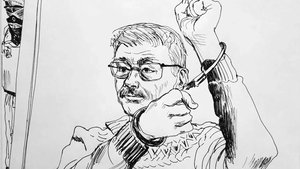
Politzek, the voices that challenge the Kremlin
In Russia, criticizing the war in Ukraine or Vladimir Putin’s regime has become a crime. Thousands of ordinary citizens are being arrested, tried, and imprisoned. They are called “Politzek”: political prisoners. Filmed clandestinely over the course of more than a year, Politzek gives a platform to those who, despite the fear, continue to speak out against Putin’s repressive Russia. Through the intersecting stories of a teenager sentenced to five years in prison for criticizing the government on social media, a young artist jailed for placing anti-war stickers, a human rights activist, and two theater directors facing Kafkaesque trials, the film unveils the machinery of state repression in Russia. With rare footage, broken yet unyielding voices, this is a story of silenced resistance.
2026

Trump's Big FUSS: Fight for US Sovereignty
Trump's Big FUSS is a powerful acronym capturing Trump's vision for America and his fight for US sovereignty, standing firm against globalist elitists.
2024

peace love (unicorns) & communism
Chatting with another recent graduate, a former student activist learns about the controversial origin of a now-beloved campus group. she embarks on a journey through the recent past, weaving conversations with a vast ensemble of young organizers into a tapestry of disruption and determination. political, personal and bursting with youthful exuberance, peace love (unicorns) and communism is a homegrown chronicle of a decade of movements at McMaster University. as past struggles echo in the present, the film poses an urgent question to today's rising generation: do you believe that we will win?
2024
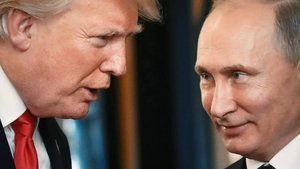
Red Shadow over the White House
As the 2024 elections approach, Russian interference in American politics – through spies or agents of influence – is a troubling reality. Vladimir Putin is counting on Donald Trump’s victory to weaken support for Ukraine. Why does Trump almost always support Russia? Is he compromised? During his presidency, did he betray the United States in favor of the Kremlin? And why has the Republican Party shifted its stance toward Russia? Answering these questions means shedding light on a labyrinthine espionage and manipulation operation. Still ongoing, it began forty years ago, during the final years of the Cold War. Back then, Trump was merely a real estate developer, and Putin was a young KGB agent. This operation contains many dark areas, but some hold pieces of the puzzle. A former KGB leader, infiltrated “illegals,” a former Trump advisor, and former senior officials from the CIA and FBI, as well as a former prosecutor, provide testimony. . . . [taken from Nilaya Productions]
2024
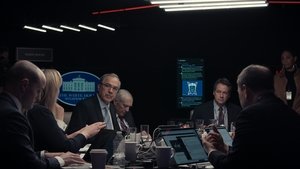
War Game
A bipartisan group of U.S. defense, intelligence, and elected policymakers spanning five presidential administrations participate in an unscripted role-play exercise in which they confront a political coup backed by rogue members of the U.S. military, in the wake of a contested presidential election.
2024

Hannah Arendt, la liberté d'être libre
In a time of resurgence of social protests, political radicalization and distrust of power, Arendt's thought has never been more relevant: A critical thinker according to some or a conservative according to others, this great figure of the intellectual world remains, in many ways, an enigma. Who was Hannah Arendt?
2023

Dreams adrift
Mike Porcel is the lost member of the Cuban Nueva Trova musical movement. His lack of “revolutionary spirit” condemned him to the scorn of his peers and made him a pariah for a decade, until he managed to go into exile. Without resentment, but without forgetting, the film reconstructs his story and revives a forgotten brilliance.
2021
FACE OF FIRE
He pours gasoline on every fire
2020

Torn Apart: Separated at the Border
Two mothers who were each separated from their children in the United States for months after fleeing from danger in their homelands to seek asylum work with pro-bono lawyers and volunteers to reunite with their kids who have been placed thousands of miles away from them with little access to communication.
2019
The Obama Years: The Power of Words
Barack Obama launched into our national consciousness at the 2004 Democratic National Convention and ever since, he's delivered messages of patriotism, unity, and hope through the power of words. But of all the speeches he's given, six in particular may define his legacy as, in historian Doris Kearns Goodwin's words, "one of the best writers and orators in the presidency." Interviews with eminent historians and key figures in his writing process give rare insights into these iconic speeches, as well as the Obama presidency and the man himself.
2017

Zensur: Die organisierte Manipulation der Wikipedia und anderer Medien
2017
It's All in Lebanon
Wissam Charaf traces the recent history and identity of Lebanon through its political campaigns, PR imagery and pop videos.
2012
Le fantôme de Mirabel
2011
An Inconvenient Truth
A documentary on Al Gore's campaign to make the issue of global warming a recognized problem worldwide.
2006
Fahrenheit 9/11
Michael Moore's view on how the Bush administration allegedly used the tragic events on 9/11 to push forward its agenda for unjust wars in Afghanistan and Iraq.
2004
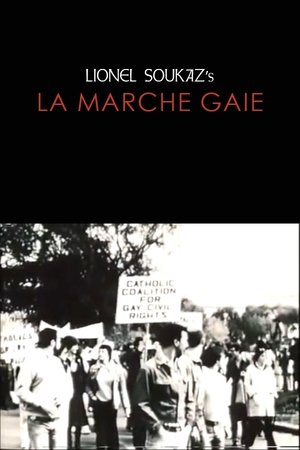
La marche gaie
A short documentary about the October 14 1979 March For Lesbian And Gay Rights in Washington D.C.
1980
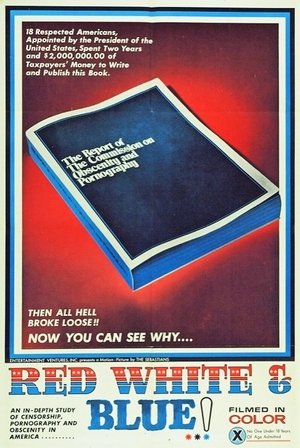
Red, White and Blue
A documentary about the hearings of President Nixon's Commission on Obscenity, featuring adult-film producer David F. Friedman (one of the producers of this film) testifying before Congress, and involved in the production of one of his films, "Trader Hornee."
1971
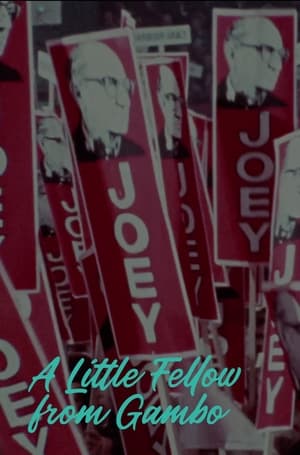
A Little Fellow from Gambo: The Joey Smallwood Story
This feature-length documentary paints a lively portrait of Father of Confederation and first premier of Newfoundland Joseph Roberts Smallwood, or "Joey," as he is known to most Canadians. Following one of Canada’s most colourful political figures during a two-and-a-half-month period that included a stormy Liberal leadership convention, the film reveals a man misunderstood even by his close associates.
1970
The Sixth Side of the Pentagon
Chris Marker and François Reichenbach document the massive anti–Vietnam War protest held in Washington, D.C., on October 21, 1967, where more than 100,000 demonstrators gathered at the Lincoln Memorial before marching on the Pentagon. Filmed amid the crowd, the short captures the tension, idealism, and growing radicalism of the American peace movement.
1968
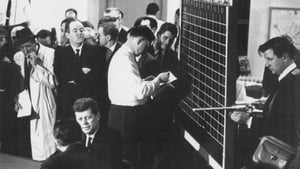
Primary
Primary is a documentary film about the primary elections between John F. Kennedy and Hubert Humphrey in 1960. Primary is the first documentary to use light equipment in order to follow their subjects in a more intimate filmmaking style. This unconventional way of filming created a new look for documentary films where the camera’s lens was right in the middle of what ever drama was occurring. Preserved by the Academy Film Archive in partnership with The Film Foundation in 1998.
1960