Watch Our Story: The Indigenous Led Fight to Protect Greater Chaco (2022) Online Free
Over 90 percent of the available lands in the Greater Chaco region of the Southwest have already been leased for oil and gas extraction. Witness the Indigenous-led work to protect the remaining lands that are untouched by oil and gas, as well as the health and well-being of communities surrounded by these extractive industries.
Cast
Deb Haaland, Janene Yazzie, Daniel Tso
More Like This
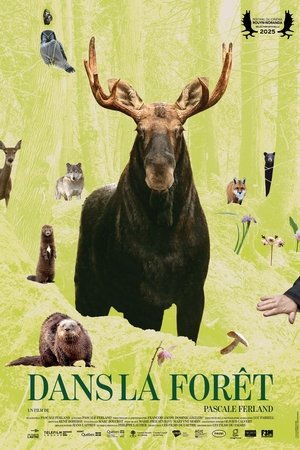
In the Forest
In the Forest is a documentary essay that explores the deep connections between humans, animals, and the forest. Through fragments of lives that intersect, echo, or contradict one another, the film gradually weaves the portrait of a rich, complex, and sometimes unsettling world where the desire to protect coexists with the drive to exploit. Moving between realism, political engagement, and dreamlike imagery, it reveals a forest that - in the face of multiplying climate upheavals and an accelerating sixth mass extinction - whispers, to those who know how to listen, the urgent need to safeguard the fragile balance between humanity, fauna, and flora.
2025
Another World
A feature documentary about the journey of mankind to discover our true force and who we truly are. It is a quest through science and consciousness, individual and planetary, exploring our relationships with ourselves, the world around us and the universe as a whole.
2014

Birds of a Feather
Dr. Jim Bednarz and Brooke Prater, the two leads of the UNT American Kestrel Project, seek to find out why the widespread raptor is on the decline.
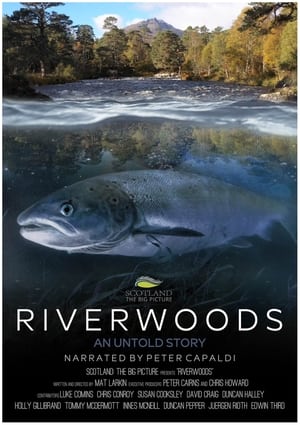
Riverwoods: An Untold Story
Three years in the making, this feature-length documentary shines a light on the perilous state of Scotland’s salmon, and tells the compelling story of a fish that once lived in the forest.
2022
Inhabitants
For millennia, Native Americans successfully stewarded and shaped their landscapes, but centuries of colonization have disrupted their ability to maintain their traditional land management practices. From deserts, coastlines, forests, mountains, and prairies, Native communities across the US are restoring their ancient relationships with the land. As the climate crisis escalates these time-tested practices of North America's original inhabitants are becoming increasingly essential in a rapidly changing world.
2021
From the Ashes
Capturing Americans in communities across the country as they wrestle with the legacy of the coal industry and what its future should be under the Trump Administration. From Appalachia to the West’s Powder River Basin, the film goes beyond the rhetoric of the “war on coal” to present compelling and often heartbreaking stories about what’s at stake for our economy, health, and climate.
2017
The Smog of the Sea
The Smog of the Sea chronicles a 1-week journey through the remote waters of the Sargasso Sea. Marine scientist Marcus Eriksen invited onboard an unusual crew to help him study the sea: renowned surfers Keith & Dan Malloy, musician Jack Johnson, spearfisher woman Kimi Werner, and bodysurfer Mark Cunningham become citizen scientists on a mission to assess the fate of plastics in the world’s oceans. After years of hearing about the famous “garbage patches” in the ocean’s gyres, the crew is stunned to learn that the patches are a myth: the waters stretching to the horizon are clear blue, with no islands of trash in sight. But as the crew sieves the water and sorts through their haul, a more disturbing reality sets in: a fog of microplastics permeates the world’s oceans, trillions of nearly invisible plastic shards making their way up the marine food chain. You can clean up a garbage patch, but how do you stop a fog?
2017
Territorios extraordinarios
Territorios extraordinarios is a documentary that delves into the heart of Northern Neuquén. Crossing the peaks and valleys of the imposing Cordillera del Viento, we will get to know some of its ancient settlers, breeders and gold prospectors. Marcelina Aguilera, Ananías Retamal, Felipe Méndez and Conradino Contreras will accompany us on an exploratory journey where, in their stories and experiences, we will see reflected some of the landmarks, myths and rites of these lands.
2016
Sacred Cod: The Fight for a New England Tradition
A documentary following the sharp decline of the cod fishing industry in New England. Included is an in-depth look at the potential causes and the resounding effects upon the lives of the fishermen themselves.
2016
White Earth
An oil boom has drawn thousands to America’s Northern Plains in search of work. Against the backdrop of a cruel North Dakota winter, the stories of three children and an immigrant mother intertwine among themes of innocence, home, and the American Dream.
2015
Stelvio: Crossroads of Peace
2014
Apocalypse, Man
Most people were first exposed to Michael C. Ruppert through the 2009 documentary, Collapse, directed by Chris Smith. Apocalypse, Man is an intimate portrait of a man convinced of the imminent collapse of the world, but with answers to how the human spirit can survive the impending apocalypse.
2014
Watershed: Exploring a New Water Ethic for the New West
As the most dammed, dibbed, and diverted river in the world struggles to support thirty million people and the peace-keeping agreement known as the Colorado River Pact reaches its limits, WATERSHED introduces hope. Can we meet the needs of a growing population in the face of rising temperatures and lower rainfall in an already arid land? Can we find harmony amongst the competing interests of cities, agriculture, industry, recreation, wildlife, and indigenous communities with rights to the water? Sweeping through seven U.S. and two Mexican states, the Colorado River is a lifeline to expanding populations and booming urban centers that demand water for drinking, sanitation and energy generation. And with 70% of the rivers’ water supporting agriculture, the river already runs dry before it reaches its natural end at the Gulf of California. Unless action is taken, the river will continue its retreat – a potentially catastrophic scenario for the millions who depend on it.
2012
An Inconvenient Truth
A documentary on Al Gore's campaign to make the issue of global warming a recognized problem worldwide.
2006
The Aquarium
Filmed primarily in Alaska, The Aquarium contrasts the openness of the primeval Arctic landscape with the entrapment of captured sea mammals in aquariums. It speaks of the progressive destruction of these animals’ habitat, seeing beyond the alluring spectacle.
2006
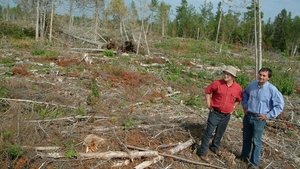
Forbidden Forest
Two very different men are brought together by New Brunswick's decision to hand the management of millions of acres of Crown land to six multinationals. One man is an Acadian woodlot owner retired after nearly 40 years in a pulp mill; the other is a painter and winemaker with homes in France and New Brunswick. They travel to Finland to urge officials at one of the largest licence holders of New Brunswick Crown lands to practise responsible forestry, then go head-to-head with the provincial government to secure a new community-based forestry policy that is environmentally sustainable and produces more jobs than the highly mechanized techniques used today.
2004
Echo in the Desert
In the vastness of the Iranian desert, young artists strive for freedom, community, and the preservation of their cultural heritage in the ancient caravanserai of Deyr-e Gachin, while facing the harsh conditions of their surroundings.
The End of Suburbia: Oil Depletion and the Collapse of the American Dream
Since World War II North Americans have invested much of their newfound wealth in suburbia. It has promised a sense of space, affordability, family life and upward mobility. As the population of suburban sprawl has exploded in the past 50 years Suburbia, and all it promises, has become the American Dream. But as we enter the 21st century, serious questions are beginning to emerge...
2004
The Bell of Chornobyl
The first full-length film about the Chornobyl tragedy, filmed in May-September 1986. The authors did not set themselves the task of showing an exhaustive picture of what happened in Chornobyl. They sought to capture the testimonies of people directly involved in the tragedy, the lessons of which have yet to be realized.
1987
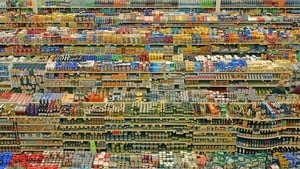
Koyaanisqatsi
Takes us to locations all around the US and shows us the heavy toll that modern technology is having on humans and the earth. The visual tone poem contains neither dialogue nor a vocalized narration: its tone is set by the juxtaposition of images and the exceptional music by Philip Glass.
1983