Watch Riverwoods: An Untold Story (2022) Online Free
Three years in the making, this feature-length documentary shines a light on the perilous state of Scotland’s salmon, and tells the compelling story of a fish that once lived in the forest.
Cast
Peter Capaldi
More Like This

Birds of a Feather
Dr. Jim Bednarz and Brooke Prater, the two leads of the UNT American Kestrel Project, seek to find out why the widespread raptor is on the decline.
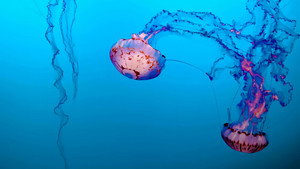
Jellyfish, The new Rulers of the Ocean
Jellyfish blooms are making headlines around the world. This is due to the damage they cause to tourism, fishing and our health. How can these creatures, which are over 98% water and have no shell, skeleton or brain, expand so rapidly? Although this is a normal stage in the life cycle of these gelatinous animals, we have to admit that blooms have become much more frequent and massive in recent decades. We're even witnessing jellyfish populations appearing in more and more regions where fish have been replaced by them, such as off the coast of Namibia, in the Black Sea, in the Sea of Japan and in certain areas of the Baltic Sea. What causes this? Why has the role of jellyfish in the ocean been underestimated, even though they outlived the dinosaurs? Are jellyfish on their way to dominating the oceans as they once did? What if they were to be the only ones left?
2026
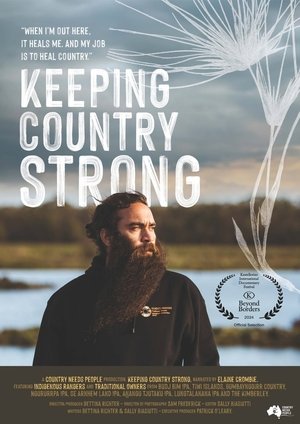
Keeping Country Strong
Keeping Country Strong is a new documentary by Country Needs People From the heart of the desert to the islands and estuaries of Sea Country, Indigenous Protected Areas span over 110 million hectares of land and sea and now cover over 54% of Australia’s reserves on land. Indigenous Rangers are on the frontline. Working in some of the most remote corners of the planet they are safeguarding endangered species, fighting wildfires and invasive species, and practising culture in the face of a changing climate. FEATURING Indigenous Rangers and Traditional Owners from Budj Bim IPA, Gaagal Wajaarr Proposed Sea Country IPA, Ngururrpa IPA, Tiwi Islands Proposed IPA, Anangu Tjutaku IPA, Lungtalanana IPA, Mayala IPA & SE Arnhem Land IPA.
2025
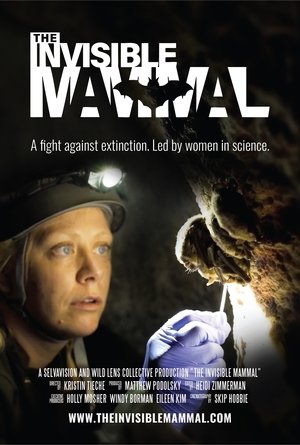
The Invisible Mammal
Against the backdrop of the sixth mass extinction, an all-woman team of biologists set out to save bats from a deadly fungal disease, but when the COVID-19 pandemic interrupts their work, they are sent down a path of discovery that illuminates the connections between bat conservation and the spread of infectious disease.
2025
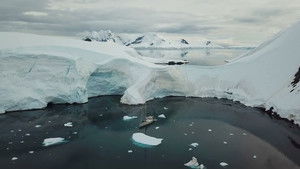
Tànana en Antarctique
2024

Churning the earth
In the face of widespread ecological destruction, social injustice, economic deprivation, there are powerful countercurrents. 'Ordinary' people in several parts of India are resisting the disruption of their lives, as also constructing alternatives in the form of sustainable farming, community-led ecotourism and conservation, revival of crafts, activity-based learning, decentralised water harvesting, local governance and direct democracy. They illustrate various petals in a 'Flower of Transformation', with a core of ethical values like solidarity, diversity, freedom, self-reliance, and respect of the commons.
2024
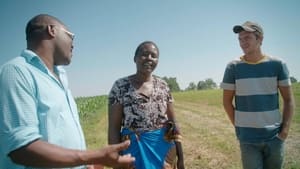
The Ants and the Grasshopper
Anita Chitaya has a gift: she can help bring abundant food from dead soil, she can make men fight for gender equality, and maybe she can end child hunger in her village. Now, to save her home in Malawi from extreme weather, she faces her greatest challenge: persuading Americans that climate change is real. Traveling from Malawi to California to the White House, she meets climate sceptics and despairing farmers. Her journey takes her across all the divisions that shape the USA: from the rural-urban divide, to schisms of race, class and gender, and to the American exceptionalism that remains a part of the culture. It will take all her skill and experience to help Americans recognise, and free themselves from, a logic that is already destroying the Earth.
2021
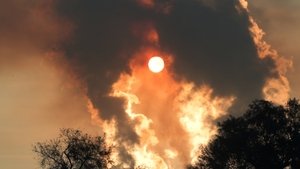
Mezquite
Mezquite is a large tree with many virtues and is in danger due to the neglect that has been had with its species in recent years.
2021
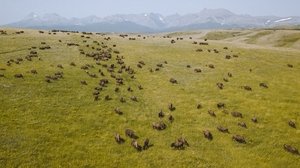
Inhabitants
For millennia, Native Americans successfully stewarded and shaped their landscapes, but centuries of colonization have disrupted their ability to maintain their traditional land management practices. From deserts, coastlines, forests, mountains, and prairies, Native communities across the US are restoring their ancient relationships with the land. As the climate crisis escalates these time-tested practices of North America's original inhabitants are becoming increasingly essential in a rapidly changing world.
2021

What The Durrells Did Next
Hosted by Keeley Hawes, star of the popular television series The Durrells, this documentary reveals the adventures of the eccentric Durrell family once they left Corfu, Greece.
2019
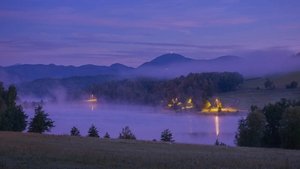
Birds of the Lakes Return
An excellent display of how humans can rehabilitate and restore an area where a heavy industry polluted the water so severely that it was unsuitable to sustain any kind of life. A a film showing how birds returned to an environment once devastated by industry. The lakes around the northern Slovenian town of Velenje, placed in the Central Europe, are geographic center of the film. They emerged as the land above the lignite mines subsided and the depressions were filled with water. The mines started operating at the end of the 19th century. In the mid 20th century a power plant was built that caused a severe pollution of the lake waters to the extent of the lakes not being fit for any kind of life. As a consequence many birds moved from these parts. After a long ecological restoration that started in the mid 1980s, life returned to the water. Gradually the birds returned as well, including some there were previously never observed in this area.
2018
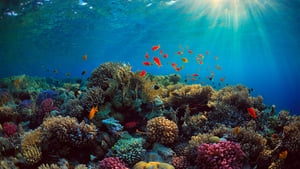
Can We Save the Reef?
An epic story of Australian and international scientists who are racing to understand our greatest natural wonder and employing cutting edge science in an attempt to save it.
2018
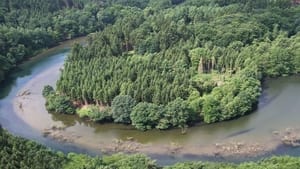
Germany's Wild Amazon
As one of Germany’s beauties, the river was the gem of German landscape. But with industrialization it became the country’s hardest working river and like everything that has been overworked, it lost it magnificence and charm. Due to tender love and care, the river is now a reigning example of one of the most successful and outstanding renaturation projects in the country.
2017
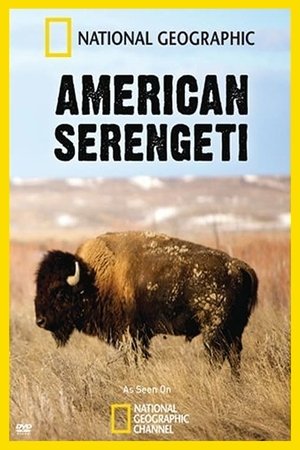
American Serengeti
Scientists take on the project of rebuilding the great American plains. Conservationists must reintroduce populations of iconic American species, some on the brink of extinction.
2010
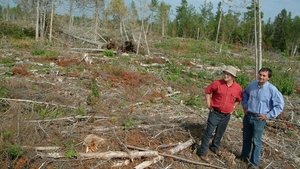
Forbidden Forest
Two very different men are brought together by New Brunswick's decision to hand the management of millions of acres of Crown land to six multinationals. One man is an Acadian woodlot owner retired after nearly 40 years in a pulp mill; the other is a painter and winemaker with homes in France and New Brunswick. They travel to Finland to urge officials at one of the largest licence holders of New Brunswick Crown lands to practise responsible forestry, then go head-to-head with the provincial government to secure a new community-based forestry policy that is environmentally sustainable and produces more jobs than the highly mechanized techniques used today.
2004
Stamp of Character
Discover the "character" of one of Missouri's oldest tie and lumber operations through this archival black-and-white film that documents one of the last railroad tie drives on the Black River made by the T.J. Moss Tie Company of St. Louis in the 1920s. Thanks to release of the film by the Kerr-McGee Chemical Corporation, the rare footage in "Stamp of Character" takes us through the entire process of making railroad ties, at a time when forests covered almost two-thirds of the state. The original silent motion picture was shown in movie theaters as an advertisement by the T.J. Moss Tie Company. Using digitally edited narration and realistic sound effects, this video makes the past live again.
1995
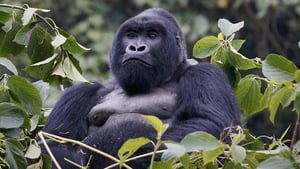
Mountain Gorilla
Mountain Gorilla takes us to a remote range of volcanic mountains in Africa, described by those who have been there as ""one of the most beautiful places in the world"", and home to the few hundred remaining mountain gorillas. In spending a day with a gorilla family in the mountain forest, audiences will be captivated by these intelligent and curious animals, as they eat, sleep, play and interact with each other. Although gorillas have been much-maligned in our popular culture, viewers will finally ""meet the legend"" face to face, and learn about their uncertain future.
1992
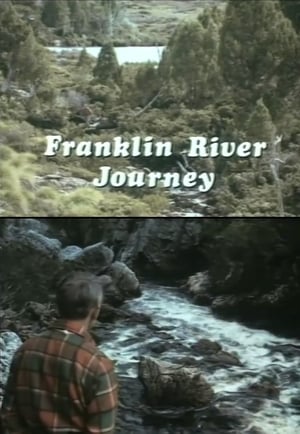
Franklin River Journey
Follows amateur botanist Antonius Moscal's raft journey down the Franklin River (Tasmania, Australia).
1980
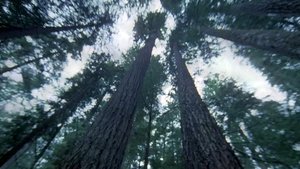
Another Side of the Forest
Developments in the Canadian forestry industry during the 1970s are shown being carried out both as lab experiments and in the field to protect and conserve the country's vast forests. These include turning a Newfoundland bog into woodland, fostering British Columbia seedlings that withstand mechanical planting, inoculating Ontario elms against the bark beetle, devising ways of controlling fire, and more.
1974
Sportsmen at Work
This short film focuses on how conservationists endeavor to protect wildlife.
1957