Watch Nuclear Nation (2012) Online Free
After the 11 March 2011 tsunami and nuclear disaster, residents of Futaba, a town in Fukushima Prefecture, are relocated to an abandoned high school in a suburb of Tokyo, 150 miles south. With a clear and compassionate eye, filmmaker Atsushi Funahashi follows the displaced people as they struggle to adapt to their new environment. Among the vivid personalities who emerge are the town mayor, a Moses without a Promised Land; and a farmer who would rather defy the government than abandon his cows to certain starvation.
More Like This
Huemul
2026
Fukushima: A Nuclear Nightmare
The definitive account of Japan’s struggle as it faced a nuclear catastrophe while still reeling from the devastation of an earthquake and tsunami.
2026
Under the Cloud
An investigation into the unfolding history of nuclear testing, uranium mining, and nuclear waste disposal on indigenous lands in the US. It raises the voices of those who witnessed and experienced the consequences of nuclear colonialism and those who still resist.
2023
Nuclear Danger
2022
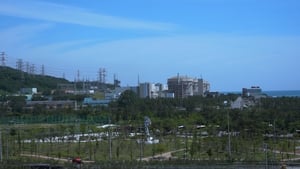
Wolsong: Vanishing Town
2019
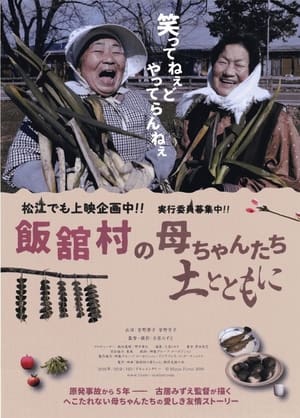
Mothers of Fukushima: Eiko & Yoshiko
Eiko Kanno is a 79 year old grandmother whose life has been completely changed by the nuclear disaster in Fukushima. Her life should have been with her grandchildren but because of the disaster which caused her entire village of Iitate to be evacuated. She now lives by herself in temporary housing. Yoshiko Kanno and her extended family are very important to her changed life. Yoshiko Kanno lost her parents in the evacuation and she found herself living next door to Eiko Kanno. They entertain themselves by telling jokes to each other like a comedic duo. They now live together.
2016
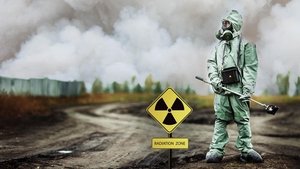
Chernobyl, Fukushima: Living with the Legacy
30 years after the Chernobyl catastrophe and 5 years after Fukushima it is time to see what has been happening in the “exclusion zones” where the radioactivity rate is far above normal.
2016
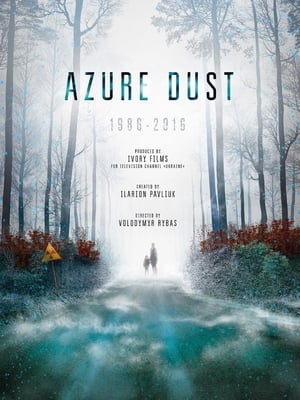
Azure Dust - Inside Chernobyl's Exclusion Zone
The story about Chornobyl area, all around the world we know of the disaster in 1986. The film may be called a guide to the Exclusion Zone. Thanks to the unique footage from the place of the tragedy, that the crew succeeded to capture, the viewers will have a chance for a full immersion into the atmosphere of the events and, along with the heroes of the film, feel the dreadful and amazing air that reigns where one of the major anthropogenic disasters took place.
2016
Reflection
Eerie images of landscapes after the Fukushima nuclear disaster shot on black and white 8mm.
2014
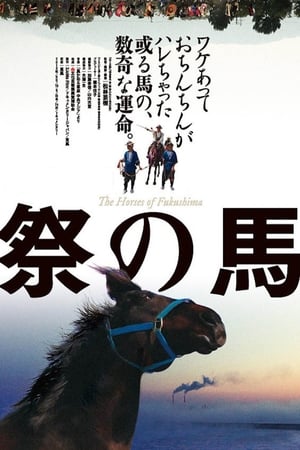
The Horses of Fukushima
Fukushima's Minami-soma has a ten-centuries-long tradition of holding the Soma Nomaoi ("chasing wild horses") festival to celebrate the horse's great contribution to human society. Following the meltdown of the Fukushima Daiichi Nuclear Power Plant in the wake of the March 11, 2011 earthquake and tsunami, local people were forced to flee the area. Rancher Shinichiro Tanaka returned to find his horses dead or starving, and refused to obey the government's orders to kill them. While many racehorses are slaughtered for horsemeat, his horses had been subjected to radiation and were inedible. Yoju Matsubayashi, whose "Fukushima: Memories of the Lost Landscape" is one of the most impressive documentaries made immediately after the disaster, spent the summer of 2011 helping Tanaka take care of his horses. In documenting their rehabilitation, he has produced a profound meditation on these animals who live as testaments to the tragic bargain human society made with nuclear power.
2013
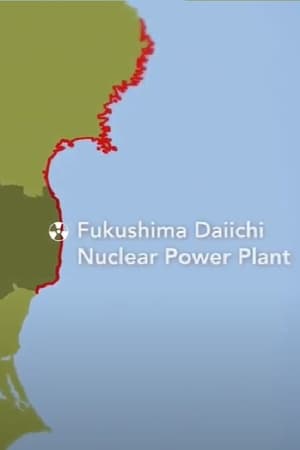
Living in Fukushima: Stories of Decontamination and Reconstruction
In the aftermath of the 3.11 Fukushima Daiichi Nuclear Power Plant accident, the Japanese government began implementing a large-scale decontamination effort to clean up the radioactive materials. A mother, a farmer, a community leader, an evacuee - hear how the clean-up effort has been carried out around their lives and what their hopes are for the reconstruction of Fukushima.
2013

Fukushima, chronique d'un désastre
2013
Die Mächtigste Bombe der Welt
2011
The Making of Fallout: New Vegas
This 8-part documentary includes behind the scenes interviews, concept art, and promotional trailers for the game.
2010
Waste: The Nuclear Nightmare
The documentary presents the results of research on nuclear waste management in the U.S., Russia, Germany and France. The authors Eric Noualhat Guéret and Laure were accompanied by the independent French laboratory technicians radiation control, CRIIRAD. They have detected and measured radiation in many places like the U.S. Columbia River or the French plutonium factory called reprocessing plant at La Hague.
2009
Gerboise Bleue
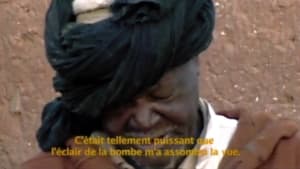
"Gerboise bleue", the first French atomic test carried out on February 13, 1960 in the Algerian Sahara, is the starting point of France's nuclear power. These are powerful radioactive aerial shots carried out in areas belonging to the French army. Underground tests will follow, even after the independence of Algeria. From 1960 to 1978, 30,000 people were exposed in the Sahara. The French army was recognized recognized nine irradiations. No complaint against the army or the Atomic Energy Commission has resulted. Three requests for a commission of inquiry were rejected by the National Defense Commission. For the first time, the last survivors bear witness to their fight for the recognition of their illnesses, and revealed to themselves in what conditions the shootings took place. The director goes to the zero point of "Gerboise Bleue", forbidden access for 47 years by the Algerian authorities
2009
The Making of Fallout 3: The Vault-Tec Files
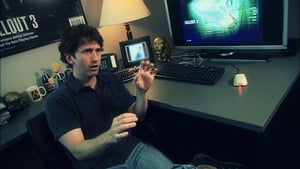
Documentary exploring the making of the third installment of the popular post-apocalyptic roleplaying game series Fallout. The Making of Fallout 3 features behind the scenes footage, concept art and was only made available to people who had purchased the collectors edition of the game.
2008
Amateur's Riot
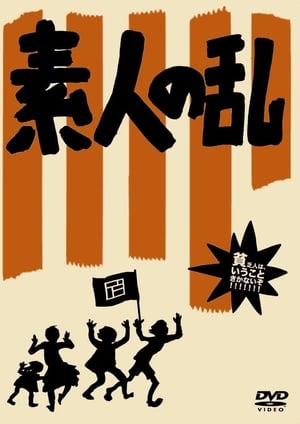
Amateur's Riot (Shirōto no ran) is a Japanese association of activists, committed to the living conditions of the poor people (binbōnin) in Tōkyō. The association was founded in 2005 by Matsumoto Hajime, Yamashita Hikaru, Futatsugi Shin, Mochitsuki Rui and Ogasawara Keita. The protagonists of Shiroto no Ran played an important role in the anti-nuclear demonstrations that appeared in response to the Fukushima nuclear catastrophe.
2008
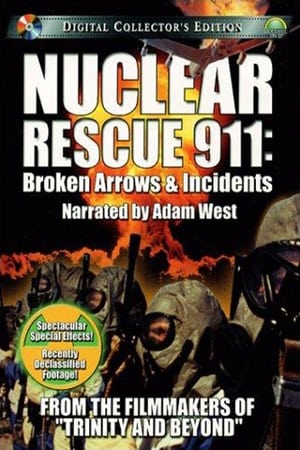
Nuclear Rescue 911: Broken Arrows & Incidents
Since 1950, there have been 32 nuclear weapon accidents, known as "Broken Arrows." A Broken Arrow is defined as an unexpected event involving nuclear weapons that result in the accidental launching, firing, detonating, theft or loss of the weapon. To date, six nuclear weapons have been lost and never recovered.Now, recently declassified documents reveal the history and secrecy surrounding the events known as "Broken Arrows". There have been 32 nuclear weapon accidents since 1950. Six of these nuclear weapons have been lost and never recovered. What does this say about our defense system? What does this mean to our threatened environment? What do we do to rectify these monumental "mistakes"? Using spectacular special effects, newly uncovered and recently declassified footage, filmmaker Peter Kuran explores the accidents, incidents and exercises in the secret world of nuclear weapons.
2001
Planning for Public Shelter Entry
The film features a meeting led by Dave Taylor, the shelter manager, discussing the protocols and responsibilities for staff members involved in managing a public shelter. Key participants, including operations deputy Harvey Johnson and health leader Mrs. Carter, outline their roles in ensuring a smooth entry for occupants during an emergency. The meeting emphasizes the importance of organization, communication, and the distribution of supplies. Staff members are encouraged to familiarize themselves with each other's duties and prepare for potential scenarios, including managing newcomers and ensuring safety and sanitation within the shelter.
1963