Watch Not My Life (2011) Online Free
Not My Life comprehensively depicts the cruel and dehumanizing practices of human trafficking and modern slavery on a global scale. Filmed on five continents, in a dozen countries, Not My Life takes viewers into a world where millions of children are exploited through an astonishing array of practices including forced labor, sex tourism, sexual exploitation, and child soldiering.
Cast
Glenn Close
More Like This
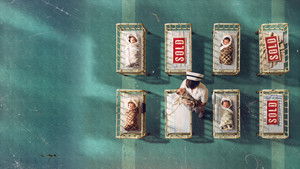
Stolen Children
The film takes us to Georgia, where the shadows of the post-Soviet past still loom large. At its center is investigative reporter Tamuna Museridze, who sets out to unravel a profoundly personal mystery. As she follows the trail of a widespread 1990s scheme in which newborns were taken from Georgian maternity wards and trafficked across the world, she exposes networks, mechanisms, and long-buried secrets along with family tragedies that remain just as painful today. The scale of the practice is staggering: as many as 100,000 children were stolen from hospitals and sold. Among them were Amy and Ano, twin sisters separated at birth who finally found each other in 2024 through social media.
2025
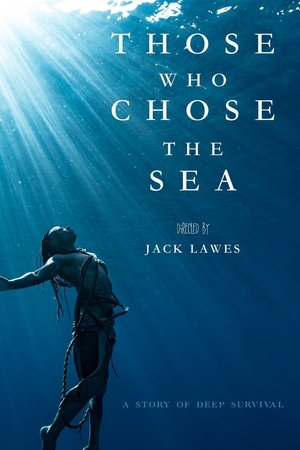
Those who Choose the Sea
Inspired by the powerful true story of the Igbo Landing of 1803, where a group of enslaved Africans chose the ocean over slavery. This poetic film follows African freediver Tatiana Mendes as she confronts her own inner turmoil beneath the surface. Through the discipline of freediving, she dives into more than just water. She descends into inherited trauma, ancestral memory, and the quiet violence of modern life.
2025
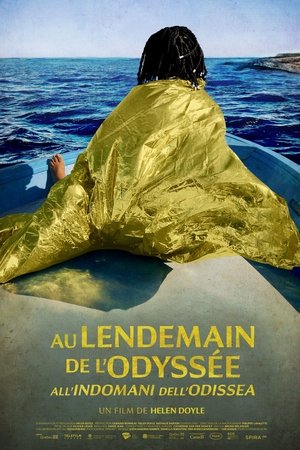
After the Odyssey
After a Dantean journey, women from Nigeria arrive alone and ever younger in Italy, looking for a better life. Such horrors as human trafficking and sexual slavery are waiting for them, as we discover in this ensemble film featuring harrowing stories told in a sensible way that spares us from the unbearable. These tales provoke a broader reflection on migration and otherness.
2024

My No Place
A boy migrates from Guerrero to Colima in Mexico, guided by the illusion of his parents, who want him to study high school. Nevertheless, the inequality barriers force him to work as a sugarcane harvester.
2022
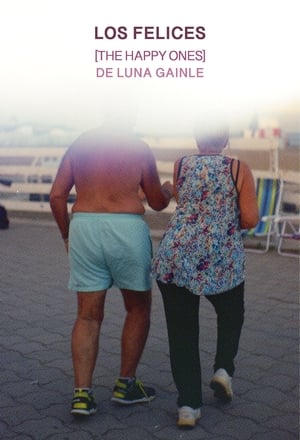
The Happy Ones
A love letter to Mar del Plata made of images, times and a road trip. "The Happy Ones" is an experimental short documentary composed of past and present family footage. It portrays a place in the summer, the city of Mar del Plata, with a span of 20 years between past and present images (January 2000 and 2020). Despite the time that passed by, it's beaches, essence and people remain, always willing to keep dancing.
2021

Mein Leben und der Notenschnitt
Sixth-graders have many things on their minds. But they are confronted with an important decision: do they continue their education in secondary school A, B, or C, or do they go to grammar school after all? And what even are those things? How do children deal with the hopes and fears associated with this step?
2021

Pick up the Wind
A short film following Anthony, a young child from the small, rural town of San Antonio de los Baños, Cuba. We see him in different moments of his daily life as he interacts with different forms of environmental, familial, and social influences. While Anthony displays contradictory traits of creativity, destruction, rigidity, and tenderness as he interacts with his external and internal worlds, we see a story built from the the multidimensionality of Anthony's layered personality as a young man.
2021
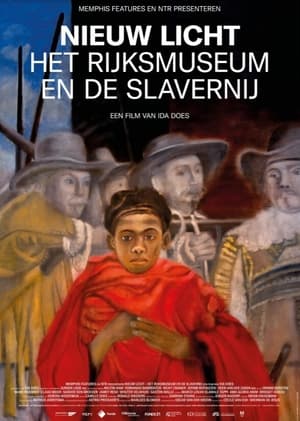
Nieuw Licht - Het Rijksmuseum en de Slavernij
2021

Generation Do Porn
Exposing how social media, financial corporations and the hospitality industry aided and abetted the biggest porn sex trafficking crime in history. The documentary has been cleared with the victims and their legal team.
2019
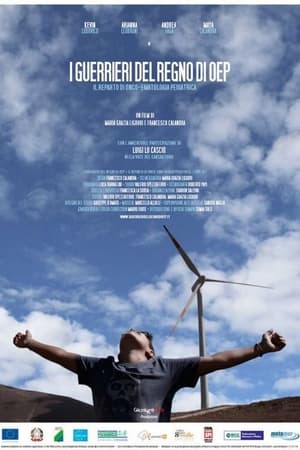
I Guerrieri del Regno di OEP
A documentary with some fictional scenes that focuses the attention, more than on hospitalized children, on the human dynamics that are established in their families. Shot in the Oncohematology ward of an Italian hospital, the movie follows the life of some young patients being treated, alternating interviews with their relatives and hospital staff.
2019
Stopping Traffic: The Movement to End Sex Trafficking
With the instant reach of social media and explosion in cyber porn, a child sex slave can be purchased online and delivered to a customer more quickly than a pizza. Stopping Traffic: The Movement to End Sex Trafficking starts the conversation on a taboo topic – with raw images of life on the streets, heart-pounding rescues and gut-wrenching, personal stories – ultimately offering a story of hope and empowerment, with the goal of engaging others in launching a movement to end modern-day slavery. With 27 million victims, human trafficking is the 2nd largest criminal enterprise in the world. Not just a back-alley enterprise in underdeveloped regions, it’s also prevalent in the U.S. and industrial nations. Stopping Traffic takes an unflinching, first-hand look at this shadowy underworld, telling the shocking story through the eyes of survivors, veteran activists, front-line rescue organizations and celebrities who support the cause, including Dolph Lundgren and Jeannie Mai.
2017

Tempestad
A woman is recruited to a prison controlled by organized crime while another woman searches for her missing daughter. Through images that submerges us in a journey from north to south Mexico, both testimonies collide and take us to the center of a storm: a country where violence has taken control of our lives, our desires and our dreams.
2017

The Cult Next Door
In 2013, three women emerged from a flat in Brixton. They had been held there for decades by Aravindan Balakrishnan, a revolutionary Maoist who controlled the women with brainwashing techniques and tales of a sinister, world-controlling machine he called 'Jackie'.
2017
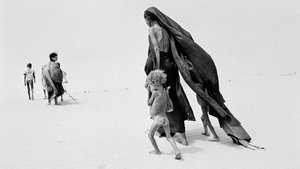
The Salt of the Earth
During the last forty years, the photographer Sebastião Salgado has been travelling through the continents, in the footsteps of an ever-changing humanity. He has witnessed the major events of our recent history: international conflicts, starvations and exodus… He is now embarking on the discovery of pristine territories, of the wild fauna and flora, of grandiose landscapes: a huge photographic project which is a tribute to the planet's beauty. Salgado's life and work are revealed to us by his son, Juliano, who went with him during his last journeys, and by Wim Wenders, a photographer himself.
2014
Meeting David Wilson
African American filmmaker David A. Wilson decided to look into his family's history during the slave era. The result is this documentary, which provides a unique perspective on the long shadow cast by slavery in America. Wilson travels to North Carolina to visit the plantation where his ancestors once toiled and to meet its current owner -- a white man named David Wilson, whose slave-owning ancestors originally occupied the property.
2008
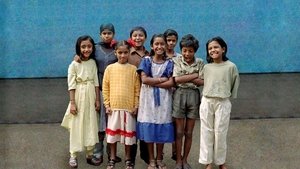
Born into Brothels: Calcutta's Red Light Kids
Documentary depicting the lives of child prostitutes in the red light district of Songachi, Calcutta. Director Zana Briski went to photograph the prostitutes when she met and became friends with their children. Briski began giving photography lessons to the children and became aware that their photography might be a way for them to lead better lives.
2004
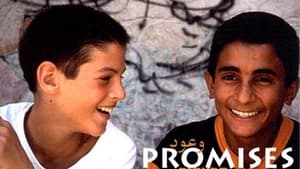
Promises
Documentarians Justine Shapiro and B.Z. Goldberg traveled to Israel to interview Palestinian and Israeli kids ages 11 to 13, assembling their views on living in a society afflicted with violence, separatism and religious and political extremism. This 2002 Oscar nominee for Best Feature Documentary culminates in an astonishing day in which two Israeli children meet Palestinian youngsters at a refugee camp.
2001
Your Very Personal Poetry
This poetic core in youngsters is also touched in Stanukina's less known Your very personal poetry (Свои, совсем особые стихи, 1982), a wonderful film about a poetry class. It is here that one recalls Kogan's admiration of Lyalya's emotional documentary skills. And it is here that one recalls Kosakovsky's depiction of Lyalya as a person of extraordinarily prosperous feelings, sensitive and energetic, childish and female, shrill and quiet. The young poets are marvellously sneaky, respectfully adoring and creatively playing with - maybe even deconstructing - "Aleksandr Sergeevich", Mr. Pushkin, Russia's exclusive trade mark of high culture and literature.
1982
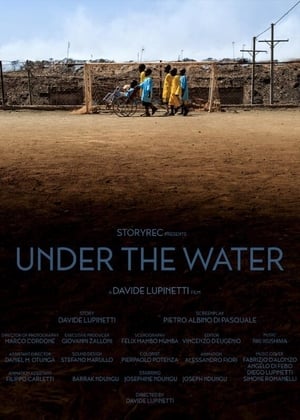
Under the water
A daily life in Korogocho, Kenya, one of the world’s poorest slums.
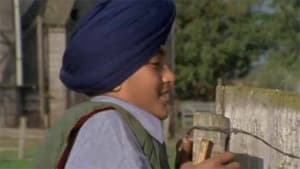
Gurdeep Singh Bains
Gurdeep is a thirteen-year-old Canadian Sikh whose family runs a dairy farm near Chilliwack, British Columbia. They have retained their language and religion. Attendance at the Sikh temple, playing soccer with his schoolmates, and working on the farm are all part of Gurdeep's well-integrated life, but sometimes he feels a little different from the other children because he wears a turban. This film is part of the Children of Canada series.
1977