Watch I Guerrieri del Regno di OEP (2019) Online Free
A documentary with some fictional scenes that focuses the attention, more than on hospitalized children, on the human dynamics that are established in their families. Shot in the Oncohematology ward of an Italian hospital, the movie follows the life of some young patients being treated, alternating interviews with their relatives and hospital staff.
Cast
Maya Calandra, Andrea Faga, Arianna Leobruni, Luigi Lo Cascio, Kevin Ludovico
More Like This
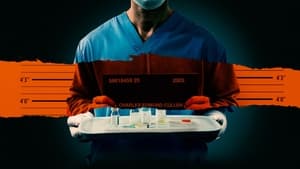
Capturing the Killer Nurse
Charlie Cullen was an experienced registered nurse, trusted and beloved by his colleagues at Somerset Medical Center in New Jersey. He is also one of history’s most prolific serial killers, with a body count potentially numbering in the hundreds across multiple medical facilities in the Northeast.
2022
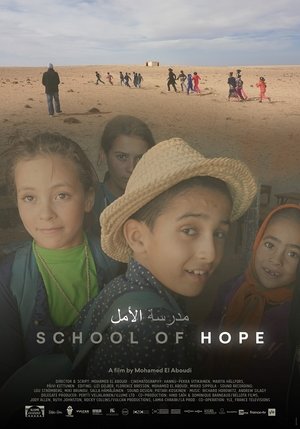
School of Hope
In the vast expanse of desert East of Atlas Mountains in Morocco, seasonal rain and snow once supported livestock, but now the drought seems to never end. Hardly a blade of grass can be seen, and families travel miles on foot to get water from a muddy hole in the ground. Yet the children willingly ride donkeys and bicycles or walk for miles across rocks to a "school of hope" built of clay. Following both the students and the teachers in the Oulad Boukais Tribe's community school for over three years, SCHOOL OF HOPE shows students Mohamed, Miloud, Fatima, and their classmates, responding with childish glee to the school's altruistic young teacher, Mohamed. Each child faces individual obstacles - supporting their aging parents; avoiding restrictions from relatives based on traditional gender roles - while their young teacher makes do in a house with no electricity or water.
2020
El triangle rodó
2020
Enfants surdoués, quels adultes deviennent-ils ?
2016
Der Weg zu Dir
A movie about intersexuality
2014
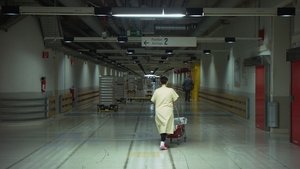
Donauspital
The daily workings of Austria's Danube Hospital.
2012
Fists of Pride
Fists of Pride follows Little Tiger and his fellow fighters as their Thai coaches prepare them for the annual Water Festival competition. In a boxing camp on the Thai-Burmese border the children of mostly illegal migrant workers fleeing Burma live and train for prize fights. In a region where combat sports have always been a matter of honor and money, the film reveals their daily struggles. Bets are open and as the hope of prize money rizes, the young boxers contemplate what it could mean for them and their families
2011
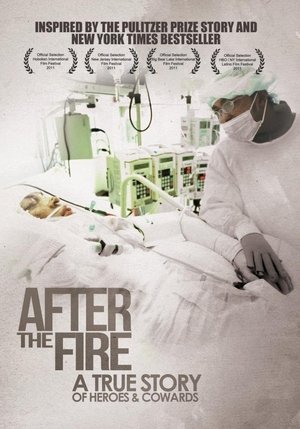
After the Fire
People show incredible courage and cowardice in the aftermath of the Seton Hall Fire in New Jersey.
2011
Criança, a Alma do Negócio
Filmmaker Estela Renner analyzes the effects that mass media and advertising have on children, showing how the industry discovered that they are the best targets for selling products. In addition to listening to them, the film talks to parents who report how influential their children are at home and how this is directly linked to advertisements, and experts debate the negative effects of this exposure.
2008
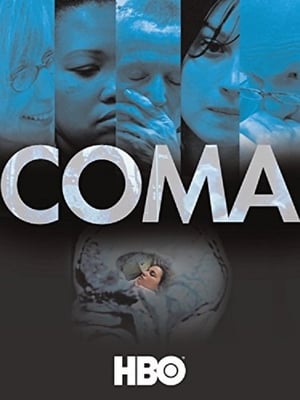
Coma
Four young Americans who've each suffered a Traumatic Brain Injury emerge from their comas at a New Jersey medical facility. Their eyes may be open, but now the real challenge for each of the patients, their families, their doctors and their therapists begins. Brain healing isn't predictable, we're told, and certainly is not guaranteed. So with each 'major' step forward that is observed (opening one's eyes, bending a thumb upon command, vocalizing a word, answering a question correctly) comes a sense of jubilant relief and hope from the families of these patients, but as we soon see, the more a patient progresses, the more difficult things can be for all involved. Moments of faith & hope contrast with disappointments & frustrations, moments of confidence with moments of doubt. It's difficult to watch, and unimaginable to have to ever live through.
2007
Klassenleben
For some time now, there have been schools in Germany whose aim is not to segregate any child. Everyone should be integrated with their minor or major handicaps, advantages or weaknesses, whether highly gifted or severely disabled. Klassenleben tells the story of such a school, its teachers, its children and the immense challenge of learning. From winter to summer 2004, Hubertus Siegert and his film team accompanied class 5d at the Fläming elementary school in Berlin. At eye level with its protagonists, the film observes the learning and life of pupils with extremely different abilities in a class of 20 children, four of whom have learning difficulties or severe multiple disabilities, and 16 "normal pupils", including some so-called gifted pupils. Do lessons succeed in such a heterogeneous group? Is everyone motivated to learn where the competition is not between "gifted" children?
2006
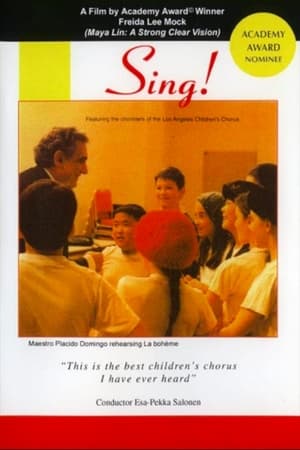
Sing!
Sing! is a 2001 American short documentary film about the Los Angeles Children's Chorus, directed by Freida Lee Mock. How do squeaky-voiced 8 year olds become amazing singers? Sing! tells the story of how a community group, amid severe cutbacks in the arts, is able to develop a children's chorus that is one of the best in the country. It was nominated for an Academy Award for Best Documentary Short.
2001
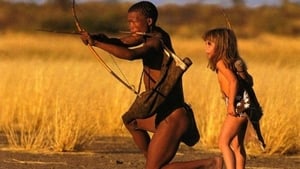
The World According to Tippi
Tippi is no ordinary child. She believes that she has the gift of talking to animals and that they are like brothers to her. 'I speak to them with my mind, or through my eyes, my heart or my soul, and I see that they understand and answer me.' Tippi is the daughter of French filmmakers and wildlife photographers, Alain Degre and Sylvie Robert, who have captured her on film with some of Africa's most beautiful and dangerous animals. Tippi shares her thoughts and wisdom on Africa, its people and the animals she has come to know and love. Often her wisdom is beyond her years, and her innocence and obvious rapport with the animals is both fascinating and charming.
1997
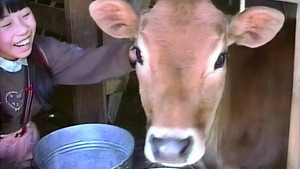
Lessons from a Calf
An elementary school in Japan begins an experimental program that frames the students' curriculum around one single project: the raising of a calf from adolescence to adulthood. Through their work with the calf, the students learn about math, biology, nutrition and numerous other subjects. But after multiple years of investing energy and emotion into their beloved pet, the students begin to realize that the final days of their project may provide them with the hardest and most important lesson of all.
1991

Waiting Room
Short Croatian documentary from the former Yugoslavia by Ante Babaja that captures the different faces in a waiting room.
1975
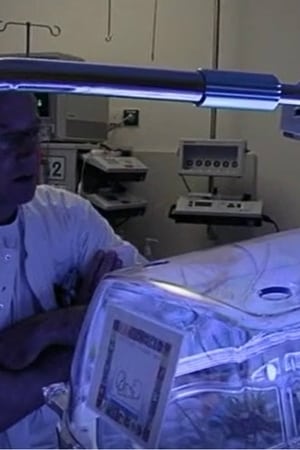
If We Knew
If We Knew is a documentary about paediatricians in an intensive-care unit for newborns. A film about the compassion needed to heal the sick and occasionally needed to hasten the death of a child.

Pour vous servir
1976: a university hospital in Brussels. Old women gather in a common room. Sick? Perhaps. Lonely, above all. The film is also the perspective of a North African woman on other women, nurses and patients. The medical staff discuss their working conditions, and the filmmaker questions, challenges and bears witness to what she sees in this ‘death ward’. Another illness. Unclassified. A very malignant tumour. A tumour that proliferates in a society ‘proud’ of its social security system but which creates a ghetto of the unproductive, the ‘left behind’, the elderly who hurt themselves by contemplating their loneliness in a hospital ward.
1976
Baobab Play
Children and teenagers throw sticks, berries, and leaves at each other from perches in a large baobab tree.
1974
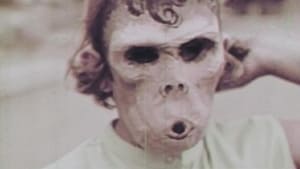
One Got Fat
This bicycle-safety film shows children what can happen when bicycles are driven carelessly and recklessly.
1963
Babies Rolling Eggs
The Washington Star of April 1st, 1900, gave the following account of the ceremony: "Over 40,000 women and children passed through the White House Gates to-day during the hours set apart for the great National show of Egg Rolling, and when the President stepped on the south front gallery at 4:15 P.M., at least 20,000 were within the grounds. The Marine Band rendered a programme of popular music. The President's children entertained at least fifty young friends during the day with a view of the egg rolling from the balcony, but none of them mingled with the great throng, preferring to view the panorama from the distance. They were much amused with the antics of the great crowd of children, who were of all colors and from every walk of life."
1902