Watch Mystery of the Ice Age Giants (2020) Online Free
During the last Ice Age, millions of large animals roamed the Earth, from wooly mammoths and giant sloths to cave lions and saber-toothed cats. But as the temperatures rose, three-quarters of these species died out. What happened? Can environmental changes alone really explain this mass extinction, or did humans - who at this very time were beginning their conquest of the planet - play a key role? To find out, researchers around the world are hunting and studying fossils in their search for answers to solve the mystery of the Ice Age giants.
Cast
Dick Mol, Emre Izat
More Like This

Chauvet: Humanity's First Great Masterpiece
In December 1994, an archaeological marvel hidden deep inside France's Gorges de l'Ardèche was revealed to the modern world for the very first time: the Chauvet cave. Scientists immediately recognised the importance of this discovery. Sealed by a landslide more than 20,000 years ago, the cave had been extraordinarily well preserved. With over 1,000 paintings adorning its walls, Chauvet is a cave art jewel. How were the hidden chambers first formed? Who created the extraordinary art? And how can we preserve it for future generations? Follows a 30-year archaeological, geological and artistic adventure as scientists endeavour to understand and conserve this exceptional record of humanity's distant past.
2025

Ein Mammut-Projekt – Wiedergeburt ausgestorbener Arten
Since the disappearance of the last male northern white rhino in 2018, only a mother and daughter remain as representatives of the species in a Kenyan reserve. Mammoths, which became extinct 4,000 years ago, are attracting the interest of the private American laboratory Colossal Biosciences. Its researchers are working to produce ex vivo (with artificial wombs) embryos from cells harvested from mammoths, liberated from the thawed soils of Siberia, and from Asian elephant oocytes, 99.6% of whose genome matches that of the ancient mastodon. They hope to have their first baby mammoth by 2028.
2024

L'autre monde des dinosaures
2024
Préhistoire en Asie : L'Aventure humaine
In the docudrama "Les Derniers Secrets de l'humanité" (The Last Secrets of Humanity), author and director Jacques Malaterre and paleoanthropologist and professor at the Collège de France Yves Coppens reveal the incredible adventure of Asian prehistory. How does science help to reconstruct these bygone times in images? Thanks to discoveries made at excavation sites and in analysis and genetics laboratories, researchers are now revealing this distant, vanished past.
2024
Domy mrtvých
2023
Les Derniers Secrets de l'humanité
This series incorporates the latest animated 3D films to explore recent discoveries about human history, especially in Asia.
2023

The Complete History of the Earth: Everything Before the Dinosaurs SUPERCUT
Content creator Paleo Analysis explores the Precambrian and the Paleozoic era on his quest to evolve back into a human.
2023
The Nobles of Prehistory: Ladies and Princes of the Paleolithic
In 1872, in the cave of Cavillon in Monaco, archaeologist Émile Rivière (1835-1922) unearthed an apparently very old human skeleton, at least 24,000 years old, a discovery that changed the modern image of prehistoric men and women.
2021
Sapiens, et la musique fut
2020

12.000 Anos de História - Arqueologia e Pré História do RS
2013
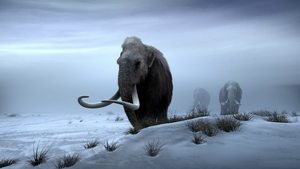
Titans of the Ice Age
Titans of the Ice Age transports viewers to the beautiful and otherworldly frozen landscapes of North America, Europe and Asia ten thousand years before modern civilization. Dazzling computer-generated imagery brings this mysterious era to life - from saber-toothed cats and giant sloths to the iconic mammoths, giants both feared and hunted by prehistoric humans.
2013
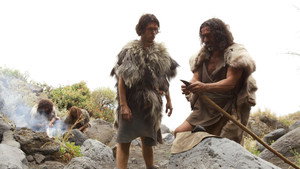
Decoding Neanderthals
Over 60,000 years ago, the first modern humans left their African homeland and entered Europe, then a bleak and inhospitable continent in the grip of the Ice Age. But when they arrived, they were not alone: the stocky, powerfully built Neanderthals had already been living there for hundreds of thousands of years. So what happened when the first modern humans encountered the Neanderthals? Did they make love or war?
2013
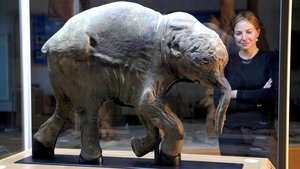
Woolly Mammoth: Secrets from the Ice
Woolly Mammoth: Secrets from the Ice is a documentary presented by English anatomist Dr. Alice Roberts that reveals some of the secrets of one of the most widely known extinct animals ever. Humans have been transfixed by the Wolly Mammoth since the end of the last ice age when there were still herds of them roaming the continents of Asia and Europe. Despite many people knowing about the great Woolly Mammoth until recently very little was known about them despite ancient humans living along side them for so long; few documented accounts exist.
2012

Titanoboa: Monster Snake
In the pantheon of predators, it's one of the greatest discoveries since the T-Rex: a snake 48 feet long, weighing in at 2,500 pounds. Uncovered from a treasure trove of fossils in a Colombian coal mine, this serpent is revealing a lost world of giant creatures. Travel back to the period following the extinction of dinosaurs and encounter this monster predator.
2012
Waking the Baby Mammoth
A unique story on the discovery of a 40-thousand-year-old, perfectly preserved baby woolly mammoth. Cutting edge science and Arctic adventure come alive in this story of a unique discovery: a perfectly preserved baby woolly mammoth that suddenly appears on a Siberian riverbank, triggering an extraordinary investigation into her life and death at the end of the Ice Age. Solving the mystery of her origins unites men whose lives are worlds apart except for their link to the woolly mammoth.
2009

Prehistoric Astronomers
Cave paintings and lunar calendars exist in the caves and remains of prehistoric hunters studied recently. What if Prehistoric Man were clever enough to develop in depth scientific knowledge? As unlikely as it may seem, new data tend to prove that Prehistoric Man actually invented Astronomy!
2007
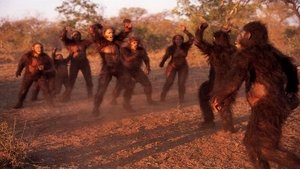
Walking with Cavemen
The great follow-up to 'Walking with Dinosaurs' and 'Walking with Beasts', presented by Professor Robert Winston, explains the story of human evolution.
2003
Mastodon in your Backyard
A documentary about the 1999 discovery of a Mastodon skeleton in a Hyde Park backyard.
2001
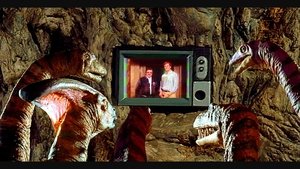
Prehistoric World
First Stop...the Tar Pits, as Gary and Eric investigate the incredible creatures that came after the dinosaurs, from giant ground sloths to savage saber-tooths. It's a trip back to the age of monstrous mammals in this wild and whimsical blast into tour prehistoric past.
1989
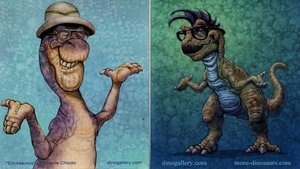
More Dinosaurs
Gary Owens needs more dinosaurs and sends Eric Boardman on the ultimate dinosaur safari to find them. Join the hunt for a living dinosaur in the jungles of Africa, separate the facts from fiction in dinosaur movies, visit Dinosaur National Monuent and much more. There's no bone unturned in this award winning program
1985