Watch My So-Called Selfish Life (2021) Online Free
Motherhood: a subject so deeply ingrained in our society, we take it for granted as part of the natural order. It's assumed all women want children, that motherhood is not only a biological imperative but the defining measure of womanhood. Titled after one of the myths it challenges, this film draws upon a heady mix of culture, science, and history–revealing the rich and diverse lives of people who said no to children, and the forces that have marginalized them in society.
More Like This
Le temps des femmes ?
Has the time of women finally come? Have their everyday lives truly changed over the past sixty years? Guided by Agnès Jaoui, women—famous and unknown—share their stories across generations. From childhood to retirement, the documentary traces shared experiences shaped by prejudice, but also by hope, strength, and humor. Blending personal archives, historic moments, and social media footage, the film places women at the center of their own story. Welcome to the Time of Women.
2025

Writing Hawa
Afghan documentary maker Najiba Noori offers not only a loving and intimate portrait of her mother Hawa, but also shows in detail how the arduous improvement of the position of women is undone by geopolitical violence. The film follows the fortunes of Noori’s family, who belong to the Hazaras, an ethnic group that has suffered greatly from discrimination and persecution.
2025

Les Scandaleuses
Béatrice Dalle, Lio, Brigitte Fontaine, Corinne Masiero, Aïssa Maïga, Virginie Despentes, Maria Schneider, Gisèle Halimi, Juliette Gréco, and Adèle Haenel—these women lived on their own terms, defying conventions and embracing lives often deemed "scandalous." Labeled frivolous, hysterical, or simply too free and too loud, they faced criticism yet used controversy as a force for change, challenging norms and advancing women's rights. This documentary retraces seventy years of their bold and unconventional journeys, telling the story of the fearless women who shaped history and fought for a more equal world.
2024
The Black Stain
Marlene's journey is one of rediscovery. Once she saw darkness as the truest reflection of her soul—a place of comfort and identity. But life's trials reshaped her understanding, transforming that darkness into a wellspring of resilience, insight, and unexpected strength.
2024
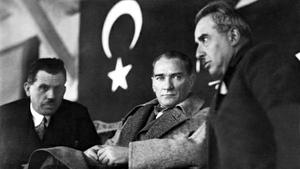
Atatürk, Father of Modern Turkey
Mustafa Kemal Atatürk (1881-1938) was a Turkish field marshal, revolutionary statesman, author, and the founding father of the Republic of Turkey, serving as its first president from 1923 until his death in 1938.
2023
The Dream of a Horse
In a mountainous but extremely green landscape goats jump over the rocks and laughing children run after them. In this paradise on earth, nomadic families have found their temporary home. From one of these families comes a teenage girl, Shahnaz. The girl should be getting married soon, but her thoughts are focused on the world of literature.
2022

Still Working 9 to 5
Examines the 40-year evolution of gender inequality and discrimination in the workplace since the 1980 release of the comedy film “9 to 5” starring Jane Fonda, Lily Tomlin, Dolly Parton, and Dabney Coleman.
2022
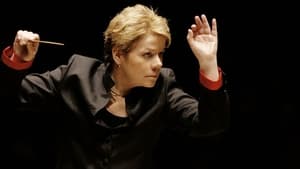
The Conductor
Leonard Bernstein’s protégée Marin Alsop reveals how she smashed the glass ceiling to become an internationally renowned conductor.
2022
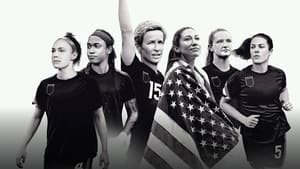
LFG
Three months before the 2019 World Cup, the U.S. Women’s National Soccer Team filed a gender discrimination lawsuit against the United States Soccer Federation. At the center of this no-holds-barred account are the players themselves–Megan Rapinoe, Jessica McDonald, Becky Sauerbrunn, Kelley O'Hara and others–who share their stories of courage and resiliency as they take on the biggest fight for women's rights since Title IX.
2021
For My Right To Choose And Be Chosen
Panamanian women tell their struggle to overcome inequality and discrimination in the political and public sphere and for the right to universal suffrage which they obtained in 1946.
2021
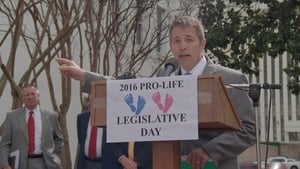
Birthright: A War Story
Women are being jailed, physically violated and at risk of dying as a radical movement tightens its grip across America.
2017
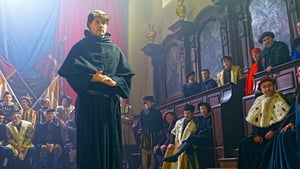
Martin Luther: The Idea that Changed the World
The year 2017 marks the 500th anniversary of one on the most important events in Western civilization: the birth of an idea that continues to shape the life of every American today. In 1517, power was in the hands of the few, thought was controlled by the chosen, and common people lived lives without hope. On October 31 of that year, a penniless monk named Martin Luther sparked the revolution that would change everything. He had no army. In fact, he preached nonviolence so powerfully that — 400 years later — Michael King would change his name to Martin Luther King to show solidarity with the original movement. This movement, the Protestant Reformation, changed Western culture at its core, sparking the drive toward individualism, freedom of religion, women's rights, separation of church and state, and even free public education. Without the Reformation, there would have been no pilgrims, no Puritans, and no America in the way we know it.
2017
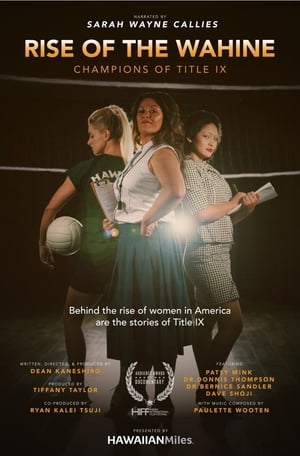
Rise of the Wahine
In the years following the Civil Rights movement and the passage of Title IX in 1972, Dr. Donnis Thompson (a headstrong African-American female coach), Patsy Mink (the first Asian-American U.S. congresswoman), and Beth McLachlin (the team captain of a rag-tag female volleyball team), battled discrimination from the halls of Washington D.C. to the dusty volleyball courts of the University of Hawaii, fighting for the rights of young women to play sports.
2014
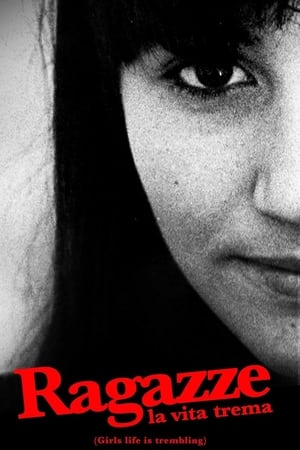
Girls Life Is Trembling
Four stories set between the 60s and the 70s in Italy. Four personal female adventures crossing the path of Italian history, the struggle for women rights, the liberation of the body, in a country without memory.
2009
Backroom Troubles
Women talk about the circumstances that drove them to seek illegal abortions and the often traumatic result. Interwoven with historical photographs and newsreel footage, the stories expose how the reality of women's lives were counterposed to what was socially and morally expected of them.
1997
Weiss ist die Farbe der Verlierer
Short film against the oppression of women. At first, differences in education are presented and then how the relationship between women and men looks like in the professional world.
1974
Tres mujeres, un camino
Outlawed in Pakistan
Outlawed in Pakistan tells the story of Kainat Soomro as she takes her rape case to Pakistan's deeply flawed court system in hopes of getting justice. The 13-year-old Kainat accuses four men of gang rape and shortly after is ordered to be killed by her village elders. Spanning over five years, the story is told through the perspective of Kainat and the four men accused of her rape.
2013
Father, Son and Holy War
Filmmaker Anand Patwardhan looks to history and psychology as he delves into the possible reasons behind the demolition of the Babri Mosque.
1994
Det er godt at have sin egen konto
1974