Watch Birthright: A War Story (2017) Online Free
Women are being jailed, physically violated and at risk of dying as a radical movement tightens its grip across America.
More Like This

To my sisters
Four women are on an existential journey in Morocco, connecting with local women from all walks of life bonding in sisterhood, and share their common quest for empowerment.
2026

Writing Hawa
Afghan documentary maker Najiba Noori offers not only a loving and intimate portrait of her mother Hawa, but also shows in detail how the arduous improvement of the position of women is undone by geopolitical violence. The film follows the fortunes of Noori’s family, who belong to the Hazaras, an ethnic group that has suffered greatly from discrimination and persecution.
2025

The Day Iceland Stood Still
When 90% of Iceland’s women walked off the job and out of their homes one morning in 1975, they brought their country to its knees and catapulted Iceland to the forefront of today's global fight for gender equality. Unexpectedly funny, laced with evocative animation and powerfully told by the women who lived it – this is the true story of 12 hours that launched a revolution.
2025
Love Alone Can't Make a Child
Love Alone Can’t Make a Child chronicles the love story and emotional odyssey of Maria and Christiane who, for over a decade, have been trying to fulfil their desire of giving birth to a child of their own. The director, a childhood friend of Maria, lovingly narrates the couple's journey, showcasing their resilience in the face of ever-increasing challenges, and the intricate dynamics of a relationship under tremendous strain. More than anything else, the film continually pursues what love truly means in a long-term romantic relationship.
2024
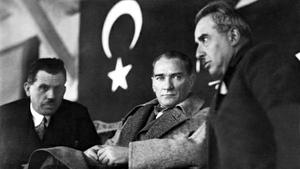
Atatürk, Father of Modern Turkey
Mustafa Kemal Atatürk (1881-1938) was a Turkish field marshal, revolutionary statesman, author, and the founding father of the Republic of Turkey, serving as its first president from 1923 until his death in 1938.
2023

Pussy Riot: Rage Against Putin
Pussy Riot make a comeback after a long absence to stand with Ukraine. Their story and their struggle are told through archival footage and interviews with the group’s members.
2023

The Conductor
Leonard Bernstein’s protégée Marin Alsop reveals how she smashed the glass ceiling to become an internationally renowned conductor.
2022

LFG
Three months before the 2019 World Cup, the U.S. Women’s National Soccer Team filed a gender discrimination lawsuit against the United States Soccer Federation. At the center of this no-holds-barred account are the players themselves–Megan Rapinoe, Jessica McDonald, Becky Sauerbrunn, Kelley O'Hara and others–who share their stories of courage and resiliency as they take on the biggest fight for women's rights since Title IX.
2021

Letters Live from the Archive: International Women’s Day
Celebrate International Women’s Day with this brand new inspiring film from LETTERS LIVE. In “LETTERS LIVE from the Archive: International Women’s Day”, remarkable letters are read by a diverse array of outstanding luminaries, including stunning performances from Olivia Colman, Gillian Anderson, Daisy Ridley, Caitlin Moran, Rose McGowan, Adwoa Aboah, Louise Brealey and more. Plus music from Roxanne Tataei.
2021
For My Right To Choose And Be Chosen
Panamanian women tell their struggle to overcome inequality and discrimination in the political and public sphere and for the right to universal suffrage which they obtained in 1946.
2021
She the People: Votes for Women
Today, it seems incredible that just a century ago, American women had no voice in democracy. Just as remarkable is that it took over 70 years of campaigns, marches, hunger strikes, and arrests to pass the constitutional amendment guaranteeing them the right to vote. Witness the decades-long fight for suffrage by heroic women who fought to claim their rights as citizens, told through rarely seen footage, expert opinions, and dozens of historic objects from the Smithsonian Institution. The legacy of their quest continues to shape our democracy.
2020

Saudi Women's Driving School
An unprecedented access to a number of Saudi women in the capital city of Riyadh as they embrace the freedom that comes from being behind the wheel.The Saudi Women’s Driving School is said to be the world's largest driving school, which caters exclusively to women since the ban on female drivers was lifted in 2017.
2019

Served Like a Girl
Five women veterans who have endured unimaginable trauma in service create a shared sisterhood to help the rising number of stranded homeless women veterans by entering a competition that unexpectedly catalyzes moving events in their own lives.
2017

Primavera das Mulheres
2017
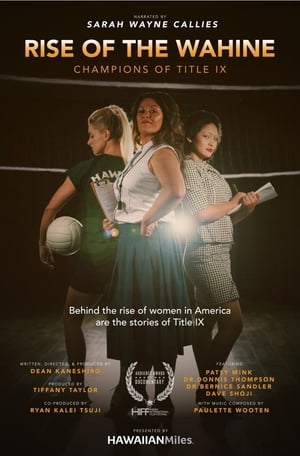
Rise of the Wahine
In the years following the Civil Rights movement and the passage of Title IX in 1972, Dr. Donnis Thompson (a headstrong African-American female coach), Patsy Mink (the first Asian-American U.S. congresswoman), and Beth McLachlin (the team captain of a rag-tag female volleyball team), battled discrimination from the halls of Washington D.C. to the dusty volleyball courts of the University of Hawaii, fighting for the rights of young women to play sports.
2014

Pink Smoke Over the Vatican
Documentary film about the controversial movement of women seeking ordination in the Roman Catholic Church. More and more women are answering a spiritual calling to take on the vestments of priesthood and seek equality in the religion they love. These daring women have risked banishment, loss of livelihood, and even excommunication to take part in what the Church calls illicit ordinations. The Vatican has vowed to end this threat to the male hierarchy, even forbidding the mere discussion of female priests. The papacy has reached a time of crisis and the controversy over women's role, and their place in the Church, must be addressed if the Vatican is to have any relevance in the 21st century.
2011

Backroom Troubles
Women talk about the circumstances that drove them to seek illegal abortions and the often traumatic result. Interwoven with historical photographs and newsreel footage, the stories expose how the reality of women's lives were counterposed to what was socially and morally expected of them.
1997
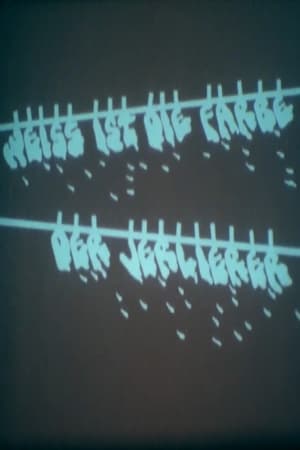
Weiss ist die Farbe der Verlierer
Short film against the oppression of women. At first, differences in education are presented and then how the relationship between women and men looks like in the professional world.
1974
Det er godt at have sin egen konto
1974
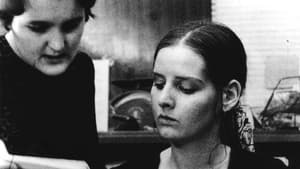
A Film for Discussion
A docu-drama shot in 1970, but not completed until 1973, the film sought to encapsulate in an experimental form issues that were under discussion within the Women’s Liberation Movement at this time and to thus contribute to action for change. In its numerous community screenings, active debate was encouraged as part of the viewing experience.
1973