Watch Mother's Day (2017) Online Free
The impact of mass incarceration is explored through an annual charity trip that takes children to visit their imprisoned mothers.
More Like This
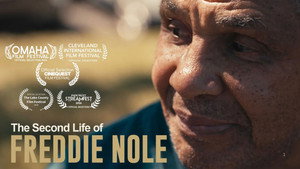
The Second Life of Freddie Nole
When Freddie Nole drives to meet a man walking out of prison, he’s not just offering a ride, he’s offering hope, dignity, and a path to permanent freedom. As this vérité road trip unfolds, we come to learn the remarkable story behind Freddie’s mission, a staggering mistake that cost him 50 years of freedom but ultimately brings him right back to the prison door.
2026

Natasha
After surviving a violent assault by a serving soldier who was convicted but walked free with a suspended sentence, Natasha O'Brien refused to stay silent.
2025
Degrees of Freedom
Created by formerly incarcerated women, Degrees of Freedom chronicles the effort to restore college programming at Bedford Hills Correctional Facility after it was eliminated in the 1990s. Refusing to accept the loss of educational opportunity, the women organized to build a program and a lasting community of care that would go on to influence prison education efforts nationwide. Told by the women themselves, the film earned the Audience Award for Short Documentary at the Dances With Films Festival.
2024

Not Just a Statistic: Stories of Survivors
The story of the South Shore Resource and Advocacy Center, five survivors of domestic violence, and their experience in the Massachusetts justice system.
2024

In Search of Bass Reeves
By the end of his illustrious career, Deputy U.S. Marshal Bass Reeves may well have been the preeminent lawman of the Old West. He brought upwards of 3,000 outlaws to justice and served in law enforcement for 32 years during Reconstruction after the Civil War. His story is one of an escape to freedom and the dangers of the West for a former slave who rose to become a legend of the law. Join us as we go in search of Bass Reeves.
2024
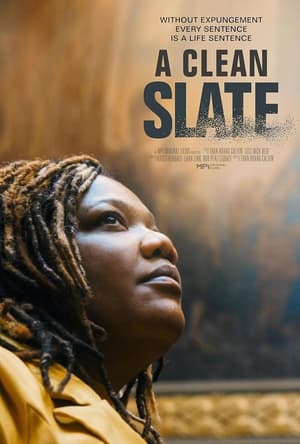
A Clean Slate
As Wisconsin reforms its expungement process, the opportunity for a second chance for the formerly incarcerated hinges on a local activist named Shanyeill McCloud.
2023
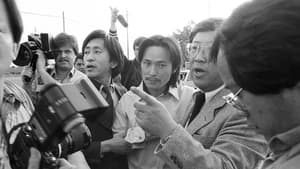
Free Chol Soo Lee
On June 3, 1973, a man was murdered in a busy intersection of San Francisco’s Chinatown as part of an ongoing gang war. Chol Soo Lee, a 20-year-old Korean immigrant who had previous run-ins with the law, was arrested and convicted based on flimsy evidence and the eyewitness accounts of white tourists who couldn’t distinguish between Asian features. Sentenced to life in prison, Chol Soo Lee would spend years fighting to survive behind bars before journalist K.W. Lee took an interest in his case. The intrepid reporter’s investigation would galvanize a first-of-its-kind pan-Asian American grassroots movement to fight for Chol Soo Lee’s freedom, ultimately inspiring a new generation of social justice activists.
2022
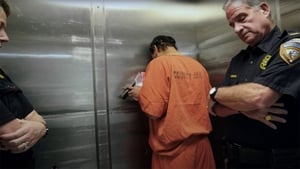
Trapped: Cash Bail In America
Every year, millions of Americans are incarcerated before even being convicted of a crime - all because they can't afford to post bail. How did we get here? “Trapped: Cash Bail in America” shines a light on our deeply flawed criminal justice system and the activists working to reform it. This new documentary explores the growing movement to end the inherent economic and racial inequalities of cash bail while highlighting victims impacted by an unjust system, the tireless campaigners fighting for criminal justice reform, and a bail industry lobbying to maintain the status quo.
2020

Time
Fox Rich, indomitable matriarch and modern-day abolitionist, strives to keep her family together while fighting for the release of her incarcerated husband. An intimate, epic, and unconventional love story, filmed over two decades.
2020
Edwin
Edwin Debrow Jr. murdered a cab driver when he was 12. He was sentenced to 40 years in prison.
2020
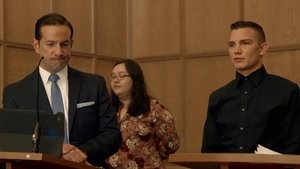
The Definition of Insanity
The Miami-Dade Community Mental Health Project comes to life in this documentary, following a team of dedicated public servants working through the courts to steer people with mental illness on a path from incarceration to recovery.
2020
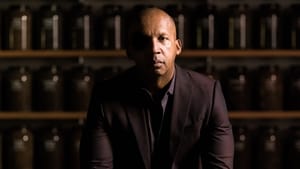
True Justice: Bryan Stevenson's Fight for Equality
An intimate portrait of Alabama public interest attorney Bryan Stevenson, founder and executive director of the Equal Justice Initiative, who for more than three decades has advocated on behalf of the poor, the incarcerated and the condemned, seeking to eradicate racial discrimination in the criminal justice system.
2019

Let It Fall: Los Angeles 1982-1992
An in-depth look at the culture of Los Angeles in the ten years leading up to the 1992 uprising that erupted after the verdict of police officers cleared of beating Rodney King.
2017
The Making of Justice
“The Making of Justice” is a movie about seven prisoners working on the scenario for a crime film together with Sarah Vanhee. Like the main character in the film they are making up, they are all guilty of murder. To shape the story, they draw on their own experiences, ideas and desires. We, the viewers, can only guess whether they are using fiction as a means of confirming, transcending or transforming their present situation.
2017
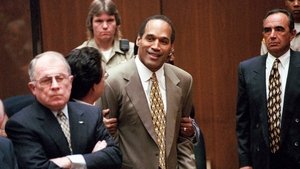
O.J.: Made in America
A chronicle of the rise and fall of O.J. Simpson, whose high-profile murder trial exposed the extent of American racial tensions, revealing a fractured and divided nation.
2016

Give Up Tomorrow
When a teenager from a political family in the Philippines is accused of a double murder, the country’s entire judicial system is put to the test after years of alleged corruption.
2011
Back On Track
Low-level narcotics offenders too often cycle in and out of jail, re-offending soon after they hit the streets. District Attorney Kamala D. Harris has convened City leaders to answer this problem and, along with key partners, has launched Back On Track, an innovative education and employment reentry initiative focusing on young adult drug offenders. Designed to increase community safety by reducing recidivism, Back On Track couples strict accountability and close supervision with education, employment support and health care. The purpose of Back On Track is to prevent young people from committing crimes by leading them to make life changing choices.
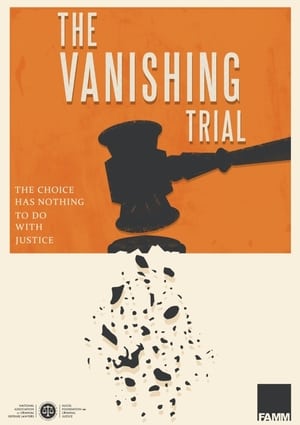
The Vanishing Trial
“The Vanishing Trial” looks into “trial penalty,” the term used to describe the substantially longer prison sentence a person receives if they exercise their constitutional right to trial instead of plead guilty. The documentary focuses on four individuals who were forced to make that excruciating choice.
Back On Track - Out Of The System
Low-level narcotics offenders too often cycle in and out of jail, re-offending soon after they hit the streets. District Attorney Kamala D. Harris has convened City leaders to answer this problem and, along with key partners, has launched Back on Track, an innovative education and employment reentry initiative focusing on young adult drug offenders. Designed to increase community safety by reducing recidivism, Back on Track couples strict accountability and close supervision with education, employment support and health care. The purpose of Back on Track is to prevent young people from committing crimes by leading them to make life changing choices.
Executing the Insane: The Case of Scott Panetti
Scott Panetti was tried for the capital murder of his parents-in-law on September 8, 1992 in Gillespie County, Texas. He was subsequently sentenced to death on September 22, 1995. Panetti has an extensive history of mental illness, including schizophrenia, manic depression, auditory hallucinations and paranoia. Panetti was hospitalized, both voluntarily and involuntarily for mental illness fourteen times in six different hospitals before his arrest for capital murder in 1992. Following his conviction, Panetti’s former wife, and daughter of the victims, Sonja Alvarado, filed a petition stating that Panetti never should have been tried for the crimes as he was suffering from paranoid delusions at the time of the killings.
2007