Watch Mossad L'Histoire Secrète d'Israël (2019) Online Free
More Like This

Red Shadow over the White House
As the 2024 elections approach, Russian interference in American politics – through spies or agents of influence – is a troubling reality. Vladimir Putin is counting on Donald Trump’s victory to weaken support for Ukraine. Why does Trump almost always support Russia? Is he compromised? During his presidency, did he betray the United States in favor of the Kremlin? And why has the Republican Party shifted its stance toward Russia? Answering these questions means shedding light on a labyrinthine espionage and manipulation operation. Still ongoing, it began forty years ago, during the final years of the Cold War. Back then, Trump was merely a real estate developer, and Putin was a young KGB agent. This operation contains many dark areas, but some hold pieces of the puzzle. A former KGB leader, infiltrated “illegals,” a former Trump advisor, and former senior officials from the CIA and FBI, as well as a former prosecutor, provide testimony. . . . [taken from Nilaya Productions]
2024

Palmyre, à la croisée des mondes
2024
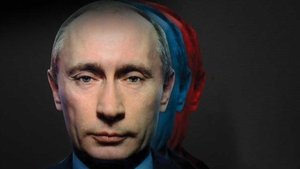
INSIDE THE MIND OF VLADIMIR PUTIN
As Russia continues to horrify the world with its brutal attacks on Ukraine, and its crush of dissent at home, CNN’s Fareed Zakaria takes viewers inside the mind of the man behind the ruthless conflict, Vladimir Putin. Throughout his rise to power and political career, Vladimir Putin has been an autocratic enigma. He was reared in Soviet poverty, served as a KGB intelligence agent in East Germany, and through a series of cunning maneuvers, rose from deputy mayor of St. Petersburg to the presidency of post-Soviet Russia. Zakaria gets answers to the many questions that surround Putin that have confounded leaders around the world, including at least four U.S. presidents: how did Putin’s mindset move from pro-global harmony, to isolation, fear, and loathing of the West.
2022

Les Suppliques
Since the defeat, the Nazis, who were the masters of the occupied zone, and the French State, which had been ruling the so-called free zone since Vichy, ordered the Jews to take a census. From the spring of 1941, whether they had been French for several generations or naturalized for a few years, foreigners who had taken refuge in France or stateless people who had been driven out of their country, they were put on file, arrested or threatened at any time. Some wrote to the administration, or directly to Marshal Pétain, who seemed to them to be the last resort. These requests are called Suppliques. Men, women, sometimes children, tried as best they could, by all means, to loosen the trap. They address themselves to their executioners, but they do not know it.
2022

Bootsmann
After 13 years in prison, former drug dealer Marius Eriksen needs to reintegrate into society, and gives unique insights into his past as the biggest drug dealer from Hamburg.
2016
Tubular Bells: The Mike Oldfield Story
Documentary about the musician Mike Oldfield, whose 1973 album Tubular Bells launched the Virgin record label and became the biggest selling instrumental album of all time.
2013

Lions for Lambs
Three stories told simultaneously in ninety minutes of real time: a Republican Senator who's a presidential hopeful gives an hour-long interview to a skeptical television reporter, detailing a strategy for victory in Afghanistan; two special forces ambushed on an Afghani ridge await rescue as Taliban forces close in; a poli-sci professor at a California college invites a student to re-engage.
2007
Rendition
When an Egyptian terrorism suspect "disappears" on a flight from Africa to Washington DC, his American wife and a CIA analyst find themselves caught up in a struggle to secure his release from a secret detention facility somewhere outside the US.
2007

The Kingdom
A team of U.S. government agents is sent to investigate the bombing of an American facility in the Middle East.
2007

The 11th Hour
A look at the state of the global environment including visionary and practical solutions for restoring the planet's ecosystems. Featuring ongoing dialogues of experts from all over the world, including former Soviet Prime Minister Mikhail Gorbachev, renowned scientist Stephen Hawking, former head of the CIA R. James Woolse
2007
The Sum of All Fears
When the president of Russia suddenly dies, a man whose politics are virtually unknown succeeds him. The change in political leaders sparks paranoia among American CIA officials, so CIA director Bill Cabot recruits a young analyst to supply insight and advice on the situation. Then the unthinkable happens: a nuclear bomb explodes in a U.S. city, and America is quick to blame the Russians.
2002
Le Club : Claude Jade
2001
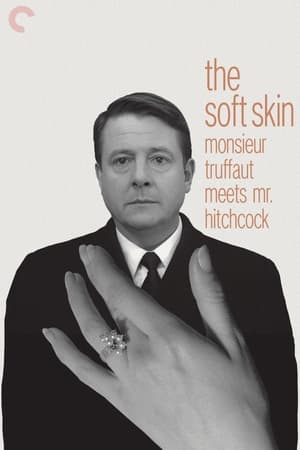
Monsieur Truffaut Meets Mr. Hitchcock
When Francois Truffaut approached Alfred Hitchcock in 1962 with the idea of having a long conversation with him about his work and publishing this in book form, he didn't imagine that more than four years would pass before Le Cinéma selon Hitchcock finally appeared in 1966. Not only in France but all over the world, Truffaut's Hitchcock interview developed over the years into a standard bible of film literature. In 1983, three years after Hitchcock's death, Truffaut decided to expand his by now legendary book to include a concluding chapter and have it published as the "Edition définitive". This film describes the genesis of the "Hitchbook" and throws light on the strange friendship between two completely different men. The centrepieces are the extracts from the original sound recordings of the interview with the voices of Alfred Hitchcock, Francois Truffaut, and Helen Scott – recordings which have never been heard in public before.
1999

The Devil's Own
Frankie McGuire, one of the IRA's deadliest assassins, draws an American family into the crossfire of terrorism. But when he is sent to the U.S. to buy weapons, Frankie is housed with the family of Tom O'Meara, a New York cop who knows nothing about Frankie's real identity. Their surprising friendship, and Tom's growing suspicions, forces Frankie to choose between the promise of peace or a lifetime of murder.
1997

Women on the Verge of a Nervous Breakdown
After being dumped by her lover, Pepa finds her life and the lives of those around her spiraling out of control in a deliciously chaotic series of events.
1988

Tribute to the Teachers
A documentary featuring interviews with teachers and officials on the profession of teaching and what it means to them.
1977
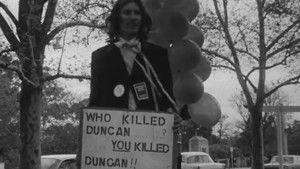
Pride & Snide
A contrast between two kinds of attitudes to gay liberation in Adelaide.
1976

The Lost Honor of Katharina Blum
After a chance encounter with a wanted man, a woman is harassed by the police and press until she takes violent action.
1975
Omnibus: François Truffaut
1973

Masculin Féminin
Paul, a young idealist trying to figure out what he wants to do with his life, takes a job interviewing people for a marketing research firm. He moves in with aspiring pop singer Madeleine. Paul, however, is disillusioned by the growing commercialism in society, while Madeleine just wants to be successful. The story is told in a series of 15 unrelated vignettes.
1966