Watch Loyalty Cards: Are They Worth It? (2024) Online Free
Alexis Conran investigates whether loyalty cards save consumers money when shopping, looking into the possibility that supermarkets could be inflating prices only to discount them. Alexis discovers how supermarkets offer a reduced price in return for an exchange of data from shoppers, speaking to those responsible for handling the data and making profits from it.
Cast
Alexis Conran
More Like This
Finding the Money
FINDING THE MONEY follows economist Stephanie Kelton on a journey through Modern Money Theory or “MMT”. Kelton provocatively asserts the National Debt Clock that ticks ominously upwards in New York City is not actually a debt for us taxpayers at all, nor a burden for our grandchildren to pay back. Instead, Kelton describes the national debt as simply a historical record of the number of dollars created by the US federal government currently being held in pockets, as assets, by the rest of us. MMT bursts into the media with journalists asking, “Have we been thinking about how the government spends money, all wrong?” But top economists from across the political spectrum condemn the theory as “voodoo economics”, “crazy” and “a crackpot theory”. FINDING THE MONEY traces the conflict all the way back to the story we tell about money, injecting new hope and empowering countries around the world to tackle the biggest challenges of the 21st century: from climate change to inequality.
2024

The Bubble
Diving deep into the true causes of the Great Recession, the financial crisis of the 2010s, renowned economists, investors and business leaders explain what America is facing if we don't learn from our past mistakes. Is the economy really improving or are we just blowing up another Bubble?
2018
Cuba, A Paradise on the Brink
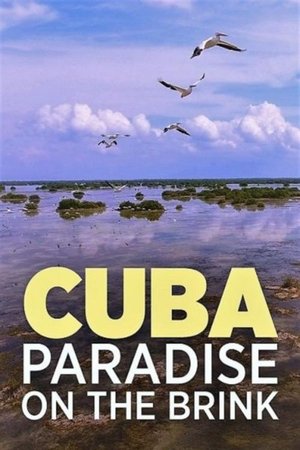
Will Cubans be able to safeguard their heritage of pristine Nature and preserved ecological treasures under this new era, as they are facing the combined pressure of money and tourism? What policies can be implemented to maintain the island’s spectacular wilderness?
2017

Nothing to Hide
NOTHING TO HIDE is an independent documentary dealing with surveillance and its acceptance by the general public through the "I have nothing to hide" argument. The documentary was produced and directed by a pair of Berlin-based journalists, Mihaela Gladovic and Marc Meillassoux. It was crowdfunded by over 400 backers. NOTHING TO HIDE questions the growing, puzzling and passive public acceptance of massive corporate and governmental incursions into individual and group privacy and rights. After the emotion initially triggered by the Snowden revelations, it seems that the general public has finally accepted to live in a monitored digital world.
2017

Kim Dotcom: Caught in the Web
The larger-than-life story of Kim Dotcom, the 'most wanted man online', is extraordinary enough, but the battle between Dotcom and the US Government and entertainment industry—being fought in New Zealand—is one that goes to the heart of ownership, privacy and piracy in the digital age.
2017
From the Kill Pen
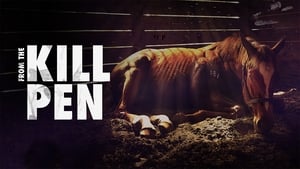
Horse slaughter is more than inhumane. It's big business.
2016

The Bitcoin Gospel
A devoted group of entrepreneurs and activists believe they see the writing on the wall, and they're determined to add a new chapter.
2015
Fascism Inc.
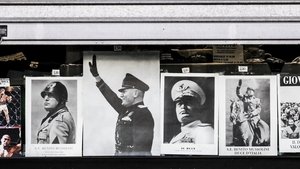
Unknown short stories from the past, the present and the future of fascism and its relation to the economic interests of each era. We will travel from Mussolini’s Italy to Greece under the Nazi occupation, the civil war and the dictatorship; and from Hitler’s Germany to the modern European and Greek fascism.
2014
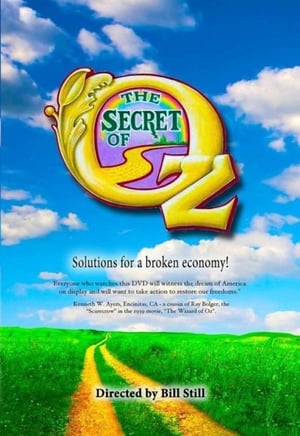
The Secret of Oz
It is well known in economics academia that The Wonderful Wizard of Oz written by L. Frank Baum in 1900 is loaded with powerful symbols of monetary reform which were the core of the Populist movement and the 1896 and 1900 president bid of Democrat William Jennings Bryan. The yellow brick road (gold standard), the emerald city of Oz (greenback money), even Dorothy’s silver slippers (changed to ruby slippers for the movie version) were the symbol of Baum’s and Bryan’s belief that adding silver coinage to gold would provide much needed money to a depression-strapped, 1890s America. We believe Baum’s symbols represent the only solution to relieve the growing economic hardship here in America – and the rest of the world. Practically speaking, 2009 marks the 70th anniversary of the 1939 MGM release of the The Wizard of Oz movie, so interest will be very high. Even Oz websites put up by kids get millions of hits.
2009
1929: The Great Crash
A documentary exploring the causes of the 1929 Wall Street Crash.Over six terrifying, desperate days in October 1929, shares crashed by a third on the New York Stock Exchange. More than $25 billion in individual wealth was lost. Later, three thousand banks failed, taking people's savings with them. Surviving eyewitnesses describe the biggest financial catastrophe in history.
2009
The One Percent
Jamie Johnson takes the exploration of wealth that he began in Born Rich one step further. The One Percent, refers to the tiny percentage of Americans who control nearly half the wealth of the U.S. Johnson's thesis is that this wealth in the hands of so few people is a danger to our very way of life.
2006
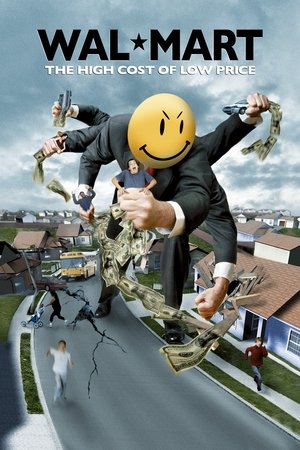
Wal-Mart: The High Cost of Low Price
This documentary takes the viewer on a deeply personal journey into the everyday lives of families struggling to fight Goliath. From a family business owner in the Midwest to a preacher in California, from workers in Florida to a poet in Mexico, dozens of film crews on three continents bring the intensely personal stories of an assault on families and American values.
2005
Enron: The Smartest Guys in the Room
A documentary about the Enron corporation, its faulty and corrupt business practices, and how they led to its fall.
2005
The Take
In suburban Buenos Aires, thirty unemployed ceramics workers walk into their idle factory, roll out sleeping mats and refuse to leave. All they want is to re-start the silent machines. But this simple act - the take - has the power to turn the globalization debate on its head. Armed only with slingshots and an abiding faith in shop-floor democracy, the workers face off against the bosses, bankers and a whole system that sees their beloved factories as nothing more than scrap metal for sale.
2004

The Corporation
Since the late 18th century American legal decision that the business corporation organizational model is legally a person, it has become a dominant economic, political and social force around the globe. This film takes an in-depth psychological examination of the organization model through various case studies. What the study illustrates is that in the its behaviour, this type of "person" typically acts like a dangerously destructive psychopath without conscience. Furthermore, we see the profound threat this psychopath has for our world and our future, but also how the people with courage, intelligence and determination can do to stop it.
2003
Roger & Me
A documentary about the closure of General Motors' plant at Flint, Michigan, which resulted in the loss of 30,000 jobs. Details the attempts of filmmaker Michael Moore to get an interview with GM CEO Roger Smith.
1989
Empire City
A film essay contrasting the modern metropolis with its "golden age" from 1830-1930, with the participation of some of New York's leading political and cultural figures. Made at a time when the city was experiencing unprecedented real estate development on the one hand and unforeseen displacement of population and deterioration on the other. Empire City is the story of two New Yorks. The film explores the precarious coexistence of the service-based midtown Manhattan corporate headquarters with the peripheral New York of undereducated minorities living in increasing alienation.
1985
Little Injustices: Laura Nader Looks at the Law
Anthropologist Laura Nader's first field trip to a Zapotec Indian village in Oaxaca, Mexico, in the late 1950s, led her to study problem-solving in the local courts. There, "little injustices" were the meat of everyday courtroom life.
1981
The Incredible Bread Machine Film
A discussion of the economic and political ideas presented in the book "The Incredible Bread Machine".
1975
The Bigger Bubble
After starting a painting business right before the housing crash, a filmmaker drives over 35,000 miles to track down the people who saw it coming and look ahead to the consequences of a decade of secret bank bailouts and 0% interest.