Watch Louis Theroux's African Hunting Holiday (2008) Online Free
Louis goes to South Africa where American tourists pay to hunt wild animals in privately owned reserves.
Cast
Louis Theroux
More Like This
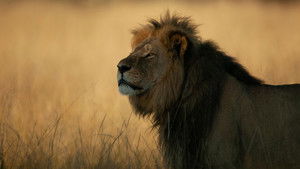
Cecil
In 2015 a lion in Zimbabwe named Cecil was killed by Walter Palmer, an American dentist, provoking a global outcry. The story of Cecil’s death turns the gaze back on to us and our behaviour. The simplicity of the outrage is a stark contrast to the complexity of the reality.
2026
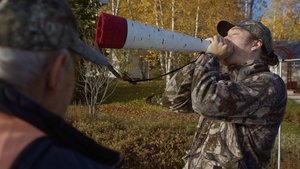
Goodbye, Hunter
For the Frigons, hunting is a family affair that forges and solidifies the bonds between generations. For many autumns, Louis-Henri has been tracking moose alongside Sasha, his grandson. On the other hand, at the dawn of his 81st birthday, old age reminds him that his career as a hunter is behind him. This year, Louis-Henri will not go hunting and Sasha will go without him for the first time. Goodbye, Hunter offers an intimate look at the moment of the passing of a long family tradition.
2024
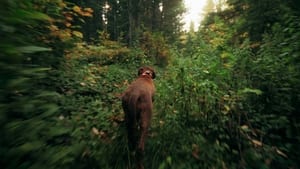
Bloodhound Dog
Bloodhound dog handlers have an essential role in Québec’s hunting ecosystem. Thanks to them, a large number of wounded and lost animals are found during hunting season. They are an important resource for wildlife protection and management. This short film meets one of them, Yves Martineau, and follows the long waits and intense research that comes with the job. In the heart of the Canadian forest, on Matane’s wildlife reserve, we follow this man and his dogs through the vastness of the woods.
2024
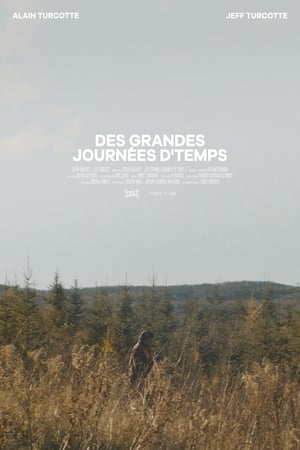
My Deer Hunter
My Deer Hunter is the meeting of Alain, man of the nature and passionate of hunting with the deer, at the moment where the nervousness of the first days of hunting settles down. It's a family reunion, a return to the source in the lands of Témiscouata.
2017
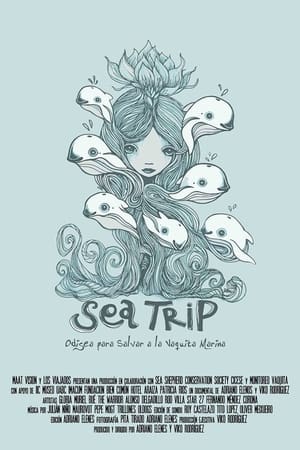
Sea Trip
The imminent extinction of the vaquita porpoise and the totoaba, two species endemic to Baja California and sought after by the mafia for their swim bladders, which are highly prized in the East; victims of illegal fishing nets and in danger of extinction.
2017
Hitler's Jurassic Monsters
This is the untold story of a Nazi vision, that went far beyond the military conquest of European countries. As part of their crazed dream to create a thousand-year Reich they developed detailed blueprints for Aryan settlements and vast hunting parks for ‘Aryan’ animals. Goering and Himmler employed Germany’s best scientists to launch a hugely ambitious programme of genetic manipulation to change the course of nature itself, both in the wild and for domestic use. In a fascinating blend of politics and biology, Hitler's Jurassic Monsters is the true and asthonishing story of how the Nazis tried to take control of nature and change the course of evolution.
2014
What I Did for Love
Call him a city slicker. Call him a tenderfoot. But don't call him a member of the family--yet. Rising L.A. lawyer James White is going home for the holidays with his fiancée, Sadie Ryder, to finally meet her family in rural Pine Gap. After blundering through a bad first impression, James attempts to win over Sadie's lawyer-loathing father Karl by pretending to be a horse-riding, hay-baling, game-hunting, seasoned square dancer. But a pair of worn jeans and a ten-gallon hat don't make a cowboy, and it's going to take more than mere posturing to charm Mr. Ryder... in fact, it just might take a miracle.
2006
Amarok's Song - The Journey to Nunavut
In this feature-length documentary, three generations of the Caribou Inuit family come together to tell the story of their journey as Canada's last nomads. From the independent life of hunting on the Keewatin tundra to taking the reins of the new territory of Nunavut on April 1, 1999, we see it all. The film is the result of a close collaboration between Ole Gjerstad, a southern Canadian, and Martin Kreelak, an Inuk. It's Martin's family that we follow, as the story is told through his own voice, through those of the Elders, and through those of the teens and young adults who were born in the settlements and form the first generation of those growing up with satellite TV and a permanent home.
1998
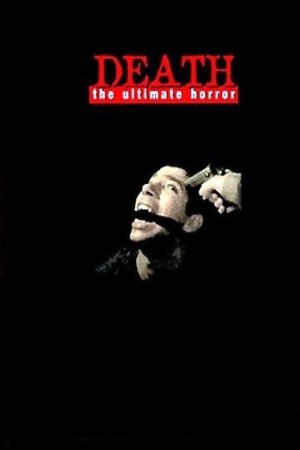
Death: The Ultimate Horror
This grisly documentary presents horrifying journalistic footage of suicides, assassinations, bombings, mob hits, decapitations, and more in bloody detail. Not for the faint of heart.
1995
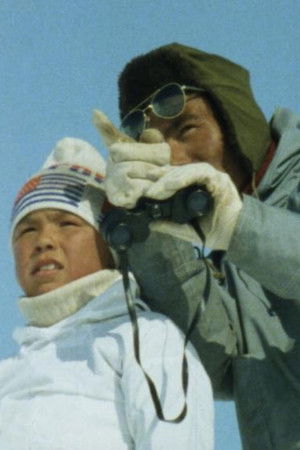
Kaali Goes for Seal Hunting
One day in the lives of an average Greenlandic family, which happens to be of great importance for 8-year old Kali - he's about to catch his first prey with the harpoon. The whole family is looking forward for the huge step in boy's maturation.
1985
Cree Hunters of Mistassini
An NFB crew filmed a group of three families, Cree hunters from Mistassini. Since times predating agriculture, this First Nations people have gone to the bush of the James Bay and Ungava Bay area to hunt. We see the building of the winter camp, the hunting and the rhythms of Cree family life.
1974
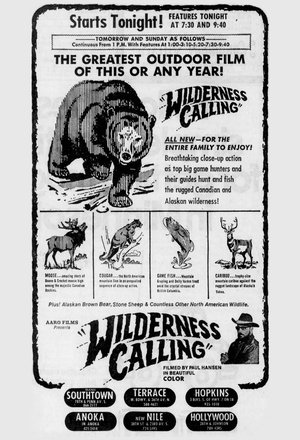
Wilderness Calling
A young boy from the Dakota prairies grows up heeding the "call of the wilderness." He hunts for pheasant in the Illinois cornfields; ducks and geese in the northern lakes; deer in the Dakota Bad Lands; mountain sheep, goats, caribou, moose, and mountain lions in British Columbia and the Yukon; and brown bears on the Alaskan peninsula. He fishes in British Columbia's mountain streams for grayling and along the Bering Sea coast for trout. The film includes footage of swans, eagles, cnd ptarmigans; a beaver colony repairing a dam; battling rams; and sheep at rest in the mountains.
1969
Nuestros safaris
Argentinian short film which shows local fauna and hunting.
1969

The Outdoorsman
A group of outdoorsmen demonstrate duck hunting as a preliminary to traveling the various hunting and fishing centers of the world. They begin their journey with a trip to the Rocky Mountains to hunt elk and mountain lions and to fish in the freshwater lakes. They travel to Lac la Ronge in Saskatchewan and to Anchorage and the Katmai Peninsula in Alaska to fish for trout, salmon, and grayling and hunt moose and bear. In the Arctic, the hunters go with a group of Eskimos for their biggest catch, the polar bear. The hunters travel south by plane, to the Fishing Club of Panama to fish for marlin, tuna, shark, and dolphin in the Gulf of Panama. In South Africa and the Zambesi River basin, they often hunt with only a camera. Accompanied by native beaters, they hunt elephants, antelope, buffalo, crocodiles, and hippopotami. As conservationists they capture some almost extinct white rhinoceros and take them to a game preserve for protection.
1968
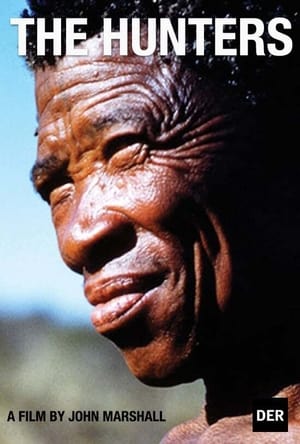
The Hunters
An ethnographic documentary following four Ju/’hoansi (!Kung) men during a multi-day giraffe hunt in the Kalahari Desert, filmed during the Smithsonian–Harvard Peabody expedition of 1952–53.
1957
Old Barak
Amateur film of fishing and geese-shooting trips by a British party in India.
1947
The Last Wilderness
Archery expert Howard Hill and a cameraman go to Wyoming to film this wild-animal three-reel short. Besides the scenery, the scenes include a buffalo killed by an arrow shot by Hill (for food); a wildcat and a coyote in a battle, and a fight-to-the-death between a mother bear protecting her cubs against a killer male bear.
1935
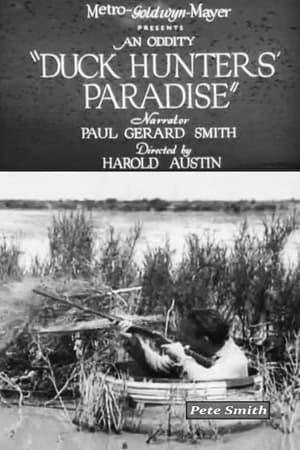
Duck Hunters' Paradise
This short follows two duck hunters in the Sacramento River Valley.
1933
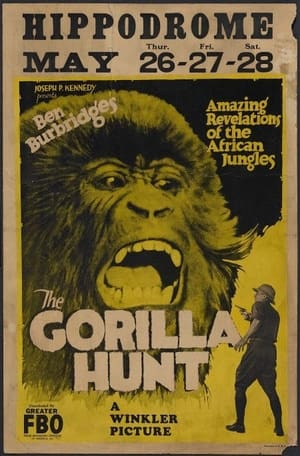
The Gorilla Hunt
Mr. Burbridge's party slew three giant gorillas, one weighing something like 450 pounds. Two of these were sent to the Belgian Government and one to the Smithsonian Institution. The explorer also brought away with him three young gorillas, one of which weighed 125 pounds and put up a good battle before he surrendered. Mr. Burbridge shows some amusing scenes with these animals, one of them being that of a young gorilla who insists on getting tangled up in a drum of film. (cont. http://www.nytimes.com/movie/review?res=9B04E5D7143CEE3ABC4C52DFB467838D639EDE)
1926
Lion Hunting
Two hunters set out on safari with their African guide. They observe zebras, an ostrich, and a hippopotamus, capture a monkey, and camp for the night. After a lion kills their goat and horse, they shoot it by the water’s edge and later kill a second. The animals are skinned, and the hunters relax with cigarettes beside their trophies. (Note: Produced by Nordisk Film in 1907, Løvejagten gained notoriety because founder Ole Olsen purchased lions from Copenhagen Zoo, released them on an island, and filmed their killing. Supplemented with zoo footage to simulate Africa, the film caused public outrage yet drew huge audiences, establishing Nordisk’s reputation worldwide.)
1908