Watch Life 2,000 Meters Under the Sea (2014) Online Free
Deep down at the bottom of the ocean lies the mysterious world of the abyss. In the midst of boiling, toxic geysers, a rich ecosystem flourishes. This miracle is possible thanks to bacteria, micro-organisms crucial to all living beings. How can bacteria survive in such extreme conditions?
More Like This
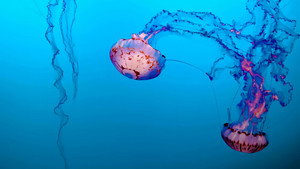
Jellyfish, The new Rulers of the Ocean
Jellyfish blooms are making headlines around the world. This is due to the damage they cause to tourism, fishing and our health. How can these creatures, which are over 98% water and have no shell, skeleton or brain, expand so rapidly? Although this is a normal stage in the life cycle of these gelatinous animals, we have to admit that blooms have become much more frequent and massive in recent decades. We're even witnessing jellyfish populations appearing in more and more regions where fish have been replaced by them, such as off the coast of Namibia, in the Black Sea, in the Sea of Japan and in certain areas of the Baltic Sea. What causes this? Why has the role of jellyfish in the ocean been underestimated, even though they outlived the dinosaurs? Are jellyfish on their way to dominating the oceans as they once did? What if they were to be the only ones left?
2026

The Dark Hobby
The Hawai'ian Islands are ground zero for the aquarium trade who capture and traffic reef fish for hobbyists’ tanks, decimating the reef, ocean and earth’s oxygen. Native Hawai'ians, conservationists, scientists, aquarium fish collectors and breeders are locked in a controversy over the stunning “treasure of Hawai'i” – the ornamental fish.
2021
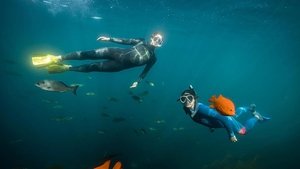
The Map to Paradise
Travel to the underwater lands of ice and corals to discover the birth of a movement to protect the sea. Through the eyes of a prince, a president, a pirate and even an island chief, see how a bountiful underwater paradise can thrive once more; paradise it is more than just a dream.
2019
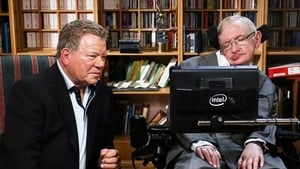
The Truth Is in the Stars
William Shatner sits down with scientists, innovators and celebrities to discuss how the optimism of 'Star Trek' influenced multiple generations.
2017
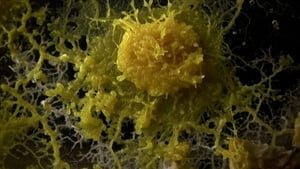
The Creeping Garden
An award-winning feature-length creative documentary exploring the extraordinary world of the plasmodial slime mould through the eyes of the fringe scientists, mycologists and artists. In recent years this curious organism has become the focus of much research in such areas as biological-inspired design, emergence theory, unconventional computing and robot engineering.
2014
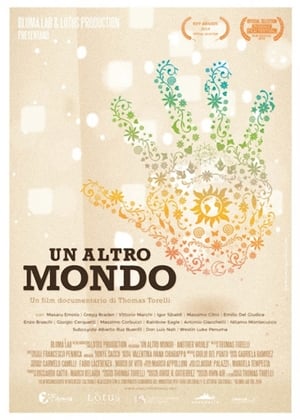
Another World
A feature documentary about the journey of mankind to discover our true force and who we truly are. It is a quest through science and consciousness, individual and planetary, exploring our relationships with ourselves, the world around us and the universe as a whole.
2014
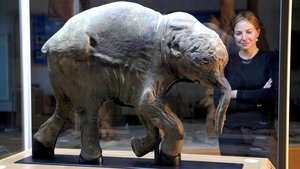
Woolly Mammoth: Secrets from the Ice
Woolly Mammoth: Secrets from the Ice is a documentary presented by English anatomist Dr. Alice Roberts that reveals some of the secrets of one of the most widely known extinct animals ever. Humans have been transfixed by the Wolly Mammoth since the end of the last ice age when there were still herds of them roaming the continents of Asia and Europe. Despite many people knowing about the great Woolly Mammoth until recently very little was known about them despite ancient humans living along side them for so long; few documented accounts exist.
2012

The Botany of Desire
Featuring Michael Pollan and based on his best-selling book, this special takes viewers on an exploration of the human relationship with the plant world — seen from the plants' point of view. Narrated by Frances McDormand, the program shows how four familiar species — the apple, the tulip, marijuana and the potato — evolved to satisfy our yearnings for sweetness, beauty, intoxication.
2009
The Brain
THE BRAIN is an astonishing voyage of discovery into our last biological frontier. Although today s computers can make calculations in one-100th of a second and technology can transport us outside the bonds of Earth, only now are we beginning to understand the most complex machine in the universe. Using simple analogies, real-life case studies, and state-of-the-art CGI, this special shows how the brain works, explains the frequent battle between instinct and reason, and unravels the mysteries of memory and decision-making. It takes us inside the mind of a soldier under fire to see how decisions are made in extreme situations, examines how an autistic person like Rain Man develops remarkable skills, and takes on the age-old question of what makes one person good and another evil. Research is rushing forward. We’ve learned more about the workings of the brain in the last five years than in the previous one hundred.
2008

Here Be Dragons
Most people fully accept paranormal and pseudoscientific claims without critique as they are promoted by the mass media. Here Be Dragons offers a toolbox for recognizing and understanding the dangers of pseudoscience, and appreciation for the reality-based benefits offered by real science.
2008

DNA: Secret of Photo 51
On April 25, 1953, James Watson and Francis Crick published their groundbreaking discovery of the double helix structure of DNA. But their crucial breakthrough depended on the pioneering work of another biologist, Rosalind Franklin. 50 years later, NOVA investigates the shocking truth behind one of the greatest scientific discoveries and presents a moving portrait of a brilliant woman in an era of male-dominated science.
2007
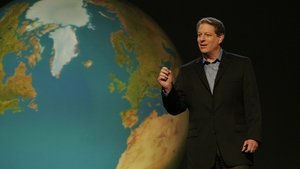
An Inconvenient Truth
A documentary on Al Gore's campaign to make the issue of global warming a recognized problem worldwide.
2006
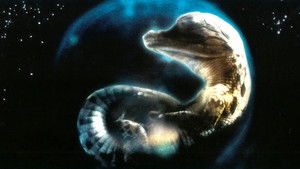
Genesis
An African narrator tells the story of earth history, the birth of the universe and evolution of life. Beautiful imagery makes this movie documentary complete.
2004
The Journey of Man: A Genetic Odyssey
Many geneticists and archaeologists have long surmised that human life began in Africa. Dr. Spencer Wells, one of a group of scientists studying the origin of human life, offers evidence and theories to support such a thesis in this PBS special. He claims that Africa was populated by only a few thousand people that some deserted their homeland in a conquest that has resulted in global domination.
2003
Origins of Life
A documentary that explores the natural world of the sea, from the single-celled organism to more complex forms of life, OCEAN ORIGINS was originally filmed in the IMAX large format, which adds a crispness and clarity to the images. This documentary film seeks to examine the process of evolution by looking at the many creatures of the sea that can illustrate the way multi-cellular life emerged over the course of four billion years. OCEAN ORIGINS is a creative film that uses fascinating documentary footage to look at scientific theories and principles in an interesting manner
2001
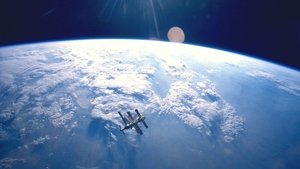
Mission to Mir
This film shows how far we have come since the cold-war days of the 50s and 60s. Back then the Russians were our "enemies". And to them the Americans were their "enemies" who couldn't be trusted. Somewhere in all this a young girl in Oklahoma named Shannon set her sights on becoming one of those space explorers, even though she was told "girls can't do that." But she did.
1997
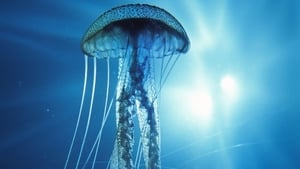
Into the Deep
An underwater exploration beneath kelp forests in the Pacific Ocean off the coast of Southern California. The film captures the birth of a shark, squids mating, a lobster molting, a fish protecting its nest from an octopus and a sea urchin, and the sea bed covered with brittle stars.
1994
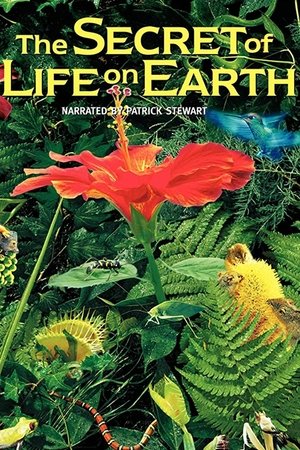
The Secret of Life on Earth
A breathtaking adventure across five continents and through time to reveal nature's most vital secret. Watch a flying fox gorge itself on a midnight snack of figs. Climb into the prickly jaws of insect-eating plants. Witness a mantis disguised as a flower petal lure its prey to doom.
1993
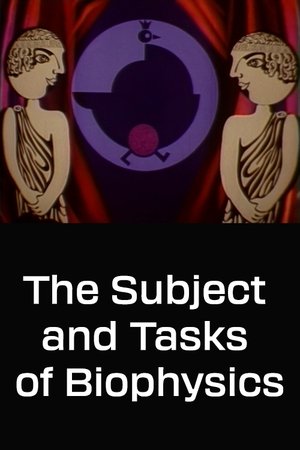
The Subject and Tasks of Biophysics
Experimental educational film reveals the emergence of some ideas of Biophysics in historical, philosophical and methodological aspects. The first film from the Biophysics Cycle (1982-1989).
1982

Take the World From Another Point of View
In 1973 Yorkshire public television made a short film of the Nobel laureate while he was there. The resulting film, Take the World from Another Point of View, was broadcast in America as part of the PBS Nova series. The documentary features a fascinating interview, but what sets it apart from other films on Feynman is the inclusion of a lively conversation he had with the eminent British astrophysicist Fred Hoyle.
1973