Watch Let It Be Law (2020) Online Free
In Argentina, a woman dies every week as the result of illegal abortions. In 2018, for the seventh time, a motion supporting legal, secure and free abortion was presented to the national congress of Argentina. The project provoked a fierce debate, revealing a society divided more than ever between the pro-life and freedom to choose positions. Through an assemblage of passionate testimonies, Let It Be Law documents the determination of women fighting bravely to secure the right to physical self-determination, and bears witness to their massive mobilization in the streets of Buenos Aires.
Cast
Marta Alanis
More Like This
Ecos del Fuego
2025

How Trump’s second term will be different
"What Donald Trump’s win means for abortion, immigration, foreign policy, and more. "Donald Trump, the 45th president of the United States, will also be its 47th president. After voting him out of office in 2020, American voters changed their minds, opting for a return to his policies and his politics. "But the second Trump presidency will look very little like the first. His policies have evolved, his circumstances have changed, and he will be returning to office with a much more focused plan than the one he entered with eight years ago. "In this video, we ask six Vox reporters what we should expect from Trump’s second term, on topics from foreign policy to abortion" (Vox).
2024
Mom's Letter
The mother and daughter face the question of whether to keep the pregnancy or terminate it. Both are under pressure from relatives, friends, and doctors. Both are going through a difficult decision-making process. Each episode of the artistic part shows the life circumstances and the path that a woman in a crisis situation goes through. In documentary inserts, representatives of various professions (psychologists, lawyers, gynecologists, clergymen) tell how they face the problem of abortion in their lives.
2024
Twenty
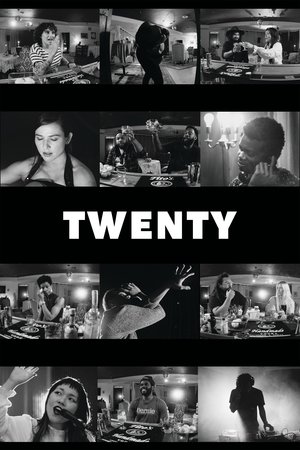
Set in a speakeasy in Atlanta, “Twenty” is a feature documentary about fifteen young people making it through 2020. The film is an observational time capsule that lays bare the raw reflections of a group of people surviving a year that will be seared into our generational memory.
2023
Lesser Choices
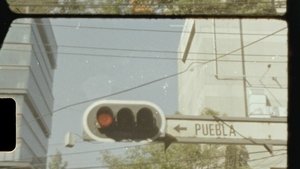
The bleached palette and home-movie aesthetics of Super 8 footage provide the image track for this testimonial about an illegal abortion in Mexico City in the 1960s, delivered in voiceover by the filmmaker’s mother. In its account of this intimate and disorienting memory, Lesser Choices summons a time of profound uncertainty—a moment from an era without rights—and offers a warning to the present.
2022

Transitory
Diego Tejerina, a prisoner with temporary releases, uses his knowledge of sociology to reflect on freedom and confinement.
2019

Caos de tránsito
Through testimonies and images, the crude reality of human rights in Argentina in democracy is portrayed and the role of the hegemonic means of communication to make causes and protests invisible ...
2018
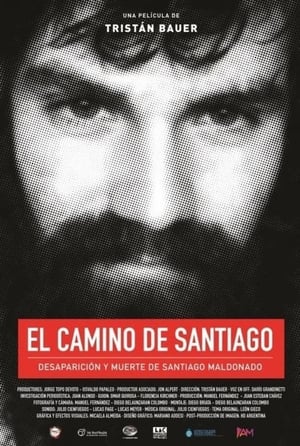
Santiago's Path: Disappearance and Death of Santiago Maldonado
Santiago Maldonado disappeared in the midst of repression against a Mapuche community that claimed to Luciano Benetton for his land. His body was found 78 days later. The need for truth and justice continues
2018
Soldier
A young man decides to join the army. He becomes the drummer in the military band, and his everyday life is now a combination of military training and music. What does the Argentine Army do these days, more than thirty years after the dictatorship? What does it mean to be a soldier in a country without wars?
2017
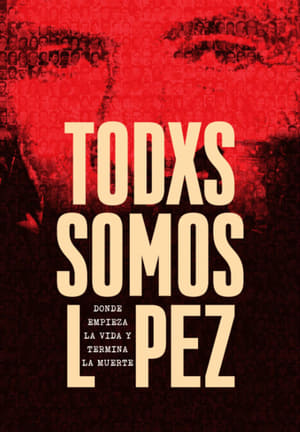
Todxs somos López. Donde empieza la vida y termina la muerte
A chronicle on the days without Jorge Julio López, key witness and complainant on the first trial on genocide in Argentina, dated in 2006. López, who had survived through concentration camps on the late seventies argentinian dictatorship, disappeared for the second time the day the court decision meant to condemn his kidnappers was about to be read.
2017

Match 64: The Maracanã
A documentary following the day life of fans in Brazil on July 13, 2014: the day when Germany and Argentina met up in the finals of FIFA World Cup.
2015
Messi
His teachers, coaches, childhood friends and Barça teammates, together with journalists, writers and prominent figures from the history of football, come together in a restaurant to analyze and pick apart Messi's personality both on and off the field, and to look back at some of the most significant moments in his life. Viewed from Álex de la Iglesia's unique perspective, Messi recreates the player's childhood and teenage years, from his very first steps, with a football always at his feet, through to the decision to leave Rosario for Barcelona, the separation from his family, and the role played in his career by individuals such as Ronaldinho, Rijkaard, Rexach and Guardiola.
2014
The Term. Beginning of a Big Story
The documentary project The Term was conceived in May 2012. When the directing trio commenced mapping the Russian sociopolitical landscape, Vladimir Putin had just settled into the Kremlin for his third term. The original experimental format of “documentary bulletins,” which were published daily online, allowed for wide-ranging content; in the feature film version, however, the filmmakers focused solely on the members of various opposition groups. Nevertheless, the work’s neutral position remains and viewers have to interpret the objectively presented situations for themselves. The main characteristics of this strongly authentic movie include close contact with the protagonists, precise editing, and an effectively controlled release of information.
2014
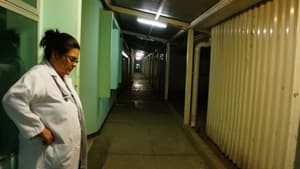
A Quiet Inquisition
At a public hospital in Nicaragua, Ob/Gyn Dr. Carla Cerrato must choose between following a law that bans all abortions and endangers her patients or taking a risk and providing the care that she knows can save a woman's life. In 2007, Dr. Cerrato’s daily routine took a detour. The newly elected government of Daniel Ortega, a former Marxist revolutionary who converted to Catholicism to win votes, overturned a 130-year-old law protecting therapeutic abortion. The new law entirely prohibits abortion, even in cases of rape, incest, or when a woman’s life is at stake. As Carla and her colleagues navigate this dangerous dilemma, the impact of this law emerges—illuminating the tangible reality of prohibition against the backdrop of a political, religious, and historically complex national identity. The emotional core of the story—the experiences and situations of the young women and girls who are seeking care—illustrate the ethical implications of one doctor's response.
2014
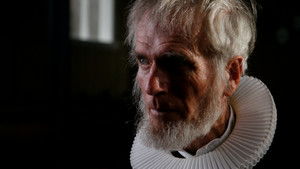
En prest og en plage
The priest Børre Knudsen is Norway's most infamous anti-abortionist, and much hated for this. He fought for his cause without thinking about the consequences for his family and his children even in the worlds most democratic country.
2014
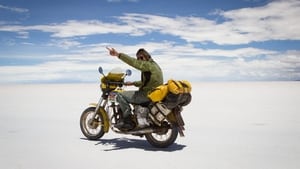
Trabantem až na konec světa
The third installment in Dan Přibáň's series of travel documentaries describes the author's journey with his friends across South America in vehicles that are often notorious but cult in their own way. The charming dynamics of the group on screen are further enhanced by the high-quality craftsmanship.
2014
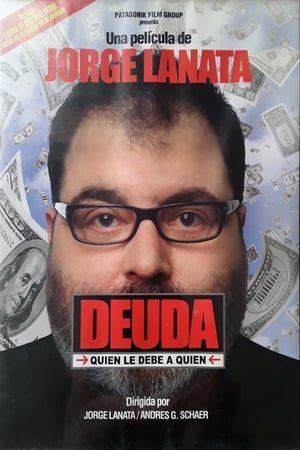
Debt
DEBT is the story of a frantic pursuit: the search for the responsible for the televised cry of hunger of Barbara Flores, an eight-year-old Argentinean girl. Buenos Aires, Washington, the IMF, the World Bank and Davos; corruption and the international bureaucratic lack of interest.
2004
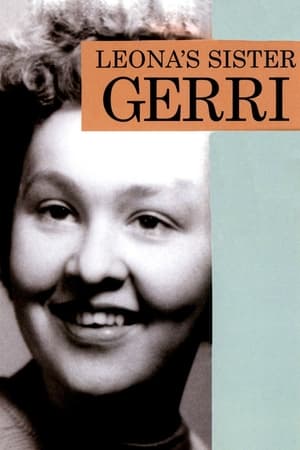
Leona's Sister Gerri
Millions have seen the photograph, and no one who has seen it will ever forget it. A naked woman, dead from a botched illegal abortion, lying on a motel room floor. The picture appeared in Ms. Magazine in April 1973, and quickly became a symbol for the abortion rights movement. LEONA'S SISTER GERRI tells the dramatic story of Gerri Santoro, a mother of two and the "real person" in the now famous photo. Should the media have used this image? What circumstances led to Gerri's tragic death? Powerfully addressing issues of reproductive rights and domestic violence, this video is a moving portrait of Gerri Santoro's life and society's response to her death.
1995
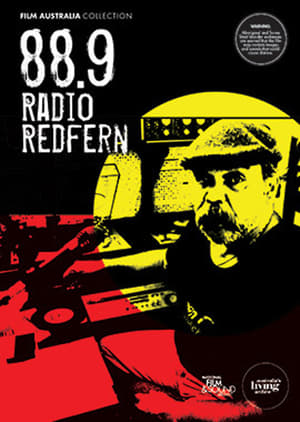
88.9 Radio Redfern
An observational documentary which looks at Sydney’s first community Aboriginal radio station, 88.9 Radio Redfern. Set against a backdrop of contemporary Aboriginal music, 88.9 Radio Redfern offers a special and rare exploration of the people, attitudes and philosophies behind the lead up to a different type of celebration of Australia’s Bicentennial Year. Throughout 1988, 88.9 Radio Redfern became an important focal point for communication and solidarity within the Aboriginal community. The film reveals how urban blacks are adapting social structures such as the mass media to serve their needs.
1989

Childhoods without Borders: Voices in Motion
"Childhoods without Borders: Voices in Motion" is a documentary in which migrant boys and girls narrate the experiences and challenges they have faced in search of a better life.