Watch Las mujeres deciden (2017) Online Free
Maria, a young Spanish doctor, works in a maternity hospital in the Ecuadorian rain forest. She is shocked about the premature pregnancies and the violence women in Ecuador have to face. She meets Mishell, an adolescent abused by her father, and Yanina, a woman who decides to perform a clandestine abortion. Maria discovers that behind unintended pregnancies often hides sexual violence.
More Like This

Writing Hawa
Afghan documentary maker Najiba Noori offers not only a loving and intimate portrait of her mother Hawa, but also shows in detail how the arduous improvement of the position of women is undone by geopolitical violence. The film follows the fortunes of Noori’s family, who belong to the Hazaras, an ethnic group that has suffered greatly from discrimination and persecution.
2025

Red Girl Rising
Joyce Jonathan Crone—Mohawk matriarch, retired teacher, activist, humanitarian—reaches forward into her community of Huntsville, Ontario, opening hearts and bridging gaps for Indigenous education.
2025
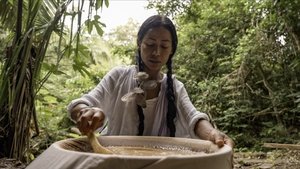
Curandera
A documentary film about one woman's incredible life journey to meet and build a relationship with Ayahuasca. Her name is Tatiana Aya Tupinambá and she chose the path of an Ayahuasca curandera. Travel into the jungle with us near Pucallpa, Peru to meet Tatiana's Ashaninka teacher, Juan Flores. Experience the magical location of Mayantuyacu, where Tatiana's journey of self-discovery and healing blossomed. Mayantuyacu is a world famous healing center and is known for it's incredible unique geothermal river which is the largest boiling river on the planet. Learn about plant 'dietas', see the process of making Ayahuasca, and witness the fascinating practice that is 'Curanderismo', the way of healing in the Amazon rainforest. Understand how the Ayahuasca songs, Icaros, are learned from the plants and connect to force that these vibrational medicines carry.
2025
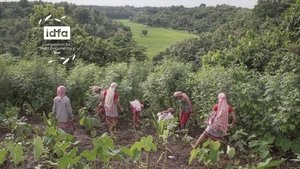
Echoes Within
“Can I be nostalgic about something I’ve never experienced?” asks debut filmmaker Pranami Koch. She has in mind her grandmother, a person she never knew who belonged to the Koches, a people in India with their own culture and traditions. In her search for connection and identity, Pranami travels to the countryside and immerses herself in the Koch community.
2024
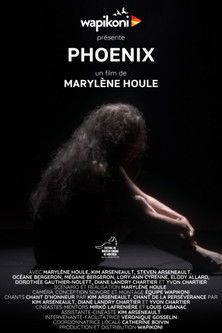
Phoenix
With its moving personal approach, careful artistic direction, and inspired sound design, this skillfully symbolic work embodies the importance of transmission.
2024

Meet Me at the Creek
Waters’ LIFT project, ᏗᏂᏠᎯ ᎤᏪᏯ (Meet Me at the Creek), is the fourth of a quartet of films, and focuses on interconnectedness and Cherokee values through the lifelong fight of Rebecca Jim, a Cherokee Nation citizen and waterkeeper warrior, as she leads the effort to restore Tar Creek in Miami, Oklahoma.
2024
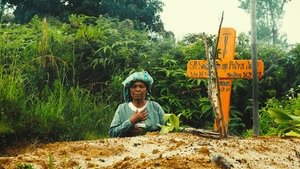
Motherland Memories
Ompung Putra Boru, a sixties indigenous Batak woman from Humbang Hasundutan, North Sumatra, retraces her life stories through photographs that interweave her past and present as a wife, mother, healer and indigenous land defender in two neighboring villages. Her multi-layered stories are juxtaposed with visual records of everyday life in the two villages, where people’s living space is still increasingly threatened by a giant pulp expansion.
2022
Cosmovisions
In Southern Bahia, seven indigenous women invite to reflection, sharing their mythology, ancestry and paths to living well.
2022
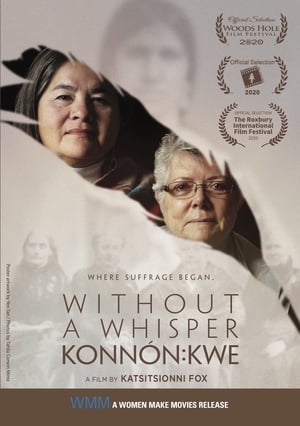
Without a Whisper - Konnón:kwe
"Without a Whisper" is the untold story of how Indigenous women influenced the early suffragists in their fight for freedom and equality. Mohawk Clan Mother Louise Herne and Professor Sally Roesch Wagner shake the foundation of the established history of the women’s rights movement in the United States. They join forces on a journey to shed light on the hidden history of the influence of Haudenosaunee Women on the women’s rights movement, possibly changing this historical narrative forever.
2020
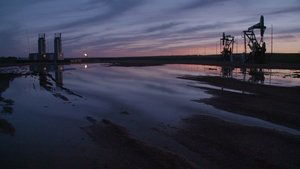
Nuuca
In this evocative meditation, a disturbing link is made between the resource extraction industries’ exploitation of the land and violence inflicted on Indigenous women and girls. Or, as one young woman testifies, “Just as the land is being used, these women are being used.”
2018
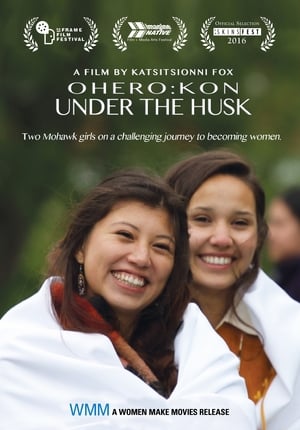
Ohero:kon - Under the Husk
This documentary follows two Mohawk girls on their journey to become Mohawk women. Friends since childhood, Kaienkwinehtha and Kasennakohe are members of the traditional community of Akwesasne on the U.S./Canada border. Together, they undertake a four-year rite of passage for adolescents, called Oheró:kon, or "under the husk." The ceremony had been nearly extinct, a casualty of colonialism and intergenerational trauma; revived in the past decade by two traditional leaders, it has since flourished. Filmmaker Katsitsionni Fox has served as a mentor, or "auntie," to many youth going through the passage rites.
2017
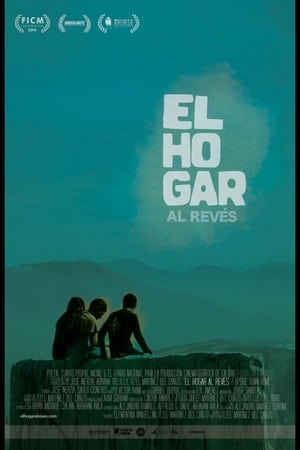
Upside Down Home
In an unfair country women work day and night far from home while their children learn to survive between loneliness and emptiness. They grow to become teenagers, locked down in one of many low income neighborhoods made up of identical small houses, outlined by overcrowding and scarcity. Their mothers, mostly workers in transnational factories, go in and out in buses that take them to a work place where they carry out twelve hour shifts two hours away from home, while their children muddle through their upbringing in tiny houses of 40 square meters. In spite of everything, they look for a way to move ahead and chase their illusions. This is a story full of youthful aspirations set in a context of difficulties and shortages.
2014

Vierzehn
Four girls—Laura, Fabienne, Lisa, and Steffi—are in love for the first time, have sex, and become pregnant. At 14 years old, they suddenly have to make life-or-death decisions. Abortion seems like the obvious solution, but the girls decide to live with their children. In the film, we experience firsthand the ups and downs the four girls go through and how they face extraordinary challenges day after day. The film ends in the first months after the babies are born.
2013
Femmes autochtones disparues et assassinées
The two-year National Inquiry into Missing and Murdered Indigenous Women and Girls, established by Ottawa, heard from 1,484 survivors of violence and their loved ones, as well as numerous experts. What will come next?
2012
Mom n' Me
The filmmaker traces the loss of her ancestral language over three generations of her family, and her own desire to recover it.
2010
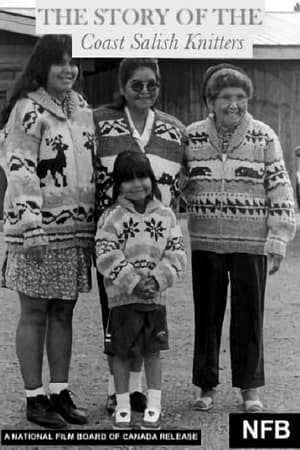
The Story of the Coast Salish Knitters
For almost a century, the Coast Salish knitters of southern Vancouver Island have produced Cowichan sweaters from handspun wool. These distinctive sweaters are known and loved around the world, but the Indigenous women who make them remain largely invisible.
2000
Women in the Shadows
Filmed on location in Saskatchewan from the Qu'Appelle Valley to Hudson Bay, the documentary traces the filmmaker's quest for her Native foremothers in spite of the reluctance to speak about Native roots on the part of her relatives. The film articulates Métis women's experience with racism in both current and historical context, and examines the forces that pushed them into the shadows.
1991

She Cried That Day
The story of a sister's love and the spirit, strength, and will of Indigenous Women refusing to let their loved ones remain invisible in the eyes of the justice system.

Don't Be Like Brenda
The brutally entitled Don't Be Like Brenda (1973) is an eight-minute lecture to young women, telling them not to be sexually promiscuous like the film's hapless heroine – although heaven knows, the promiscuity hinted at here is tragically modest. Poor Brenda goes all the way with a boy who does not marry her. The film is stunningly without any useful educational content on contraception and makes it entirely clear that the woman, not the man, is to blame. The film even makes her poor unwanted child suffer from a heart defect, so that no one wants to adopt the poor little thing – just to hammer the point home. (from: http://www.theguardian.com/film/filmblog/2009/feb/11/sex-education-films)
1973

Dragonfly
Nohemí and Mary are two women resisting structural violence in Ciudad Juárez. United by pain and hope, both mothers find inspiration to move their families forward. The dragonfly, a symbol they share, embodies their resilience and capacity for change.