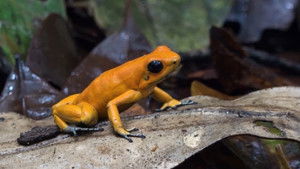
Watch Curandera (2025) Online Free
A documentary film about one woman's incredible life journey to meet and build a relationship with Ayahuasca. Her name is Tatiana Aya Tupinambá and she chose the path of an Ayahuasca curandera. Travel into the jungle with us near Pucallpa, Peru to meet Tatiana's Ashaninka teacher, Juan Flores. Experience the magical location of Mayantuyacu, where Tatiana's journey of self-discovery and healing blossomed. Mayantuyacu is a world famous healing center and is known for it's incredible unique geothermal river which is the largest boiling river on the planet. Learn about plant 'dietas', see the process of making Ayahuasca, and witness the fascinating practice that is 'Curanderismo', the way of healing in the Amazon rainforest. Understand how the Ayahuasca songs, Icaros, are learned from the plants and connect to force that these vibrational medicines carry.
Cast
Tatiana Aya Tupinambá, Juan Flores Salazar
More Like This
Willow World
A filmmaker revisits her childhood, interweaving 16mm vignettes and her old child services documents, uncovering the truth she couldn't voice as a child.
2026
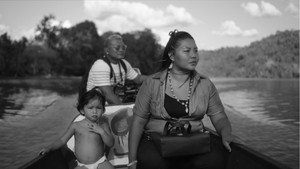
Parasisi
On the border of Surinam and French Guyana, indigenous Wayana territory is overrun by intruders. Illegal gold miners poison the river, missionaries repress indigenous identity, and even doctors with the best intentions leave marks that are often silently violent. The Wayana call these intruders Parasisi.
2026
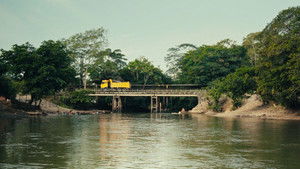
buen vivir – ñutse canseye
Oil extraction in the Amazon region is contaminating the land and water of a natural paradise. A slow process that threatens the health and traditional culture of local communities. Thirteen women raise their voices against the destruction of their land. Through protests and silent resistance, they confront an opaque global power structure.
2025
Preschool to Prison
Preschool to Prison is a compelling examination of how the United States public school system is built and operated like prisons. Zero-tolerance policies are used to justify suspension and arrests that set up a pathway to send children of color and children with special needs from school to prison. Children are being suspended, restrained, dragged, physically manhandled, and subsequently arrested for minor offenses such as throwing candy on a school bus. These personal accounts from people affected by the school-to-prison pipeline give riveting tales about the generational impact on society.
2023
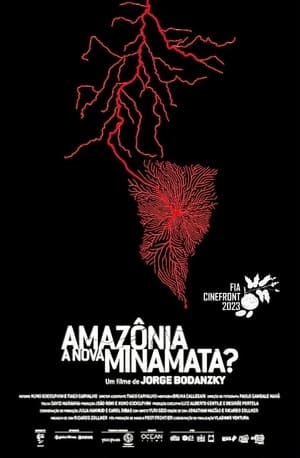
Amazônia, a Nova Minamata?
2022
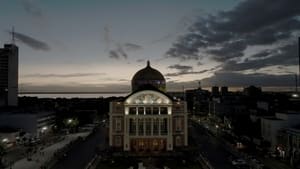
Teatro Amazonas: The Art of Sound and Nature
The history of the Teatro Amazonas in Manaus, an opera house located in the middle of the Amazon rainforest, whose construction, between 1884 and 1896, depended on the labor exploitation of the local indigenous populations, provides an insight into the cultural, social and political situation in Brazil.
2022
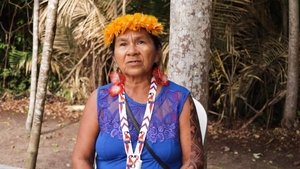
Tapajós Ãgawaraitá
2022
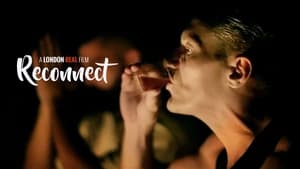
Reconnect: The Movie
Back in 2012 I had my very first Ayahuasca ceremony and, needless to say, I was terrified. But it ended up entirely changing my life and that of my future family. Which is why I decided to revisit the medicine in 2018, participating in three Ayahuasca ceremonies over the course of one week in Costa Rica, and document the process. In the film, we tackle my personal story of trying to build London Real into a global media and transformation company while also struggling with my own disconnection from friends, family and my own species. We also dive deep into the division and tribalism currently facing all of us around the world.
2019

Obaida
OBAIDA, a short film by Matthew Cassel, explores a Palestinian child’s experience of Israeli military arrest. Each year, some 700 Palestinian children undergo military detention in a system where ill-treatment is widespread and institutionalized. For these young detainees, few rights are guaranteed, even on paper. After release, the experience of detention continues to shape and mark former child prisoners’ path forward.
2019
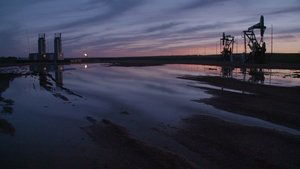
Nuuca
In this evocative meditation, a disturbing link is made between the resource extraction industries’ exploitation of the land and violence inflicted on Indigenous women and girls. Or, as one young woman testifies, “Just as the land is being used, these women are being used.”
2018
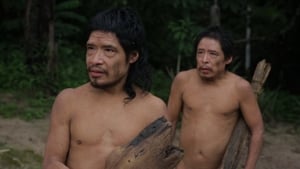
Piripkura
The last two surviving members of the Piripkura people, a nomadic tribe in the Mato Grosso region of Brazil, struggle to maintain their indigenous way of life amidst the region's massive deforestation. Living deep in the rainforest, Pakyî and Tamandua live off the land relying on a machete, an ax, and a torch lit in 1998.
2018

I Was Only 14
Filmmaker Froukje van Wengerden’s 86-year-old grandmother shares a powerful memory from 1944, when she was just 14. As her story unfolds, we see a group of contemporary 14-year-old girls. Their procession of portraits permits the spectator to see simultaneously forward and back, into the future and towards the past. A miraculous testimonial that uses eye contact to focus the viewer inward and evoke unexpected emotions.
2016
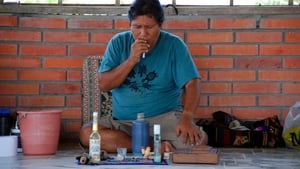
The Shaman & Ayahuasca: Journeys to Sacred Realms
Filmed in the jungles of Peru, shaman Don Jose Campos introduces the practices and benefits of Ayahuasca, the psychoactive plant brew that has been used for healing and visionary journeys by Amazonian shamans for at least a thousand years.
2010
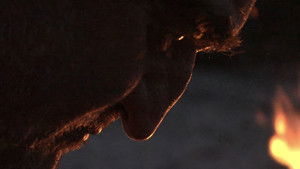
Big River Man
Follows Martin Strel as he attempts to cover 3,375 miles of the Amazon River in what is being billed as the world's longest swim.
2009
Woven Songs of the Amazon
The Shipibo-Konibo people of Peruvian Amazon decorate their pottery, jewelry, textiles, and body art with complex geometric patterns called kené. These patterns also have corresponding songs, called icaros, which are integral to the Shipibo way of life. This documentary explores these unique art forms, and one Shipibo family's efforts to safeguard the tradition.
2007
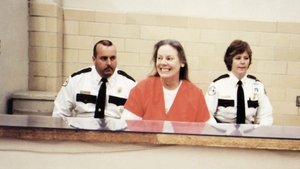
Aileen: Life and Death of a Serial Killer
British documentarian Nick Broomfield creates a follow-up piece to his 1992 documentary of the serial killer Aileen Wuornos, a highway prostitute who was convicted of killing six men in Florida between 1989 and 1990. Interviewing an increasingly mentally unstable Wuornos, Broomfield captures the distorted mind of a murderer whom the state of Florida deems of sound mind -- and therefore fit to execute. Throughout the film, Broomfield includes footage of his testimony at Wuornos' trial.
2003

Amazon: Land of the Flooded Forest
Explore an extraordinary region where water and land life intermingle six months out of the year.
1990
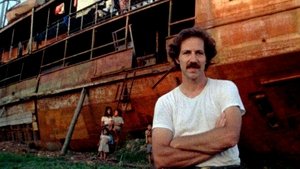
Burden of Dreams
The Amazon rain forest, 1979. The crew of Fitzcarraldo (1982), a film directed by German director Werner Herzog, soon finds itself with problems related to casting, tribal struggles and accidents, among many other setbacks; but nothing compared to dragging a huge steamboat up a mountain, while Herzog embraces the path of a certain madness to make his vision come true.
1982
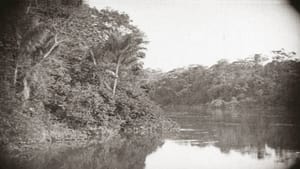
Amazon: Longest River in the World
Documentary by Portuguese Silvino Santos, about the Amazon, its flora, fauna, its inhabitants and among other wonderful images from the beginning of the 20th century with alternating close-up shots of caimans, jaguars and tropical flora with footage of Indigenous rituals--including some of the earliest known moving images of the Indigenous Witoto people--and longer sequences showcasing the region’s extractive industries: rubber, the Brazil nut, timber, fishing, even the egret feathers that were a staple of women’s fashion at the time.
1918