Watch L'Arc-en-ciel éclaté (1998) Online Free
More Like This
L’Irak sous emprise
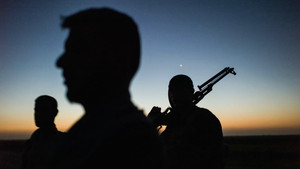
In 2014, when Mosul, Iraq's second largest city, fell to the Islamic State, the creation of dozens of factions was seen as the solution to organize the Shiite youth who had risen up en masse to fight Daesh and protect Baghdad, which was under threat. These factions were supposed to be a temporary force. In reality, they have never been demobilized, leading the Iraqi state into ever greater instability. How did they become so strategically important in post-Daesh Iraq?
2025

Au coeur des services secrets de l'Etat islamique
2024

Face to Face with ETA: Conversations with a Terrorist
An in-depth interview with José Antonio Urrutikoetxea, known as Josu Ternera, one of the most relevant leaders of the terrorist gang ETA.
2023
The Matchmaker
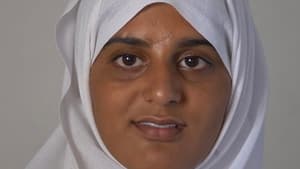
A unique interview with Tooba Gondal, the woman who groomed and lured scores of Western women to join ISIS. Using social media, she became a deadly matchmaker, recruiting a number of high-profile “jihadi brides” for ISIS militants in Syria: she allegedly helped organise the transporting of three British schoolgirls, including Shamima Begum, to Syria.
2022
Aleph
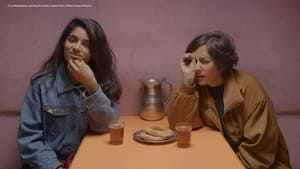
Structured as a labyrinth-like game and inspired by Jorge Luis Borges, Aleph is a travelogue of experience, a dreamer's journey through the lives, experiences, stories and musings of protagonists spanning ten countries and five continents.
2021
Nothing is Forgiven
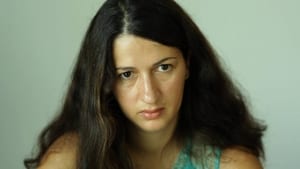
The story of Zineb El Rhazoui, a young Moroccan woman who, in the wake of the Charlie Hebdo attack, finds her life radically transformed : from a censored journalist in Morocco she becomes the most protected woman of France.
2019
Fånge hos al-Qaida
2019
Undercovered
Following the 2001 terrorist attacks on New York City, one item of clothing has gained a scandalous global reputation: the headscarf. All over the world, a major debate is going on about whether Muslim women should be allowed to wear the headscarf in public.
2017

The Newburgh Sting
Just 60 miles north of New York City sits the poverty-stricken town of Newburgh, where, in 2009, four men were arrested for a plan to bomb two Jewish centers in the Bronx. But their leader, a suspicious Pakistani businessman planted by the government as an informant, led these men straight into the hands of the authorities. With endless footage gathered from hidden cameras, directors David Heilbroner and Kate Davis investigate just what homegrown terrorism truly means in this shocking and galvanizing exposé.
2014
It's Hard Being Loved by Jerks
The murder of Dutch filmmaker Theo van Gogh by an Islamic extremist in 2004, followed by the publishing of twelve satirical cartoons depicting the prophet Mohammed that was commissioned for the Danish newspaper Jyllands-Posten, provides the incendiary framework for Daniel Leconte's provocative documentary, It's Hard Being Loved by Jerks.
2008
Loose Change
2nd Edition of Loose Change documentary. What if...September 11th was not a surprise attack on America, but rather, a cold and calculated genocide by our own government?We were told that the twin towers were hit by commercial jetliners and subsequently brought down by jet fuel. We were told that the Pentagon was hit by a Boeing 757. We were told that flight 93 crashed in Shanksville, Pennsylvania. We were told that nineteen Arabs from halfway across the globe, acting under orders from Osama Bin Laden, were responsible. What you will see here will prove without a shadow of a doubt that everything you know about 9/11 is a complete fabrication. Conspiracy theory? It's not a theory if you can prove it.Written and narrated by Dylan Avery, this film presents a rebuttal to the official version of the September 11, 2001 terrorist attacks and the 9/11 Commission Report.
2005
Visit Palestine
What drives a young, well-educated Westerner to volunteer as a “peace activist” in the Middle East? Caiomhe Butterly is one of a growing number of volunteers who risk their own safety to intervene in the long-running and bloody conflict between Israel and Palestine. Several internationals, including her, have now been injured. Some have died. In this film, she describes witnessing the aftermath of the attack on Jenin in April 2002. The film follows her work, the main emphasis being “the accompaniment of communities at risk”. Despite being threatened, shot in the leg and deported later that year, she is determined to go back.
2005
The Basque Ball: Skin Against Stone
An attempt to create a bridge between the different political positions that coexist, sometimes violently, in the Basque Country, in northern Spain.
2003
No Safe Place: Six Lives Forever Changed
This gripping documentary tells the powerful story of men, women and children who happened to be in the wrong place at the wrong time. In Israel it's not a matter of if, but when another terror strike will happen. This is the reality that Israelis face every day as they go to work, send their children to school on buses, or sit in a cafe and wonder if they are safe, if their lives are in danger.
2003
Oversand
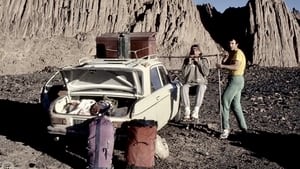
Oversand is one of the first films about free climbing, the third film in a series of three with "Overdon" and "Over-Ice". Directed by Jean-Paul Janssen, the film was shot in 35mm in Algeria, in the Sahara Desert, in the Tamanrasset region, on the walls of the majestic peaks of the Atakor massif, central sub-region of Hoggar, mountainous heart of Hoggar, a volcanic plateau of almost circular shape, whose average altitude is 2000 meters, and which culminates at Mount Tahat (2918m), the highest point in Algeria. The Atakor is distinguished by its spectacular volcanic peaks, its needles, and its rugged landscapes, resulting from the erosion of ancient volcanic chimneys, which make it the most emblematic summits of the Hoggar, such as the Assekrem, the Ilamane, or the Tizouyag, where climbers Patrick Edlinger, Patrick Bérhault, Bernard Gorgeon, Hugues Jaillet, Jacques Perrier, Stéphane Troussier and Odette Schoënleb evolve under the watchful eye of the Tuareg caravans.
1981

Freedom of Inês Etienne Romeu
August 29, 1979, Talavera Bruce Penal Institute, Bangu, Rio de Janeiro. After serving eight years in prison, Inês Etienne Romeu, the only survivor of the "House of Death" in Petrópolis and the first political prisoner sentenced to life in prison in Brazil, left prison benefiting from Amnesty. Norma Bengell filmed this moment: from the prison door to her home with her family, Inês was welcomed by family, friends and members of the Brazilian Amnesty Committee, in what marked the first act of the historic denunciation that Inês would carry out against her tormentors and the Military Regime.
1979
The Pan-african Festival in Algiers
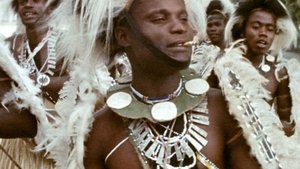
Festival panafricain d'Alger is a documentary by William Klein of the music and dance festival held 40 years ago in the streets and in venues all across Algiers. Klein follows the preparations, the rehearsals, the concerts… He blends images of interviews made to writers and advocates of the freedom movements with stock images, thus allowing him to touch on such matters as colonialism, neocolonialism, colonial exploitation, the struggles and battles of the revolutionary movements for Independence.
1969

Algeria, Year Zero
Documentary on the beginnings of Algerian independence filmed during the summer of 1962 in Algiers. The film was banned in France and Algeria but won the Grand Prize at the Leipzig International Film Festival in 1965. Out of friendship, the production company Images de France sent an operator, Bruno Muel, who later declared: "For those who were called to Algeria (for me, 1956-58), participating in a film on independence was a victory over horror, lies and absurdity. It was also the beginning of my commitment to the cinema."
1965
Algeria in Flames
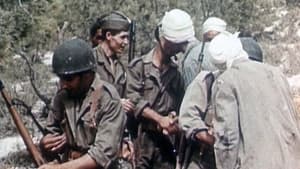
These are the first images shot in the ALN maquis, camera in hand, at the end of 1956 and in 1957. These war images taken in the Aurès-Nementchas are intended to be the basis of a dialogue between French and Algerians for peace in Algeria, by demonstrating the existence of an armed organization close to the people. Three versions of Algeria in Flames are produced: French, German and Arabic. From the end of the editing, the film circulates without any cuts throughout the world, except in France where the first screening takes place in the occupied Sorbonne in 1968. Certain images of the film have circulated and are found in films, in particular Algerian films. Because of the excitement caused by this film, he was forced to go into hiding for 25 months. After the declaration of independence, he founded the first Algerian Audiovisual Center.
1958
Alger Et Ses Environs
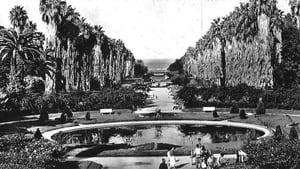
The film, shot in 1938, is part of a series entitled “The true face of Algeria”. The film highlights the proximity of Algiers to Paris and promotes air travel. The commentary supporting the images highlights the urban dynamism (“Every day, a new skyscraper replaces a wasteland”) and the comparison with Paris (“Algiers is often nicknamed the Paris of North Africa because of its elegance become proverbial). Contemporary architectural achievements are described as the sign of “grandiose modernism”: “we love the new, the bold”. But the point does not forget the buildings illustrating “the Moorish, classic and attractive style”. The description of the Casbah also attempts to understand the architectural organization but also the diversity and even the atmosphere.
1945