Watch Language Does Not Lie (2004) Online Free
Victor Klemperer (1881-1960), a professor of literature in Dresden, was Jewish; through the efforts of his wife, he survived the war. From 1933 when Hitler came to power to the war's end, he kept a journal paying attention to the Nazis' use of words. This film takes the end of 1945 as its vantage point, with a narrator looking back as if Klemperer reads from his journal. He examines the use of simple words like "folk," "eternal," and "to live." Interspersed are personal photographs, newsreel footage of Reich leaders and of life in Germany then, and a few other narrative devices. Although he's dispassionate, Klemperer's fear and dread resonate
Cast
Denis Lavant
More Like This
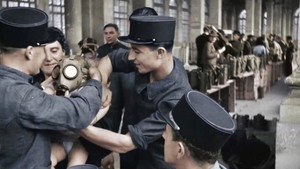
1939-1940: A Strange Defeat
In late summer 1939, the French learned that Adolf Hitler had attacked Poland. On September 3, France entered the war, twenty years after the carnage of World War I. Although France was considered the world’s leading military power, with a vast empire and a powerful ally in the United Kingdom, everyone was overcome with a sense of dread. Yet the fighting would not begin until May 1940 and would end with France’s defeat in June. How did the French people experience those few months—among the most decisive and darkest in the country’s history?
2026
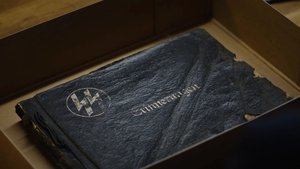
The Lost Album of the SS
In 2016, an album containing 250 previously unseen photos of Nazi officials was discovered in the USA by Stephan Hördler, a prominent Holocaust historian, who immediately understood the album's inestimable value. The album brings together photographs of a "group of friends," all from the same region of Germany, all of whom became SS men. From 1928 to 1943, the photo album allows us to follow their journey. Hördler conducted the investigation, comparing the photos in the album with other, better-known ones, the faces of these men with those of concentration camp officials, and ultimately revealed that it was at Lichtencburg that these young men were trained, a "school" for future camp executioners, and the bonds of camaraderie and informal network that would allow them to help each other, even after the war.
2025

Tuorås Dalska
In the small community of Älvdalen in northern Dalarna, Sweden, the unique language Elfdalian (Älvdalska) is spoken. This documentary follows Ing-Marie's personal story about how it is and has been to live with the Elfdalian language.
2024

The Case of Bruno Lüdke
The incredible story of Bruno Lüdke (1908-44), the alleged worst mass murderer in German criminal history; or actually, a story of forged files and fake news that takes place during the darkest years of the Third Reich, when the principles of criminal justice, subjected to the yoke of a totalitarian system that is beginning to collapse, mean absolutely nothing.
2021
KinderblocK - L’ultimo inganno
2020
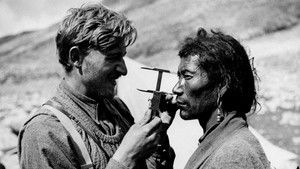
Hitler's Evil Science
In 1935, German scientists dug for bones; in 1943, they murdered to get them. How the German scientific community supported Nazism, distorted history to legitimize a hideous system and was an accomplice to its unspeakable crimes. The story of the Ahnenerbe, a sinister organization created to rewrite the obscure origins of a nation.
2019

The Girl with the Instagram
Nagyvárad, Hungary, 1944. From February to June, Eva Heyman, a 13-year-old Jewish girl, wrote a diary describing the harsh conditions of her life under Nazi occupation. How would she have told her story if she had used Instagram?
2019
Trillium
There are about 250 people with a unique ancestry. Livonians – one of the smallest and most endangered nations. Each of Livonians has a duty to preserve their identity and the great history of their ancestors. Trillium follows the footsteps of a poet and researcher Valts Ernštreits, who is one of 20 people able to speak fluent Livonian – an indigenous language related to Estonian and Finnish – in his efforts to look after the language and culture of these ancient settlers of the Baltic Sea coast.
2018
21 rue la Boétie
2017
Hitler's Hollywood
Film journalist and critic Rüdiger Suchsland examines German cinema from 1933, when the Nazis came into power, until 1945, when the Third Reich collapsed. (A sequel to From Caligari to Hitler, 2015.)
2017
School of Babel
They just arrived in France. They are Irish, Serbs, Brazilians Tunisians, Chinese and Senegalese ... For a year, Julie Bertuccelli filmed talks, conflicts and joys of this group of students aged 11 to 15 years, together in the same class to learn French.
2014

Du cristal à la fumée
A staging of Jacques Attali's play "From Crystal to Smoke" by Daniel Mesguich.
2010
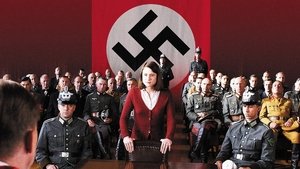
Sophie Scholl: The Final Days
In 1943, as Hitler continues to wage war across Europe, a group of college students mount an underground resistance movement in Munich. Dedicated expressly to the downfall of the monolithic Third Reich war machine, they call themselves the White Rose. One of its few female members, Sophie Scholl is captured during a dangerous mission to distribute pamphlets on campus with her brother Hans. Unwavering in her convictions and loyalty to the White Rose, her cross-examination by the Gestapo quickly escalates into a searing test of wills as Scholl delivers a passionate call to freedom and personal responsibility.
2005

El Caudillo Pardo
A portrait of Peruvian Jorge Poholyrec, a 71-year-old pariah who is a defender of National Socialism and such extremist postures as misogyny, eugenetics, the importation of females, and the suppression of minority populations.
2005
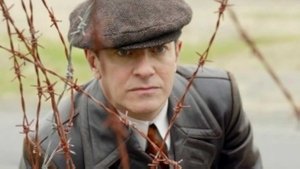
Jean Moulin, une affaire française
Drama set in the Second World War, focused on Jean Moulin, hero, martyr and symbol of the French resistance and the patriotism during the dark years of Nazi occupation.
2003
Roparz Hemon
The bombings recently carried out by the Revolutionary Breton Army (ARB) have drawn attention to the political and cultural history of the Breton movement. The writer Roparz Hemon is one of its emblematic figures. He was born in Brest in 1900, and died in Dublin in 1978 after thirty years of voluntary exile in Ireland following his trial for collaboration at the end of the war. He had indeed organised the first Breton-language radio programmes under German control. The work of this poet, novelist, and translator of Shakespeare and Cervantes is dominated by the theme of the dream.
2000
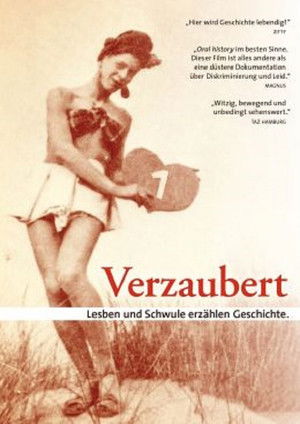
Enchanted
Stories of 12 gay and lesbian survivors of Nazism and the Holocaust.
1993
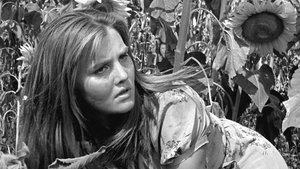
Attack and Retreat
Chronicle of the unheralded and unsuccessful invasion of the Soviet Union by the Italian army during World War II.
1964
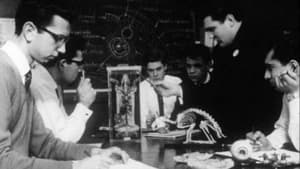
Comprehensive School
The joys of 1960s modern education - as seen at a not-exactly-typical local comp.
1962
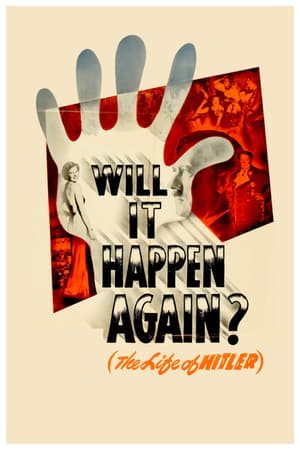
Will It Happen Again?
An account of Adolf Hitler's rise and fall, his relationship with Eva Braun and their days of leisure at the Berghof, their Bavarian residence.
1948