Watch Du cristal à la fumée (2010) Online Free
A staging of Jacques Attali's play "From Crystal to Smoke" by Daniel Mesguich.
Cast
Bernard-Pierre Donnadieu, Féodor Atkine, Xavier Gallais, Jean-Damien Barbin, Matthieu Cruciani, Frédéric Cuif, Sébastien Desjours, Florent Ferrier, Zbigniew Horoks, Arnaud Maillard, Philippe Maymat, William Mesguich
More Like This
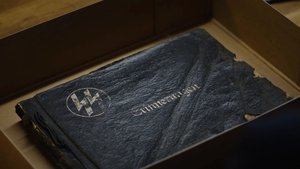
The Lost Album of the SS
In 2016, an album containing 250 previously unseen photos of Nazi officials was discovered in the USA by Stephan Hördler, a prominent Holocaust historian, who immediately understood the album's inestimable value. The album brings together photographs of a "group of friends," all from the same region of Germany, all of whom became SS men. From 1928 to 1943, the photo album allows us to follow their journey. Hördler conducted the investigation, comparing the photos in the album with other, better-known ones, the faces of these men with those of concentration camp officials, and ultimately revealed that it was at Lichtencburg that these young men were trained, a "school" for future camp executioners, and the bonds of camaraderie and informal network that would allow them to help each other, even after the war.
2025
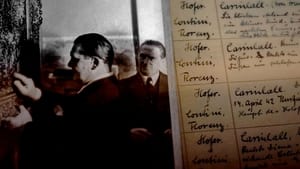
Goering's Catalogue: A Collection of Art and Blood
For more than a decade, Reichsmarschall Hermann Goering, Adolf Hitler's right-hand man during the infamous Third Reich, assembled a collection of thousands of works of art that were meticulously catalogued.
2021
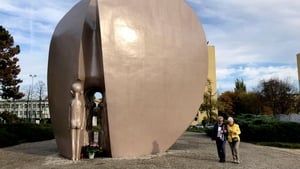
Stolen Children
June 1941, during World War II. Reichsführer-SS Heinrich Himmler orders the mass abduction of particularly well-bred young children from Poland and the occupied territories of the Soviet Union in order to be educated in German culture, by both state schools and German families…
2020

Poland 1939: When German Soldiers Became War Criminals
September 1st, 1939. Nazi Germany invades Poland. The campaign is fast, cruel and ruthless. In these circumstances, how is it that ordinary German soldiers suddenly became vicious killers, terrorizing the local population? Did everyone turn into something worse than wild animals? The true story of the first World War II offensive that marks in the history of infamy the beginning of a carnage and a historical tragedy.
2019
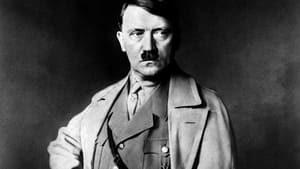
Who was Hitler
Hitler's biography told like never before. Besides brief historical localizations by a narrator, only contemporaries and Hitler himself speak: no interviews, no reenactment, no illustrative graphics and no technical gadgets. The testimonies from diaries, letters, speeches and autobiographies are assembled with new, often unpublished archive material. Hitler's life and work are thus reflected in a unique way in interaction with the image of the society in the years 1889 to 1945.
2017
100 Years of the UFA
The intricate history of UFA, a film production company founded in 1917 that has survived the Weimar Republic, the Nazi regime, the Adenauer era and the many and tumultuous events of contemporary Germany, and has always been the epicenter of the German film industry.
2017
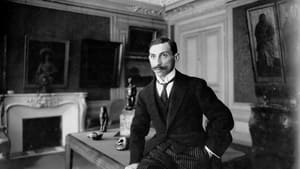
21 rue la Boétie
2017
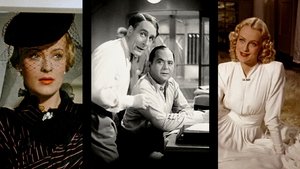
Hitler's Hollywood
Film journalist and critic Rüdiger Suchsland examines German cinema from 1933, when the Nazis came into power, until 1945, when the Third Reich collapsed. (A sequel to From Caligari to Hitler, 2015.)
2017
Hitler's Junkies
In Third Reich, the abuse of drugs made commanders and soldiers feel invincible. The Führer himself took them on daily basis. This is the unbelievable story of the D-IX project and of methamphetamines, which, abundantly furnished to soldiers, changed the course of history.
2015
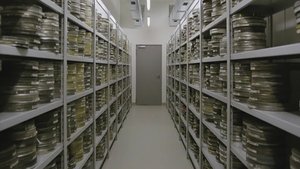
Forbidden Films
Between 1933 and 1945 roughly 1200 films were made in Germany, of which 300 were banned by the Allied forces. Today, around 40 films, called "Vorbehaltsfilme", are locked away from the public with an uncertain future. Should they be re-released, destroyed, or continue to be neglected? Verbotene Filme takes a closer look at some of these forbidden films.
2014
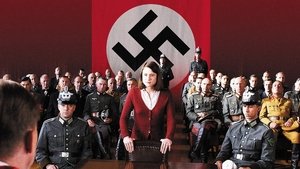
Sophie Scholl: The Final Days
In 1943, as Hitler continues to wage war across Europe, a group of college students mount an underground resistance movement in Munich. Dedicated expressly to the downfall of the monolithic Third Reich war machine, they call themselves the White Rose. One of its few female members, Sophie Scholl is captured during a dangerous mission to distribute pamphlets on campus with her brother Hans. Unwavering in her convictions and loyalty to the White Rose, her cross-examination by the Gestapo quickly escalates into a searing test of wills as Scholl delivers a passionate call to freedom and personal responsibility.
2005
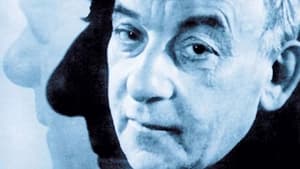
Language Does Not Lie
Victor Klemperer (1881-1960), a professor of literature in Dresden, was Jewish; through the efforts of his wife, he survived the war. From 1933 when Hitler came to power to the war's end, he kept a journal paying attention to the Nazis' use of words. This film takes the end of 1945 as its vantage point, with a narrator looking back as if Klemperer reads from his journal. He examines the use of simple words like "folk," "eternal," and "to live." Interspersed are personal photographs, newsreel footage of Reich leaders and of life in Germany then, and a few other narrative devices. Although he's dispassionate, Klemperer's fear and dread resonate
2004

Jean Moulin, une affaire française
Drama set in the Second World War, focused on Jean Moulin, hero, martyr and symbol of the French resistance and the patriotism during the dark years of Nazi occupation.
2003
Der Judenhetzer – Julius Streicher und "Der Stürmer"
Even high Nazi leaders like Joseph Goebbels and Hermann Göring were almost contemptuous of this party comrad, and yet he was one of the most influential figures in the Third Reich: Julius Streicher, publisher of the anti-Semitic weekly "Der Stürmer", responsible for the worst propaganda and infamous for his corrupt and violent regime as Gauleiter of Franconia. By the Allies he was considered a symbol of Nazi hatred of the Jews. In 1946 he was sentenced to death in Nuremberg and executed.
2001
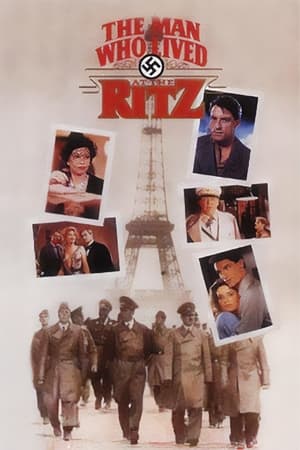
The Man Who Lived at the Ritz
In this drama, an American art student is trapped amidst the political turmoil of war-torn Europe while visiting Paris and staying at the fabulous Ritz hotel. Rather than cope constructively with it all, the fellow opts to ignore it and continue living the high-life for as long as possible.
1988
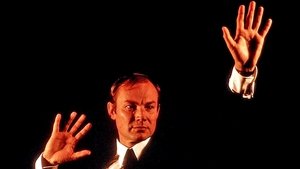
Hanussen
A man's story parallels Hitler's rise. Austrian Klaus Schneider, wounded in World War I, recovers in the care of Dr. Emil Bettleheim. Bettleheim discovers that Schneider possesses powers of empathy and of clairvoyance, such that could aid suicidal patients. After the war, with one friend as his manager and another as his lover, Schneider changes his name to Eric Jan Hanussen and goes to Berlin, as a hypnotist and clairvoyant performing in halls and theaters. He always speaks the truth, which brings him to the attention of powerful Nazis. He predicts their rise (good propaganda for them) and their violence (not so good). He's in pain and at risk. What is Hanussen's future?
1988
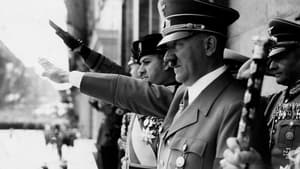
Hitler: A Career
A keen chronicle of the unlikely rise to power of Adolf Hitler (1889-1945) and a dissection of the Third Reich (1933-1945), but also an analysis of mass psychology and how the desperate crowd can be deceived and shepherded to the slaughterhouse.
1977
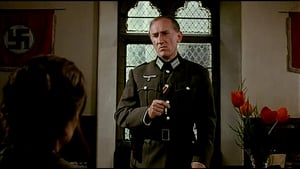
The Hiding Place
Corrie and Betsie ten Boom are middle-aged sisters working in their father's watchmaker shop in pre-World War II Holland. Their uneventful lives are disrupted with the coming of the Nazis. Suspected of hiding Jews and caught breaking rationing rules, they are sent to a concentration camp, where their Christian faith keeps them from despair and bitterness.
1975

Benito Mussolini: Anatomy of a Dictator
1962
Le Temps des assassins
1962