Watch La Tragédie du Roi Christophe (1965) Online Free
No overview available.
Cast
Douta Seck, Boudjema Bouhada, Bachir Touré, Yvan Labejoff, Med Hondo, Bitty Moro, Georges Hilarion, Akonio Dolo, Ahmed Benaissa, Jean-Marie Serreau, Armand Abplanalp, Hervé Denis
More Like This
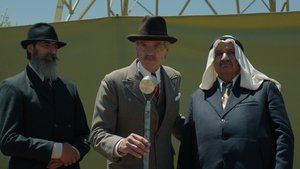
Palestine 36
Year 1936. As villages across Palestine rise against British colonial rule, Yusuf drifts between his rural home and the restless energy of Jerusalem, longing for a future beyond the growing unrest. But history is relentless. With rising numbers of Jewish immigrants escaping antisemitism in Europe and some arriving with nefarious Zionist-colonial ambitions, and the Palestinian population uniting in the largest and longest uprising against Britain’s 30-year dominion, all sides spiral towards inevitable collision in a decisive moment for the British Empire and the future of the entire region.
2025

Sahel: Pátria ou Morte
For decades, the countries of the African Sahel region have been targets of colonialism and exploitation by France and other Western powers. This documentary addresses the popular resistance and new paths of development forged by Burkina Faso, Niger, and Mali after experiencing civil and military uprisings in recent years. The film explores the popular resistance that sustains the revolution in the three Sahel countries and was made after extensive coverage of the ongoing social dynamics and geopolitical disputes.
2025

Fanon
Frantz Fanon, a French psychiatrist from Martinique, has just been appointed head of department at the psychiatric hospital in Blida, Algeria. His methods contrast with those of the other doctors in a context of colonization. A biopic in the heart of the Algerian war where a fight is waged in the name of Humanity.
2025
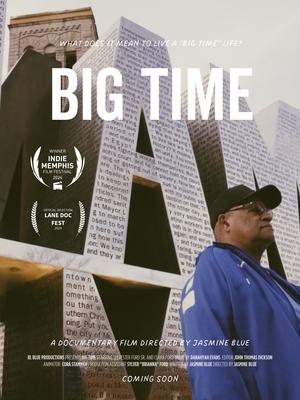
Big Time
Civil Rights Movement activist, TSSAA Hall of Fame Basketball Coach, swim coach, teacher, musical director, father, grandfather, and friend to many, Coach Sylvester Ford Sr. was known by many as “Big Time.” The nickname was given to him as a kid for his height, but “Big Time” showed time and time again why his nickname was about way more than his looks– it’s also because of how he showed up big for his community. Hometown Feature Audience Award winner at Indie Memphis 2024, Big Time chronicles the life of legendary Memphis basketball coach, Sylvester Ford Sr., while inspiring us all to live “big time” lives along the way.
2024
Congo-Océan, un chemin de fer et de sang
2024
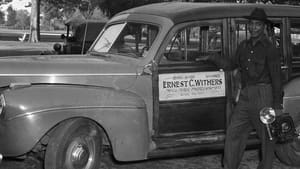
The Picture Taker
From his Memphis studio, Ernest Withers’ nearly 2 million images were a treasured record of Black history but his legacy was complicated by decades of secret FBI service revealed only after his death. Was he a friend of the civil rights community, or enemy—or both?
2022
The 24th
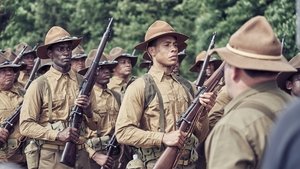
The incredibly powerful and timely true story of the all-black Twenty-Fourth United States Infantry Regiment, and the Houston Riot of 1917. The Houston Riot was a mutiny by 156 African American soldiers in response to the brutal violence and abuse at the hands of Houston police officers.
2020

Hebrews to Negroes 2: Revelation - The Age of The Awakening
Hebrews to Negroes 2 : Revelation is a documentary that uncovers the 'True Biblical Identity" and Ancestral Homeland of the people living in North Africa, the Middle East and the Levant (Palestine, Lebanon, Jordan, Syria, Israel). Find out what "secrets" have been hidden for centuries in regards to the "Identity" Theft of the True Descendants of Abraham and Jacob with the Children of Japheth.
2019

August 28: A Day in the Life of a People
Documentary film on events that happened on August 28th in African-American history, shown at the Smithsonian African-American History Museum.
2017

Dark Night, October 17, 1961
Parisian authorities clash with the Front de Libération Nationale (FLN) in director Alain Tasma’s recounting of one of the darkest moments of the Algerian War of Independence. As the war wound to a close and violence persisted in the streets of Paris, the FLN and its supporters adopted the tactic of murdering French policemen in hopes of forcing a withdrawal. When French law enforcement retaliated by brutalizing Algerians and imposing a strict curfew, the FLN organizes a peaceful demonstration that drew over 11,000 supporters, resulting in an order from the Paris police chief to take brutal countermeasures. Told through the eyes of both French policemen as well as Algerian protestors, Tasma’s film attempts to get to the root of the tragedy by presenting both sides of the story.
2005
Unchained Memories: Readings from the Slave Narratives
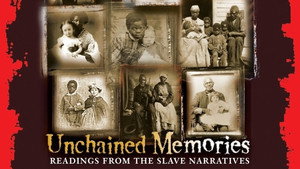
When the Civil War ended in 1865, more than four million slaves were set free. Over 70 years later, the memories of some 2,000 slave-era survivors were transcribed and preserved by the Library of Congress. These first-person anecdotes, ranging from the brutal to the bittersweet, have been brought to vivid life in this unique HBO documentary special, featuring the on-camera voices of over a dozen top African-American actors.
2003

The Rooster’s Crow at Noon
While being imprisoned on a remote island for leading a naval-yard workers' strike, a man reminisces about his former days as a naval mechanic and the life back in his hometown.
1996
Chronicle of the Years of Fire
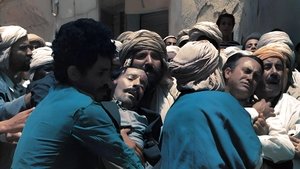
A meticulous chronicle of the evolution of the Algerian national movement from 1939 until the outbreak of the revolution on November 1, 1954, the film unequivocally demonstrates that the "Algerian War" is not an accident of history, but a slow process of suffering and warlike revolts, uninterrupted, from the start of colonization in 1830, until this "Red All Saints' Day" of November 1, 1954. At its center, Ahmed gradually awakens to political awareness against colonization, under the gaze of his son, a symbol of the new Algeria, and that of Miloud, half-mad haranguer, half-prophet, incarnation of Popular memory of the revolt, the liberation of Algeria and its people.
1975

Les Mains Libres
In 1964, Algeria, just two years after the end of the war of independence, found itself catapulted into new contradictions, a still rural territory which responded to the modernity brought by the revolution. Filmed during the winter of 1964-1965 by the young director Ennio Lorenzini, it is the first international Algerian production which paints a rare portrait in color of a multifaceted nation, far from the simplistic vision created by the press and the French army. Produced by Casbah Film, Les Mains Libres (initially titled Tronc De Figuier) bears witness to the stigmata of colonization and the future of free Algeria throughout the Algerian territory and reveals the richness of its landscapes and the diversity of its traditions . The documentary, using the aesthetics of militant cinema of the time, is made up of four scenes: Sea and Desert, The Struggle, The Earth, Freedom.
1965
Porto Rico
The life of Puerto Rican revolutionary José Maldonado Román, known as Águila Blanca, on the island in the late 19th century. Maldonado Román fought against colonialism by leading a gang of ex-convicts to vindicate Puerto Rico as it sought its identity as a country.
Isabelle Eberhardt
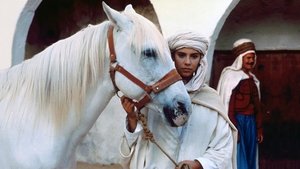
The true story of explorer, journalist and writer Isabelle Eberhardt, originally from Switzerland. She moved to Annaba in Algeria in 1897 with her mother, who preferred to live in the Algerian neighborhoods rather than the European neighborhoods that she hated, and converted to Islam. Her lifestyle shocked the French colonialists: she dressed like a man, frequented cafes and smoke shops. Fascinated by the desert, she traveled the Sahara under the identity of Si Mahmoud, she published articles and books on the world she discovered in southern Algeria, strongly criticizing the colonial authorities. Arriving in El Oued, the soldiers prevent him from continuing his journey. She disobeys and overhears officers shooting Arab prisoners. Arrested, she was accused of espionage and was expelled from Algeria. She married Slimane, a Muslim non-commissioned officer in 1901. Having become French through this marriage, she could now reside in Algeria.
1991
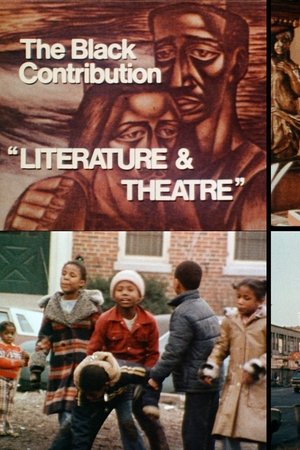
The Black Contribution: Literature and Theatre
The Black Contribution – Literature and Theater 1978 is a rare documentary highlighting the voices and cultural impact of African American writers and performers during the civil rights era. Introduced by NAACP leader Benjamin Hooks and narrated by Roscoe Lee Brown, the film weaves together dramatic readings, theatrical excerpts, and candid urban street footage. Margaret Walker’s poem For My People is performed alongside scenes of daily Black life in New York City — children playing, families on stoops, open fire hydrants, and the realities of poverty in 1970s neighborhoods. James Baldwin appears in interview footage, while signs for his play The Amen Corner and stage excerpts from Lorraine Hansberry’s A Raisin in the Sun underscore the powerful presence of Black voices in American theater. With rare shots of Harlem life, literature, and performance, this film documents the enduring contributions of African American artists to U.S. culture and history.
1978
The Battle of Algiers
Paratrooper commander Colonel Mathieu, a former French Resistance fighter during World War II, is sent to Algeria to reinforce efforts to squelch the uprisings of the Algerian War. There he faces Ali la Pointe, a former petty criminal who, as the leader of the Algerian Front de Liberation Nationale, directs terror strategies against the colonial French government occupation. As each side resorts to ever-increasing brutality, no violent act is too unthinkable.
1966
Dawn of the Damned
This excellent feature-length documentary - the story of the imperialist colonization of Africa - is a film about death. Its most shocking sequences derive from the captured French film archives in Algeria containing - unbelievably - masses of French-shot documentary footage of their tortures, massacres and executions of Algerians. The real death of children, passers-by, resistance fighters, one after the other, becomes unbearable. Rather than be blatant propaganda, the film convinces entirely by its visual evidence, constituting an object lesson for revolutionary cinema.
1965

Jamila, the Algerian
Djamila, a young Algerian woman living with her brother Hadi and her uncle Mustafa in the Casbah district of Algiers under the French occupation of Algeria, sees the full extent of injustice, tyranny and cruelty on his compatriots by French soldiers. Jamila's nationalist spirit will be strengthened when French forces invade her university to arrest her classmate Amina who commits suicide by ingesting poison. Shortly after the prominent Algerian guerrilla leader Youssef takes refuge with her, she realizes that her uncle Mustafa is part of this network of anti-colonial rebel fighters. Her uncle linked her to the National Liberation Front (FLN). A series of events illustrate Jamila's participation in resistance operations against the occupier before she was finally captured and tortured. Finally, despite the efforts of her French lawyer, Jamila is sentenced to death...
1958