Watch Khrushchev Does America (2013) Online Free
The story of the unconditional, no-holds-barred tour of America by Soviet Premier Nikita Khrushchev, leader of World Communism and America's arch nemesis, during 13 sun-filled days in the fall of 1959.
Cast
Geoffrey Bateman, Nikita Khrushchev
More Like This

Kancha Sherpa: Last of the First from the 1953 Conquest of Mt Everest
Kancha Sherpa was one of 103 Sherpas that brought Sir Edmund Hillary and Tenzing Norgay to the top of Mt. Everest in 1953, as the first to reach the top. This achievement would have been impossible without the strength, courage and knowledge of the Sherpas, who have a strong connection to the mountains of the Himalayas. At the age of 80, Kancha is the Last of the First from the 1953 expedition to Mt. Everest. Kancha is looking into the future, with a heartfelt hope that his tradition, will reach far into the 21st century and beyond. He is concerned to see modern traditions melting away old traditions, like the snow on top of Everest.

Red Shadow over the White House
As the 2024 elections approach, Russian interference in American politics – through spies or agents of influence – is a troubling reality. Vladimir Putin is counting on Donald Trump’s victory to weaken support for Ukraine. Why does Trump almost always support Russia? Is he compromised? During his presidency, did he betray the United States in favor of the Kremlin? And why has the Republican Party shifted its stance toward Russia? Answering these questions means shedding light on a labyrinthine espionage and manipulation operation. Still ongoing, it began forty years ago, during the final years of the Cold War. Back then, Trump was merely a real estate developer, and Putin was a young KGB agent. This operation contains many dark areas, but some hold pieces of the puzzle. A former KGB leader, infiltrated “illegals,” a former Trump advisor, and former senior officials from the CIA and FBI, as well as a former prosecutor, provide testimony. . . . [taken from Nilaya Productions]
2024
My Life with Him (Che)
In the 1950s, young revolutionary Ernesto Guevara meets Peruvian economist, intellectual and activist Hilda Gadea, whose sharp political vision and energy left a lasting mark on his path. At its core, the story delves into their romantic bond, Hilda’s journey through motherhood and the agonizing choice that ultimately shaped her life: remain by her daughter’s side or follow the call of the revolution.

Yeti Massacre
In the winter of 1959, the mutilated bodies of nine hikers were found in the Ural Mountains of Russia. Were they slaughtered in cold blood by a yeti? If so, what drove this legendary beast to kill? Shocking evidence sheds terrifying new light on the Dyatlov Pass incident.
2023
Against the Law
United Kingdom, March 24, 1954. Ten years before the decriminalization of homosexuality, journalist Peter Wildeblood and his friends Lord Montagu and Michael Pitt-Rivers are convicted and imprisoned for indecency and sodomy.
2017
The Deal
Stop-motion animation on the arranging of marriages in 1950/60s set in the Eastern-Polish borderland. The script is based on a part of Mikołaj Smyk's diary, the director's grandfather. The biographical objects used in the animation, such as an authentic headscarf, Polish and Russian books, the copy of Mikołaj Smyk's diary and photographs help situate the story in its original environment.
2015
The Fifties in Luxembourg
The nostalgic retrospective of the time from a very candid perspective, over five chapters.
2013
Nuclear Savage: The Islands of Secret Project 4.1
A shocking political exposé, and an intimate ethnographic portrait of Pacific Islanders struggling for survival, dignity, and justice after decades of top-secret human radiation experiments conducted on them by the U.S. government.
2011
Disco and Atomic War
A different history of the Cold War: how Estonians under Soviet tyranny began to feel the breeze of freedom when a group of anonymous dreamers successfully used improbable methods to capture the Finnish television signal, a window into Western popular culture, brave but harmless warriors who helped change the fate of an entire nation.
2009
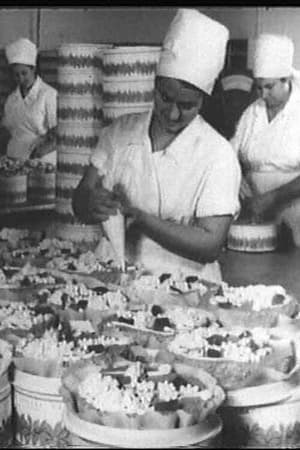
Charlie Marx and the Chocolate Factory
Charlie Marx and the Chocolate Factory started as an investigation of the link between politics and chocolate, at the Karl Marx Confectionary Factory in Kiev, Ukraine. Since access to the factory was denied, the project had to be re-considered, re-invented or re-enacted. Mostly made of archival footage and re-enacted performances based on the company's website, the film merges what was left of the initial idea with what has been collected and realized instead. It borrows from the genres of video art, 'Man on the street' interview, direct address, corporate film, essay, and music video, without legitimately belonging to any of them. The film unravels as a reflection on its own failure, and yet keeps on investigating what has always been at stake: the shift from public to private property (and from analog to digital technology), dialectics of permanence and change, language as a mirror of ideology, and post-Soviet oligarchy culture.
2009
Charlie Wilson's War
A Texas congressman sets a series of events in motion when he conspires with a CIA operative to aid Afghan mujahideen rebels fighting the Soviets.
2007
The Good Shepherd
Edward Wilson, the only witness to his father's suicide and member of the Skull and Bones Society while a student at Yale, is a morally upright young man who values honor and discretion, qualities that help him to be recruited for a career in the newly founded OSS. His dedication to his work does not come without a price though, leading him to sacrifice his ideals and eventually his family.
2006
K-19: The Widowmaker
When Russia's first nuclear submarine malfunctions on its maiden voyage, the crew must race to save the ship and prevent a nuclear disaster.
2002
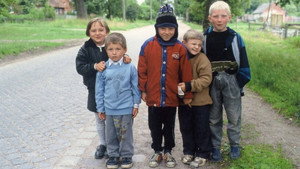
Das ist alles
Portrait of a Russian village near Kaliningrad and its multiethnic inhabitants.
2001

Hollywood Rated 'R'
A roller-coaster ride through the history of American exploitation films, ranging from Roger Corman's sci-fi and horror monster movies, 1960s beach movies, H.G. Lewis' gore-fests, William Castle's schlocky theatrical gimmicks, to 1970s blaxploitation, pre-"Deep Throat" sex tease films, Russ Meyer's bosom-heavy masterpieces, etc, etc. Over 25 interviews of the greatest purveyors of weird films of all kind from 1940 to 1975. Illustrated with dozens of films clips, trailers, extra footage, etc. This documentary as a shorter companion piece focusing on exploitation king David F. Friedman.
1997
Crisis en el Caribe (Noticiero ICAIC)
1962
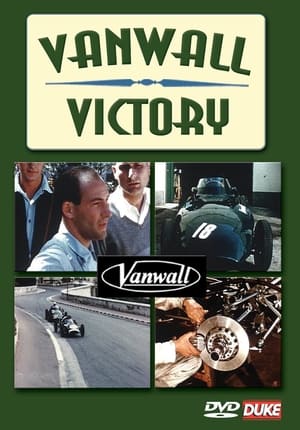
Vanwall Victory
Historical film covering the British Vanwall Grand Prix team behind the scenes and at the 1957 Monaco Grand Prix and British Grand Prix at Aintree.
1957
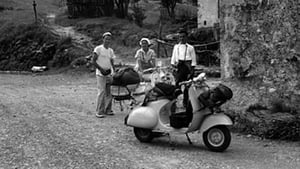
Russian Close-Up
Albert Maysles' visual diary of the faces and places encountered along a cross country motorscooter ride through the Soviet Union in the late 1950s.
1957
Alert Today - Alive Tomorrow
This short shows how the city of Reading, Pennsylvania would implement civil defense procedures to help residents survive a nuclear attack. Through a network of volunteers, makeshift hospitals would be set up, auxiliary police officers would maintain order, and other elements of the civil defense program would be put in place.
1956
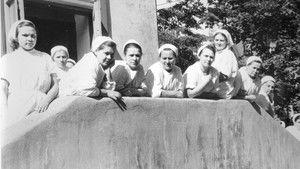
Psychiatry in Russia
In 1955, Albert Maysles traveled by motorcycle throughout Russia. During this trip, he shot what was to become his first film, 'Psychiatry in Russia', an unprecedented view into Soviet mental healthcare. Originally televised by the David Garroway Show on NBC-TV in 1956.
1955