Watch Kahuku: Survival of a Plantation Town (1988) Online Free
When the Kahuku sugar plantation and mill shut down in the 1970's, workers who lived in plantation housing had to decide how to hold the community together and create something new out of an industry that had come to an end. This is the story of their successful transition from plantation to self-governing community.
Cast
Scott Shirai, Tom Nakayama, John Primacio, Jr., Seiko Shiroma
More Like This

Songs of Love from Hawaii
Told in three unique stories, Songs of Love from Hawaii is a hybrid historical drama that uncovers the journeys of Hawaii's first Korean immigrants. From picture bride Lim Ok Soon to those isolated in Kalaupapa, their tales of love, sacrifice, and resilience come alive through stunning performances by world-class musicians and rare archival images against Hawaii's breathtaking landscapes.
2024
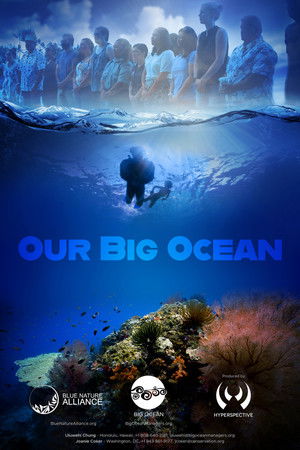
Our Big Ocean
A short documentary that talks about how ocean conservation managers from around the world come together to collaborate on ways to save our oceans. It also discusses the importance of including indigenous and traditional knowledge to start solving challenges. We produced this in collaboration with Big Ocean Managers and Conservation International.
2023

Kekaiulu Hula Studio
Kekaiulu Hula Studio follows the Proclaimed Hula Halau of the same name, showcasing their twist on what the real reason for hula is and what life as a dancer in the halau is really like. Something previously unseen in the public eye.
2022

Hawaii, l'âme du ukulélé
A passionate ukulele player, cartoonist Joann Sfar ("The Rabbi's Cat") flies to Hawaii to explore the history of the little instrument, as well as the culture that surrounds it. For the pocket guitar, imported in 1879 by the Portuguese from Madeira who had come to harvest sugar cane, is the vector of a philosophy specific to the archipelago: the spirit of "Aloha", which condenses hospitality, joy, love and respect. With brushes in hand, Joann Sfar set out in search of the ideal instrument, meeting craftsmen, musicians, dancers and guardians of Hawaiian culture.
2020
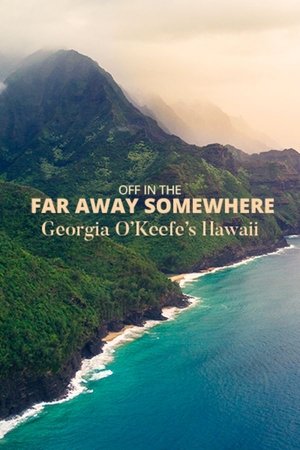
Off in the Far Away Somewhere: Georgia O’Keeffe’s Hawaii
An original short film narrated by Academy Award-nominee Sigourney Weaver featuring excerpts from Georgia O’Keeffe’s personal letters to her husband written during her journey to and around the Hawaiian Islands.
2018
Out of State
Out of State is the unlikely story of native Hawaiians men discovering their native culture as prisoners in the desert of Arizona, 3,000 miles, and across the ocean, from their island home.
2017
Kapu Aloha 101: Ke Kula o Maunakea
Documenting the Kapu Aloha movement, as they take a stand to defend Mauna Kea in the wake of the Thirty Meter Telescope protests.
2015

Rise of the Wahine
In the years following the Civil Rights movement and the passage of Title IX in 1972, Dr. Donnis Thompson (a headstrong African-American female coach), Patsy Mink (the first Asian-American U.S. congresswoman), and Beth McLachlin (the team captain of a rag-tag female volleyball team), battled discrimination from the halls of Washington D.C. to the dusty volleyball courts of the University of Hawaii, fighting for the rights of young women to play sports.
2014
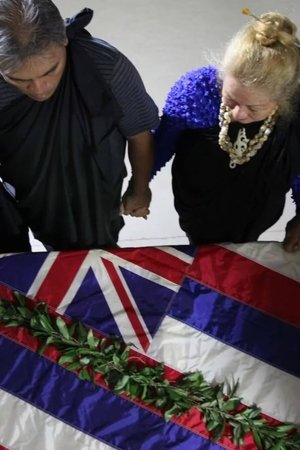
Ka Ho‘ina: Going Home
Ka Hoʻina documents members of Hui Mālama I Nā Kūpuna O Hawaiʻi Nei's final repatriation of over 140 sets of iwi kupuna and provides an intimate look into the legacy forged by these committed and passionate few, ensuring that Hawaiians will mālama or care for kupuna for generations to come.
2014
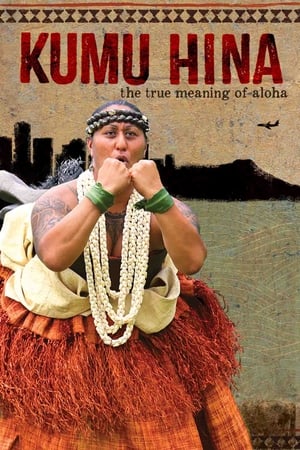
Kumu Hina
A powerful film about the struggle to maintain Pacific Islander culture and values within the Westernized society of modern day Hawaiʻi. It is told through the lens of an extraordinary Native Hawaiian who is both a proud and confident māhū, or transgender woman, and an honored and respected kumu, or teacher, cultural practitioner, and community leader.
2014

E Haku Inoa: To Weave a Name
A mother and daughter, estranged by divorce and mental health issues, reconnect through patience, understanding, and their a shared appreciation of their Native Hawaiian heritage.
2013
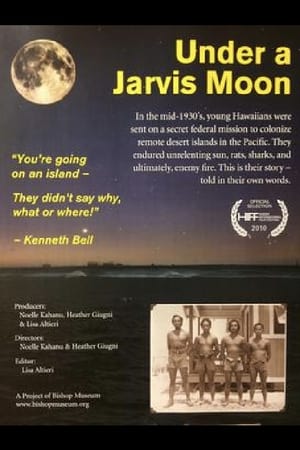
Under a Jarvis Moon
Under a Jarvis Moon is a 2010 documentary film about the young men, mostly of Hawaiian origin, sent in the 1930s and 1940s to colonize the Line Island of Jarvis and the Phoenix Islands of Howland and Baker.
2010
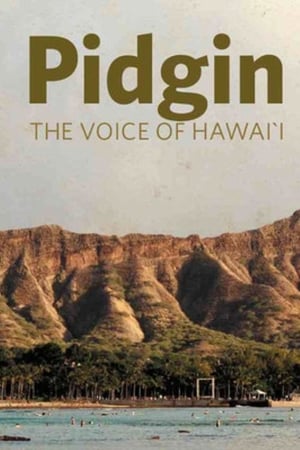
Pidgin: The Voice of Hawai'i
What if you are made to feel ashamed when you speak your "mother tongue" or ridiculed because of your accent? "Pidgin: The Voice of Hawai'i" addresses these questions through its lively examination of Pidgin - the language spoken by over half of Hawai'i's people.
2009

The Massie Affair
In the waning days of summer 1931, Honolulu's tropical tranquility was shattered when a young Navy wife made a drastic allegation of rape against five nonwhite islanders. What unfolded in the following days and weeks was a racially-charged murder case that would make headlines across the nation, enrage Hawai'i's native population, and galvanize the island's law enforcers and the nation's social elite.
2005
The Bruce Movie
Shot entirely on 16mm, Super 8 and 35mm movie film, "The Bruce Movie" is an in-depth look at one of the most renowned surfers on the planet: Bruce Irons. Some have described Bruce as, "A freak", "Unpredictably spontaneous", "Explosive" and "The deadliest guy on tour". Bruce's uncanny tube riding ability and high flying aerial attack will leave you awestruck. Along his path, Bruce has won surfing's most prestigious event: The Eddie Aikau Big Wave Invitational. In the film you will also witness his frustrating first year on the World Championship Tour; in typical Bruce fashion, he waits until the last second to regain a spot on the WCT where he makes the final at one of his favorite waves: Pipeline. This first film on Bruce Irons will go down in history as a must have in every surfer's library.
2005
Riding Giants
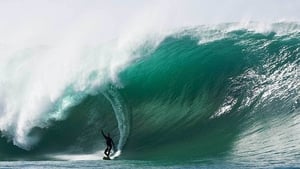
Riding Giants is story about big wave surfers who have become heroes and legends in their sport. Directed by the skateboard guru Stacy Peralta.
2004

Nihi
Nihi is a film biography of Titus Kinimaka, one of the last remaining professional big-wave riders of pure Hawaiian descent. As a boy, he won surf contests against those twice his age; by his teens, he was recognized as one of the best surfers to have ever hit the waves. In 1996 at age 41, Titus was named Waterman of the Year by the Hawaiian Lifeguard Association for outstanding rescues as a lifeguard. He has spent over twenty years spreading aloha spirit, traveling the world as an ambassador for surfing and Hawaiian culture
2003

Elvis - Aloha from Hawaii
A 1973 concert by Elvis Presley that was broadcast live via satellite on January 14, 1973. The concert took place at the Honolulu International Center in Honolulu and aired in over 40 countries across Asia and Europe. Viewing figures have been estimated at over 1 billion viewers world wide, and the show was the most expensive entertainment special at the time, costing $2.5 million.
1973
Follow Me
Documentary about two boys and a girl who travel to surfing spots around the world.
1969
The Four of Moana
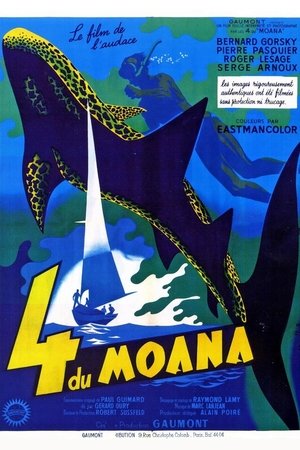
Documentary focused on underwater shootings and hawaiian dances.
1959