Watch JO de Berlin 36, la grande illusion (2015) Online Free
In August 1936, the Olympic Games, orchestrated by Joseph Goebbels, the Third Reich's Minister of Propaganda, took place in Berlin. This was a vast charm offensive designed to present Germany as a nation that respected the Olympic principles of equality and fraternity. This documentary reveals the political strategies of the Third Reich, which benefited from the complicity of the International Olympic Committee in thwarting calls for a boycott by several countries. Once the games were over, Nazi policy intensified. How could the civilized world turn a blind eye to this "great illusion"? Gretel Bergmann, the German Jewish athlete at the center of a bargaining chip between the German authorities and the US government, and Noël Vandernotte, who won a bronze medal in rowing, share their stories.
More Like This

An Evening with Dua Lipa
Features live performances of Dua Lipa's greatest hits accompanied by the Heritage Orchestra, as well as personal reflections on her career.
2024
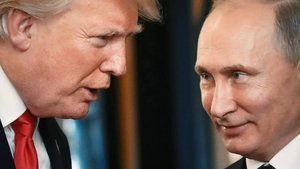
Red Shadow over the White House
As the 2024 elections approach, Russian interference in American politics – through spies or agents of influence – is a troubling reality. Vladimir Putin is counting on Donald Trump’s victory to weaken support for Ukraine. Why does Trump almost always support Russia? Is he compromised? During his presidency, did he betray the United States in favor of the Kremlin? And why has the Republican Party shifted its stance toward Russia? Answering these questions means shedding light on a labyrinthine espionage and manipulation operation. Still ongoing, it began forty years ago, during the final years of the Cold War. Back then, Trump was merely a real estate developer, and Putin was a young KGB agent. This operation contains many dark areas, but some hold pieces of the puzzle. A former KGB leader, infiltrated “illegals,” a former Trump advisor, and former senior officials from the CIA and FBI, as well as a former prosecutor, provide testimony. . . . [taken from Nilaya Productions]
2024

La bande son des années 90
2024

God & Country: The Rise of Christian Nationalism
Examines the implications of Christian Nationalism, how it distorts not only our constitutional republic, but Christianity itself, and asks the question: What happens when a faith built on love, sacrifice, and forgiveness grows political tentacles, conflating power, money, and belief into hyper-nationalism?
2024

Klimt & The Kiss
The Kiss by Gustav Klimt is one of the most recognised and reproduced paintings in the world. It is perhaps the most popular poster on student dorm walls from Beijing to Boston. Painted in Vienna around 1908, the evocative image of an unknown embracing couple has captivated viewers with its mystery, sensuality and dazzling materials ever since it was created. But just what lies behind the appeal of the painting – and just who was the artist that created it? Delving into the details of real gold, decorative designs, symbolism and simmering erotica, a close study of the painting takes us to the remarkable turn of the century Vienna when a new world was battling with the old.
2023

The Ringleader: The Case of the Bling Ring
In a candid, first-time interview with Rachel Lee, the so-called teenage mastermind behind a string of high-profile celebrity robberies in 2008 and 2009, the film examines the motivations of Lee and a group of her friends who broke into celebrity homes in Hollywood to ransack and steal, exploring the possible reasons behind her actions including mental health issues and addictions, as well as the climate of celebrity excess that fueled the teens, recontextualizing the events behind the sensational headlines.
2023
The Unmaking of Boris Johnson
A deep dive surrounding the scandals and events surrounding Boris Johnson that lead to his resignation
2022
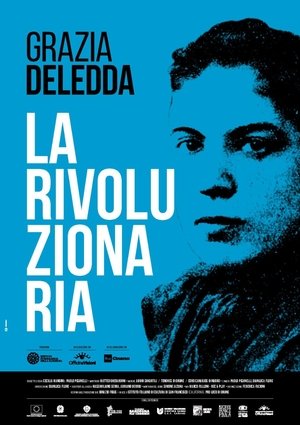
Grazia Deledda, the Revolutionary
A cinematic journey to discover, through previously unpublished documents and manuscripts, the world of writer and ethnographer Grazia Deledda, the first Italian woman and writer to win the Nobel Prize for Literature in 1926. A revolutionary author, she transcended the confines of male-dominated culture and asserted her creative path as an artist and a woman.
2021

Spookers
Documentary from Kiwi filmmaker Florian Habicht on the most successful haunted attraction in the Southern Hemisphere, Auckland’s Spookers.
2017
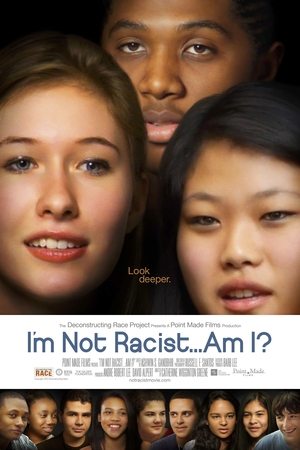
I'm Not Racist... Am I?
What if this next generation could transcend racism? One year, 12 teens, on a remarkable journey to face racism and white privilege, have the conversations most of us are too afraid to have. Once they push through naivete, guilt and tears, what they learn may change us all.
2014

Une vie avec Oradour
2011
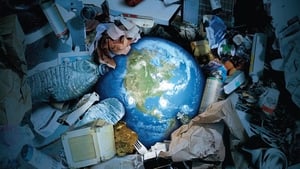
The 11th Hour
A look at the state of the global environment including visionary and practical solutions for restoring the planet's ecosystems. Featuring ongoing dialogues of experts from all over the world, including former Soviet Prime Minister Mikhail Gorbachev, renowned scientist Stephen Hawking, former head of the CIA R. James Woolse
2007
Die Reichsautobahn - Strassen des Führers
They were not only the largest construction project of the Nazi era, but above all the most popular: 80 years ago, work began on the Reichsautobahnen, whose myth still resonates today.
2000
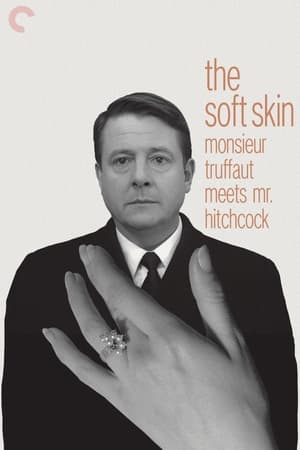
Monsieur Truffaut Meets Mr. Hitchcock
When Francois Truffaut approached Alfred Hitchcock in 1962 with the idea of having a long conversation with him about his work and publishing this in book form, he didn't imagine that more than four years would pass before Le Cinéma selon Hitchcock finally appeared in 1966. Not only in France but all over the world, Truffaut's Hitchcock interview developed over the years into a standard bible of film literature. In 1983, three years after Hitchcock's death, Truffaut decided to expand his by now legendary book to include a concluding chapter and have it published as the "Edition définitive". This film describes the genesis of the "Hitchbook" and throws light on the strange friendship between two completely different men. The centrepieces are the extracts from the original sound recordings of the interview with the voices of Alfred Hitchcock, Francois Truffaut, and Helen Scott – recordings which have never been heard in public before.
1999
Interview and Reading: Jonas Mekas
Jonas Mekas recites poems of his, both in English and Lithuanian. Exclusive Mekas interview by the poet Sparrow. The legendary poet-film critic and film diarist waxes philosophical in rare extended setting exhibiting his transcendental poetic humor. Jonas attacks the crass world of TV advertising and sell-out commercial filmmakers. Contributes zen anecdotes and filmmaking advice. Choice clips include Mekas' Film Diaries with deceivingly formalist amateur "home movie" style, but in small bursts of expression in a quick collage. Footage from Jonas' homeland as well as clips of famed pop figures John Lennon, Yoko Ono and Tiny Tim.
1991
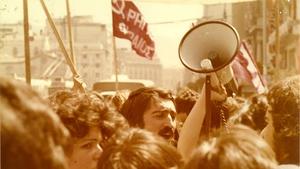
Evidence
A documentary presenting people and events connected with the most important political developments from the student uprising at the Athens Polytechnic in 1973 until the first year of democratic rule after the dictatorship collapsed in 1974.
1975
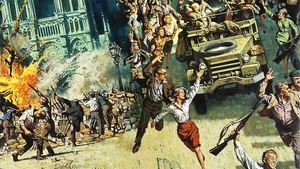
Is Paris Burning?
Near the end of World War II, General Dietrich von Choltitz receives orders to burn down Paris if it becomes clear the Allies are going to invade, or if he's unable to maintain control of the city. After much contemplation, Choltitz ignores orders, enraging the Germans and giving hope to various resistance factions that the city will be liberated. Choltitz, alongside Swedish diplomat Raoul Nordling, helps a leader organise his forces.
1966
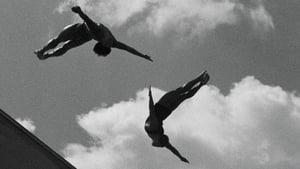
Olympia Part Two: Festival of Beauty
Part two of Leni Riefenstahl's monumental examination of the 1938 Olympic Games, the cameras leave the main stadium and venture into the many halls and fields deployed for such sports as fencing, polo, cycling, and the modern pentathlon, which was won by American Glenn Morris.
1938
Olympia Part One: Festival of the Nations
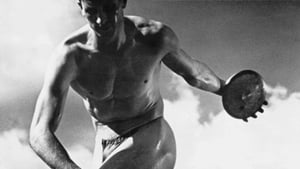
Starting with a long and lyrical overture, evoking the origins of the Olympic Games in ancient Greece, Riefenstahl covers twenty-one athletic events in the first half of this two-part love letter to the human body and spirit, culminating with the marathon, where Jesse Owens became the first track and field athlete to win four gold medals in a single Olympics.
1938
All Lines
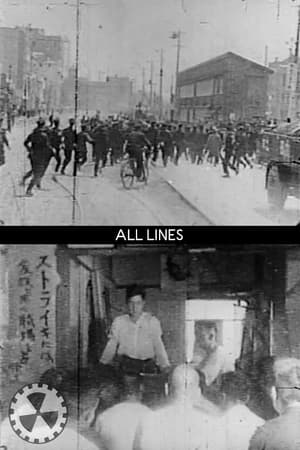
This was a news film with elements of reenactment. From December 1927 to 1932, 2,000 bus and train drivers were fired, provoking a strike. This film was edited out of footage shot from that strike over a long period.
1932