Watch Island Ablazed (1961) Online Free
Documentary recounting the story of the Cuban Revolution and its impact on the young people of Cuba.
Cast
Leonid Khmara, Che Guevara, Fidel Castro
More Like This
Aquela Mesma Estação
2021

Served Like a Girl
Five women veterans who have endured unimaginable trauma in service create a shared sisterhood to help the rising number of stranded homeless women veterans by entering a competition that unexpectedly catalyzes moving events in their own lives.
2017

Soldier
A young man decides to join the army. He becomes the drummer in the military band, and his everyday life is now a combination of military training and music. What does the Argentine Army do these days, more than thirty years after the dictatorship? What does it mean to be a soldier in a country without wars?
2017
Fidel Castro: America's Nemesis
Fidel Castro, the former President of Cuba and one of the most controversial figures of the 20th century, passed away in November. He famously claimed that "history will absolve me", but will it? This special film considers Castro and his legacy.
2016
Leninland
At the peak of Perestroika, in 1987, in the village of Gorki, where Lenin spent his last years, after a long construction, the last and most grandiose museum of the Leader was opened. Soon after the opening, the ideology changed, and the flow of pilgrims gradually dried up. Despite this, the museum still works and the management is looking for ways to attract visitors. Faithful to the Lenin keepers of the museum as they can resist the onset of commercialization. The film tells about the modern life of this amazing museum-reserve and its employees.
2013

Disco and Atomic War
A different history of the Cold War: how Estonians under Soviet tyranny began to feel the breeze of freedom when a group of anonymous dreamers successfully used improbable methods to capture the Finnish television signal, a window into Western popular culture, brave but harmless warriors who helped change the fate of an entire nation.
2009
Charlie Marx and the Chocolate Factory
Charlie Marx and the Chocolate Factory started as an investigation of the link between politics and chocolate, at the Karl Marx Confectionary Factory in Kiev, Ukraine. Since access to the factory was denied, the project had to be re-considered, re-invented or re-enacted. Mostly made of archival footage and re-enacted performances based on the company's website, the film merges what was left of the initial idea with what has been collected and realized instead. It borrows from the genres of video art, 'Man on the street' interview, direct address, corporate film, essay, and music video, without legitimately belonging to any of them. The film unravels as a reflection on its own failure, and yet keeps on investigating what has always been at stake: the shift from public to private property (and from analog to digital technology), dialectics of permanence and change, language as a mirror of ideology, and post-Soviet oligarchy culture.
2009
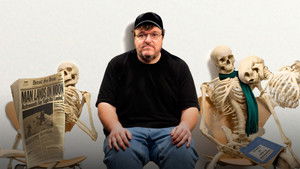
Sicko
A documentary about the corrupt health care system in The United States whose main goal is to make profit even if it means losing people’s lives. "The more people you deny health insurance, the more money we make" is the business model for health care providers in America.
2007
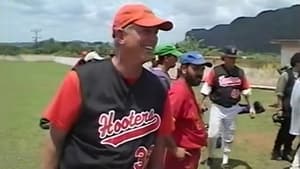
Gift of the Game
Acclaimed Florida novelist Randy Wayne White travels to Cuba with former pitchers Bill "Spaceman" Lee (Boston Red Sox) and Jon Warden (Detroit Tigers), and a band of baseball enthusiasts to find and revive the children's baseball league founded by American writer Ernest Hemingway in the days before Fidel Castro came to power.
2002
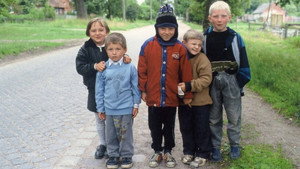
Das ist alles
Portrait of a Russian village near Kaliningrad and its multiethnic inhabitants.
2001

90 Miles
Having grown up within the Cuban Revolution, in 1980, Juan Carlos Zaldívar was a 13-year-old "pioneer" jeering in the streets at the thousands of "Marielitos" leaving the island by boat for the United States. Within weeks, he was a Marielito himself, headed with the rest of his family for a new life in Miami. Now a U.S.-based filmmaker, Zaldívar recounts the strange twist of fate that took him across one of the world's most treacherous stretches of water in 90 Miles, a new documentary having its broadcast premiere on PBS's acclaimed P.O.V. series in the summer of 2003. As related by Zaldívar in the intensely personal and evocative 90 Miles, arrival in South Florida is only the beginning of the family's struggles to comprehend the full meaning of their passage into exile. What follows is an intimate and uneasy accounting of the historical forces that have split the Cuban national family in two, and which shape the passage of values from one generation to the next.
2001
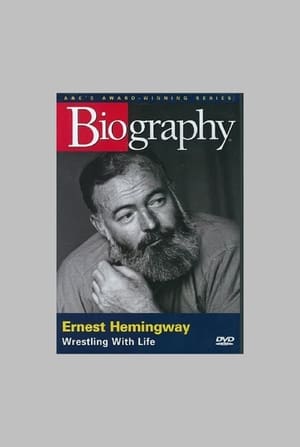
Ernest Hemingway: Wrestling with Life
A&E's long-running biography series takes a look at one of the 20th century's most emblematic figures, Ernest Hemingway. Through a collection of still photography, narration by granddaughter Mariel Hemingway, commentary from author A.E. Hotchner and publisher Charles Scribner, and readings from Hemingway's writing (including personal letters and unpublished works) by Scott Glenn, the film takes us from the man's Midwestern childhood roots up through the tragic suicide that serves as a bittersweet exclamation on what is otherwise considered to be a life of profound accomplishment.
1997
Historia de una Plaza
1989
Biografía de un carnaval
Short documentary recounting the history of the Santiago de Cuba carnival.
1983
El octubre de todos
1977
Solidaridad Cuba y Vietnam
Short documentary on the solidarity of the Cuban people with Vietnam during the war against the United States.
1965
I'm Going to Santiago
This black-and-white film is a loving portrait of Santiago de Cuba and its people. It provides a view of Cuba as a picturesque country, the product of an earthy mix of black and criollo cultures. The film uses historical images which portray the end of the eighteenth century when Haitian slave owners fled with their slaves to Cuba after the Haitian Revolution.
1964
Crisis en el Caribe (Noticiero ICAIC)
1962
Russian Close-Up
Albert Maysles' visual diary of the faces and places encountered along a cross country motorscooter ride through the Soviet Union in the late 1950s.
1957
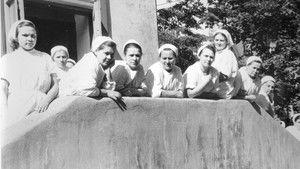
Psychiatry in Russia
In 1955, Albert Maysles traveled by motorcycle throughout Russia. During this trip, he shot what was to become his first film, 'Psychiatry in Russia', an unprecedented view into Soviet mental healthcare. Originally televised by the David Garroway Show on NBC-TV in 1956.
1955