Watch Innenansichten - Deutschland 1937 (2012) Online Free
More Like This

Mit Vollgas in den Tod
2023
A45 - Königin der Autobahnen
The A45 was the most beautiful highway in Germany. But almost 50 years after its construction, the A45 has become the country's biggest problem child. For the people of Sauerland and Siegerland, the A45 was a road of hope - the starting signal for the economic region of South Westphalia. A place of longing and a destination for drives. Since December 2, 2021, 3 p.m., nothing in Lüdenscheid has been the same. The big problem: there is no hope of improvement in the short term. Since spring 2022, it has been clear that the highway closure will last for years.
2023
Von Schlagrahmdampfern und anderen verlorenen Dingen
Not everyone who nowadays drives on the A73 between Nuremberg and Bamberg knows that they are travelling on a former waterway. Still half a century ago, the old Ludwig-Main-Danube-Canal (in short: Ludwig-Canal) was located here, which represented the last puzzle piece to a navigable connection between the oceans. Build within a remarkable ten years’ time of construction, the canal, which was opened in 1846, was the realization of a small dream of humanity as it finally connected the North Sea with the Black Sea. Unfortunately, the idea could not support itself financially: Too powerful were the railroads, which saw its rise simultaneously, and which soon undermined the ambitious canal project’s future as they were in every regard the faster, more comfortable, and better means of transportation of the hour.
2020
Snelweg NL
The highway in the Netherlands has a total length of almost 2500 kilometres. There is almost no other country with such an enormous highway density. In this documentary the monumentality, but also the apparent everydayness of our highway is shown. The highway is actually a poorly known arena for a wide range of activities. What does this monumental and almost perfect network say about us?
2019
A Night at the Garden
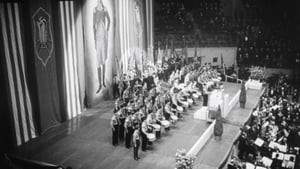
Archival footage of an American Nazi rally that attracted 20,000 people at Madison Square Garden in 1939, shortly before the beginning of World War II.
2017
Filmreise in das alte Köln
A documentary about Cologne through the pre-war years until the 1930s.
2014
The Long Road Through Balkan History
Bosnian Croat writer Miljenko Jergović and Serbian writer Marko Vidojković replace one another by the steering wheel of Yugo, a symbol of their common past while driving on the Brotherhood and Unity Highway that stretched across five of six republics of Yugoslavia.
2009
Magda Goebbels. Sacrifice
The story of Magda Goebbels, the wife of Goebbels, an associate of Hitler, is one of the most amazing and shocking stories of the 20th century. The world shuddered to learn that before the suicide in the bunker on May 1, 1945, which followed the suicide of Hitler and his inner circle, Magda Goebbels killed her six children. The youngest girl was 5 years old, the eldest was 12 years old. Only the eldest son of Magda Harald survived, he was at the front.
2008
The Rape of Europa
World War II was not just the most destructive conflict in humanity, it was also the greatest theft in history: lives, families, communities, property, culture and heritage were all stolen. The story of Nazi Germany's plundering of Europe's great works of art during World War II and Allied efforts to minimize the damage.
2007
Route 66 - ein amerikanischer albTraum
Germany's first Open Source movie. A gonzo style documentary.
2004

Was lebst Du?
I followed the everyday lives of Ali, Kais, Ertan and Alban with my camera for over two years. The time was characterized by disappointments, conflicts and also great successes. It all began with a visit to the "Klingelpütz" youth center in the middle of Cologne. Young migrants have been meeting here for many years.
2004
The End of Suburbia: Oil Depletion and the Collapse of the American Dream
Since World War II North Americans have invested much of their newfound wealth in suburbia. It has promised a sense of space, affordability, family life and upward mobility. As the population of suburban sprawl has exploded in the past 50 years Suburbia, and all it promises, has become the American Dream. But as we enter the 21st century, serious questions are beginning to emerge...
2004
Der Judenhetzer – Julius Streicher und "Der Stürmer"
Even high Nazi leaders like Joseph Goebbels and Hermann Göring were almost contemptuous of this party comrad, and yet he was one of the most influential figures in the Third Reich: Julius Streicher, publisher of the anti-Semitic weekly "Der Stürmer", responsible for the worst propaganda and infamous for his corrupt and violent regime as Gauleiter of Franconia. By the Allies he was considered a symbol of Nazi hatred of the Jews. In 1946 he was sentenced to death in Nuremberg and executed.
2001
Nazis: The Occult Conspiracy
This documentary examines how Adolf Hitler and the Nazi regime made use of ancient mysticism, occultism, and mind-control techniques in their efforts to win the war.
1998
Mama General
A film about poverty in a rich country: father, mother, seven children have made it out of the homeless asylum. The author met the Cologne family B. for the first time in 1976. Living with debts, installments, reminders, living with the certainty that the children will not fare any differently. For more than twenty years, between dreams and fears, the camera recorded two generations' fear of failure and hunger for middle class. A unique film chronicle from the "latest economic miracle" - between 1976 and 1997.
1997
Nuremberg
On 20 November 1945, in what had once been the spiritual centre of the Nazi Empire, the first Nuremberg trial opened. Nuremberg examines the first trail in detail: the scale and speed of the US-led effort to place the Third Reich's leaders in the dock; the charges brought against them; the courtroom drama; the final judgements. Of the 21 defendants, three were acquitted, seven given jail sentences and the remaining eleven sentenced to death, among them Hitler's right-hand man, Hermann Goering. This programme also explores the twelve subsequent trials against the backdrop of the emerging Cold War and the shifting allegiances of allies and enemies in the immediate post-war period.
1996
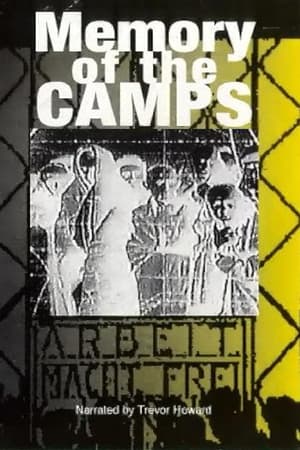
Memory of the Camps
In 1945, Allied troops invaded Germany and liberated Nazi death camps. They found unspeakable horrors which still haunt the world’s conscience. A film was made by British and American film crews who were with the troops liberating the camps. It was directed in part by Alfred Hitchcock and was broadcast for the first time in its entirety on PBS FRONTLINE in 1985.
1985
Wohnen über der Autobahn
This short film portrays people that live near a highway
1981
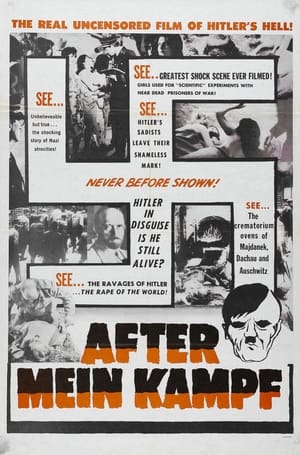
After Mein Kampf?
By combining actual footage with reenactments, this film offers both a documentary and fictional account of the life of Adolf Hitler, from his childhood in Vienna, through the rise of the Third Reich, to his final act of suicide in the waning days of WWII. The film also provides considerable, and often shocking, detail of the atrocities enacted by the Nazi regime under Hitler's command.
1961

Triumph of the Will
A showcase of German chancellor and Nazi Party leader Adolf Hitler at the 1934 Nuremberg Rally.
1935