Watch I Am Trying to Remember (2021) Online Free
Pegah talks about Gholam, a man who’s not like her father, mother, uncles, or aunts, even though he’s always present at family gatherings. Gholam films these everyday scenes with his own camera. At the time, Pegah can’t imagine what the purpose of these films might be, but she’s happy to pose before the lens of this family friend, who she’s certainly very fond of.
Cast
Pegah Ahangarani
More Like This
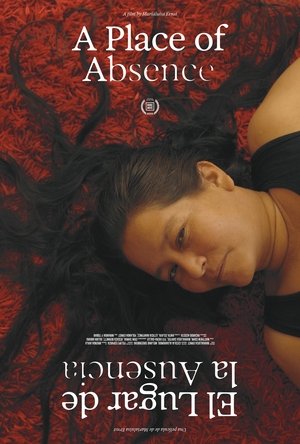
A Place of Absence
This poetic film follows director Marialuisa's journey with Anita and Leticia, Central American women traveling with the Caravan of Mothers of Missing Migrants.
2025
13 novembre, nos vies en éclats
On November 13, 2015, the attacks in Paris and Saint-Denis, carried out by three Islamist commandos and claimed by ISIS, were the deadliest in France since the end of World War II. In the months that followed, the November 13 Program was launched by the CNRS and Inserm to study the construction of individual and collective memory around an event that profoundly marked French society. Today, the testimonies of 27 volunteers—among some 1,000 people—who participated in the study form a mosaic of experiences that shows how trauma extends beyond the immediate circle to permeate the national collective memory.
2025
Amnion
The amnion – the fetal membrane protecting the embryo – becomes a metaphor in the film for an intimate space where pain can be shared and a path to healing sought. This sensitive portrait of three women whose lives have been marked by sudden separation is carried from the outset by a meditative soundtrack that shapes an environment in which personal experience becomes expressible. Ritual gestures – traditional costumes, cooking together, hugging – create a protective shell that allows pain not only to be expressed and shared, but also transformed.
2025
memory consolidation 02
memory consolidation 02
2025

Love, XAF
This movie is a letter to the creator's inner child. The creator talks about his journey of becoming a full-time creator. He started with a dream and bought his first camera to pursue his passion. He faced many challenges and doubts along the way, but he never gave up on his dream. He eventually achieved his goal and became a successful creator. The creator encourages his inner child to keep going and never give up on his dreams. He also reminds himself to be grateful for what he has achieved so far.
2024
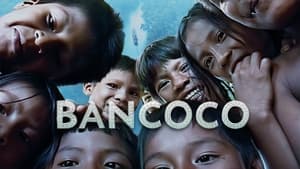
Bancoco
A New Yorker journeys to the jungle in the Darien Gap of Panama to reconnect with an indigenous tribe he met and photographed 20 years ago. Their reunion highlights the profound power of photos and the human connection that transcends cultural barriers.
2023
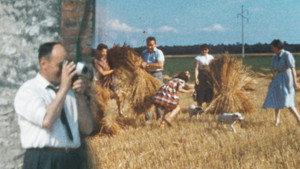
Paysans cinéastes
Farmers in the Île-de-France region, they filmed life on the farm, working in the fields, and family and village celebrations on 8 mm or Super 8 film. From the 1950s to the 1980s, these testimonies unfold a history of rural life: we move away from a peasant and family model to industrial agriculture for export. Through these family images, I attempt to answer my own questions about our agricultural future. In the 1950s, the land of Île-de-France fed us.
2023

H.A.G.S. (Have a Good Summer)
A portrait of growing up told through filmmaker Sean Wang's middle school yearbook. Go Hornets.
2021
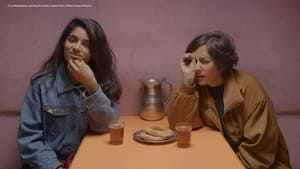
Aleph
Structured as a labyrinth-like game and inspired by Jorge Luis Borges, Aleph is a travelogue of experience, a dreamer's journey through the lives, experiences, stories and musings of protagonists spanning ten countries and five continents.
2021
Old Home on the Corner
a film about memories & showering.
2021
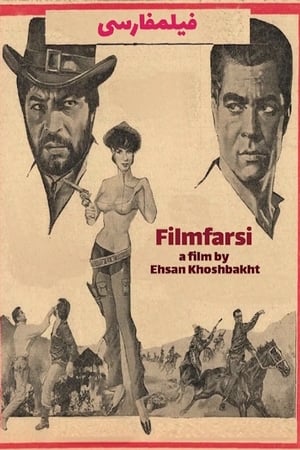
Filmfarsi
A found-footage essay, Filmfarsi salvages low budget thrillers and melodramas suppressed following the 1979 Islamic revolution.
2019
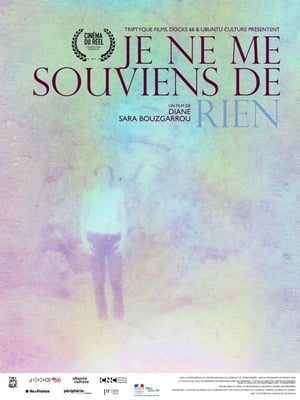
I Remember Nothing
January 2011 : the revolution bursts in Tunisia, my father’s country. The Tunisian people scream in a rage and I, here in Paris, can feel their revolt vibrating in my heart.
2017
Tricky Memory
The lastest neuroscience discoveries show surprising results: false memories, distortion, modification, déjà vus. Our memory is affected in many ways, and deceives us every day. The very fact of recalling souvenirs modifies them. The everyday consequences are manyfold. To what extent can we rely on our souvenirs? How much credit can we give them during trials? Even more shocking, scientists have proved to be able to manipulate our memory: creating artificial souvenirs, deleting, emphasizing or restoring them on demand.
2016

Coría and the sea
This is a story about women who are fighters, tenacious, hopeful, active women…who were capable of lifting, from nothingness, in the harshest landscape of the world, life. They are the Sahrawi women. 40 years ago, they were forced into exile; the men of this region, marched to war and the women created “temporary cities”: The Refugee Camps. They invented a new day to day life which made possible a sustainable existence and a hope, of one day returning home. Coría every night dreams of the sea; the majestic image of its water, the sound of its waves, are the echoes that join the people with their homeland. The will beats in the hearts of the Sahrawi women who maintain their unbreakable spirit, ever moving forward.
2014
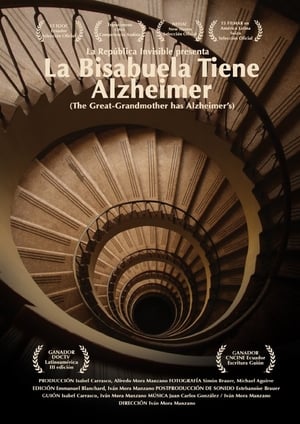
La bisabuela tiene Alzheimer
A meeting between the daughter and the grandmother of the director, Iván Mora Manzano, at a time when the memories of one, the girl’s, were taking shape, and the other’s the grandmother’s, were vanishing. This starting point is used as a pretext to talk about other topics such as the importance of family memories and the search for memory.
2012
Raul Brandão was a Great Writer...
This film is an attempt to disclose if Raul Brandão has left any trace, in Nespereira, Gumarães.
2012
Cinema da nossa gente
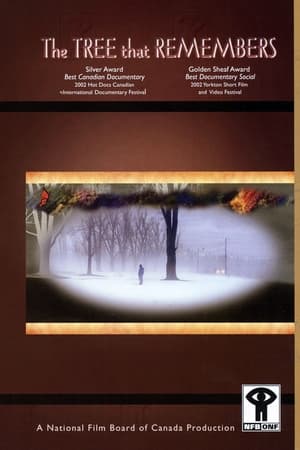
The Tree That Remembers
The 1992 suicide of a young Iranian refugee in a small Canadian town prompted filmmaker Masoud Raouf to examine his own past as a political prisoner in Iran who helped fight for democracy, only to be persecuted by the ayatollah's regime. Raouf's documentary features historical footage and interviews with veterans of the 1979 revolution, who watched with dismay as their homeland traded a despot for a religious dictatorship.
2002

History and Memory: For Akiko and Takashige
This film is a poetic composition of recorded history and non-recorded memory. Filmmaker Rea Tajiri’s family was among the 120,000 Japanese and Japanese Americans who were imprisoned in internment camps after the attack on Pearl Harbor. And like so many who were in the camps, Tajiri’s family wrapped their memories of that experience in a shroud of silence and forgetting. This film raises questions about collective history – questions that prompt Tajiri to daringly re-imagine and re-create what has been stolen and what has been lost.
1991
Danny
A moving personal documentary about Danny, a friend of Kybartas who died of an AIDS-related illness in 1986. This powerful work explores the reason for Danny’s return home and his attempts to reconcile his relationship with his family members who had difficulty facing his homosexuality and his imminent death.
1987