Watch Hoggar '64 (1965) Online Free
Filmed chronicle by mountain filmmaker Mario Fantin, of the 1964-1965 expedition of the Italian mountaineer Guido Monzino to the summits of Hoggar in the Algerian Sahara with the ascents of Garet el Djenoun, Tizouyag Nord, Saouinan and Iharen. The mountain ranges of the Hoggar desert turn out to be more complex and interesting than most mountaineers suspected at the time.
Cast
Guido Monzino, Mario Fantin
More Like This
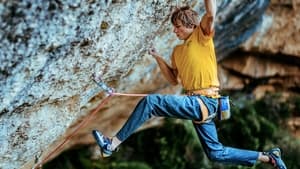
Rotpunkt
Rotpunkt documents the advent, the agony and the art of the redpoint through Alex Megos’s efforts to redefine the boundaries of the form. The film traces the redpoint—which transformed rock climbing from an engineering problem into a brilliant test of mental and physical strength—from its origins with a ragtag bunch of tights-wearing revolutionaries in rural Bavaria, to its golden era with Wolfgang Güllich, to its new ideal in the German phenom Megos as he battles to unlock new levels of human potential.
2019
Uncharted Lines
Every climbing reward comes at the cost of a potential risk, but when you are a climbing pioneer, driven by the unknown and unexpected, you are willing to risk whatever it takes for the chance to find the perfect first ascent line. This is a story of exploration and discovery, a journey of friendship and solitude, a quest to fuel an obsessive passion. Starring Paul Robinson, Jimmy Webb, Daniel Woods, Chris Sharma and Niky Ceria.
2017
ZA
South Africa is home to some of the world’s best rock climbing and attracts thousands of climbers each year from across the globe. Many films have documented this emerging paradise, but ZA (Zuid-Africa) stands to become a cult classic among the climbing community. Stunning landscapes are perfectly captured through expert time-lapses and ground-breaking drone footage. World-class climbers such as Daniel Woods, Nalle Hukkataival, and Dave Graham take on V15 first ascents and terrifyingly majestic highballs. Nina Williams battles and overcomes the elusive grade of V13, while supporting climbers bring camaraderie and color to the overall vibe of the film. Candid conversations and lifestyle shots are interspersed throughout, allowing the audience to connect with the climbers and routines of the trip. ZA gives a glimpse into the world of these professional climbers, their friends, and the reason why they keep coming back to South Africa.
2015
Wide Boyz II – Slender Gentlemen
After their success climbing the world’s hardest offwidth, the Wide Boyz, Pete Whittaker and Tom Randall, embark on their next crack climbing mission. This time their sights are set on the thinner end of the crack climbing spectrum. Their goal is the mighty Cobra Crack in Squamish BC, considered to be the hardest finger crack in the world. First climbed by Canadian ‘rock star’ Sonnie Trotter after battling it out with Didier Berthod, the route hit the media spotlight in the film First Ascent. With no local hard cracks to train on, the Wide Boyz refit their underground training dungeon and commit to a year of torturous finger training. With only a short trip to Canada planned, the Boyz face their biggest challenge yet against the sharp granite bite of the mighty Cobra Crack!
2014
Killerslope
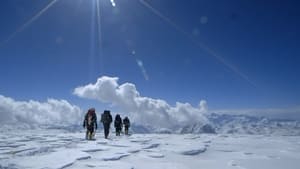
Mountain climbers achieve fame, despite the many deadly accidents. The image is partly created by the climbers themselves. But because of the difficult circumstances at these great heights, it is practically impossible to find out if all these incredible stories are actually true. In April 2014, Dutch climbers start an expedition the sixth highest mountain in the world. Investigative journalist Geertjan Lassche closely follows the group. How ruthless do you need to be? And are these mountain climbers really as arrogant as they seem to be? The closer the group gets to the top, the more we learn about all kinds of universal dilemmas. And then, even the mountain itself turns against the climbers.
2014
Jurek
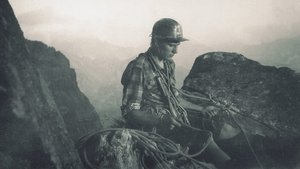
This documentary follows the feats of high-altitude climber Jerzy Kukuczka and his ascent to higher heights before his death in 1989.
2014
Cerro Torre: A Snowball's Chance in Hell
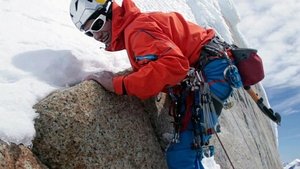
Movie about David Lama climbing the Patagonian mountain Cerro Torre for the first time free, a mountain that has been dubbed the most difficult to climb in the world.
2013
Reel Rock 7
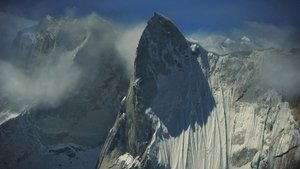
The biggest stories from the climbing world, told with humor, heart, and mind-bending action. Featuring Alex Honnold in Honnold 3.0, Chris Sharma and Adam Ondra in La Dura Dura, Conrad Anker, Jimmy Chin and Renan Ozturk in Shark's Fin, The Wide Boyz, Sasha DiGiulian, Daila Ojeda and more.
2012
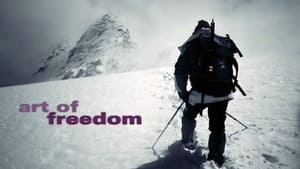
Art of Freedom
The documentary film Art of Freedom answers the most poignant questions on the phenomenon of Polish expeditions to the Himalayas. Poles have reigned the highest mountaintops of the world for more than 20 years. They not only set down new trails, but new rules of behavior. They set themselves apart with an original style of climbing, endurance, conscientiousness about the overall well-being of the team - and solidarity.
2011
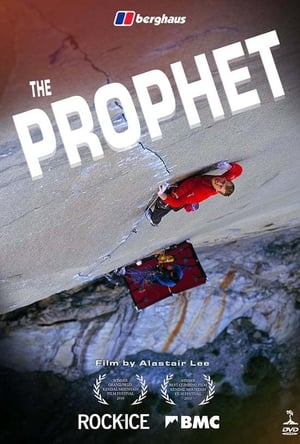
The Prophet
The amazing story of the epic first ascent of 'The Prophet' on El Capitan, Yosemite. Following the UK's top big wall climber Leo Houlding as he revisits his 10 year project; 'The Prophet', an exceptionally steep, loose and difficult route on the east face of Yosemite's El Cap. Leo describes the route as 'the wildest climb I've ever been on'. This has to be seen to be believed, crazy climbing. Extended cut 48mins.
2010

Marco Étoile Filante
Avid for steep slopes, Marco Siffredi (1979-2002) obeys only one rule: not to fall. This gifted kid with hair sometimes blond peroxidized, green or blue clashed in his valley: Chamonix, mecca of mountaineering. His thing was to go up and down on a snowboard. . 90 minutes September 8, 2002, altitude 8848 meters, rare oxygen, his head already brushing the sky and his snowboard running, Marco Siffredi, 23, rushes from the summit of Everest in the Horbein corridor and its slopes at 50 degrees . A year earlier, he had already made the first descent of the mountain on a snowboard. But there remains another corridor… more direct. It's not a challenge, just a reason to be... However, that day, at the top of the roof of the world, his trace is lost...
2008
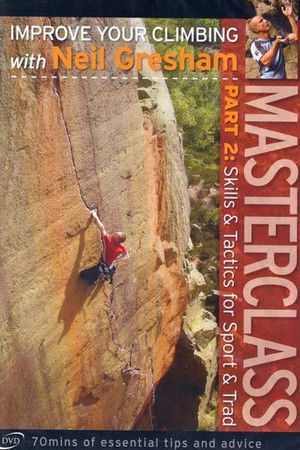
Masterclass Part 2: Skills and Tactics for Sport and Trad
Are you tired of burning out on steep routes and unsure whether it’s due to lack of strength or poor technique? Do you still feel nervous about pushing above bolts or trusting your feet on slabs? If you’re fed-up with making the same old mistakes then why not settle the score using this two-part instructional video series, hosted by Britain’s leading climbing coach Neil Gresham. Whether you climb F5 or F7c, these films are packed with tips to help you improve every aspect of your climbing performance. Part 1 shows you how to develop your technique and how to train more productively and Part 2 shows you how to put it all together and get the most from yourself on the cliffs. There are right and wrong examples to help you identify your weaknesses and case studies from some of Britain’s best climbers. Those dream routes may be closer than you think and watching these films might be all you need to turn them into a reality.
2005

Raï Story: From Cheikha Rimitti to Cheba Djenet
Raï Story is a musical journey in search of the Raï legend, Cheikha Remitti, in Oran, Algeria, where the Raï musical tradition began. In 1923, the first Raï singers performed behind screens during ceremonies to protect their identity. It was only when the music of singer Cheikha Remitti began to gain popularity among the general public that Raï music was made public, in the 1940s. Cheikha Remitti, who lives between Paris and Oran, is nowhere to be found, the filmmakers then decide to meet producers, musicians, singers like Cheba Dalila or Cheba Djenet, for whom Remitti created a wake. The opportunity, through these unique stories, illustrated with archive images, to retrace the important place of women in this musical tradition and the transformation of Raï music from the 1960s to 2000.
2004
Moving Over Stone
Writer and mountain guide Doug Robinson explains the sport of climbing, focusing on the climbing movement, with several leading climbers providing examples on challenging routes across the United States.
1988
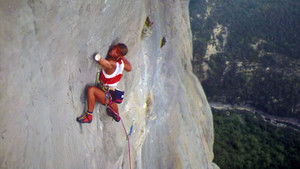
Opera Vertical
Vertical Opera is a documentary film directed by Jean-Paul Janssen, with climbers Patrick Edlinger and Jean-Paul Lemercier in the Gorges du Verdon. The film opens with a training sequence of Patrick Edlinger then he links the routes with Jean-Paul Lemercier "L'Ange en décongelation" (7a), in which he falls voluntarily to demonstrate the usefulness of the rope, then "Le Septième Saut" (7b+). Finally, the final scene, an anthology, consists of a close-up of Edlinger who climbs free solo and barefoot the route "Débiloff", still in the Verdon, above hundreds of meters of void, all to lyrical music. It is "Wie Furchtsam Wankten Meine Schritte", the aria for alto voice from Johann Sebastian Bach's cantata BWV 33, music not unrelated to the subject of the documentary: "How faltering and fearful my steps were".
1984
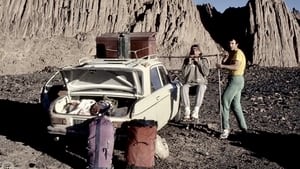
Oversand
Oversand is one of the first films about free climbing, the third film in a series of three with "Overdon" and "Over-Ice". Directed by Jean-Paul Janssen, the film was shot in 35mm in Algeria, in the Sahara Desert, in the Tamanrasset region, on the walls of the majestic peaks of the Atakor massif, central sub-region of Hoggar, mountainous heart of Hoggar, a volcanic plateau of almost circular shape, whose average altitude is 2000 meters, and which culminates at Mount Tahat (2918m), the highest point in Algeria. The Atakor is distinguished by its spectacular volcanic peaks, its needles, and its rugged landscapes, resulting from the erosion of ancient volcanic chimneys, which make it the most emblematic summits of the Hoggar, such as the Assekrem, the Ilamane, or the Tizouyag, where climbers Patrick Edlinger, Patrick Bérhault, Bernard Gorgeon, Hugues Jaillet, Jacques Perrier, Stéphane Troussier and Odette Schoënleb evolve under the watchful eye of the Tuareg caravans.
1981
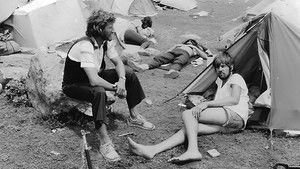
Nanga Parbat 80, La revanche de futur
1980
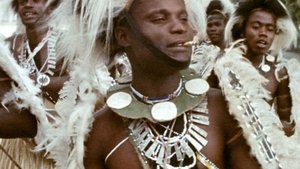
The Pan-african Festival in Algiers
Festival panafricain d'Alger is a documentary by William Klein of the music and dance festival held 40 years ago in the streets and in venues all across Algiers. Klein follows the preparations, the rehearsals, the concerts… He blends images of interviews made to writers and advocates of the freedom movements with stock images, thus allowing him to touch on such matters as colonialism, neocolonialism, colonial exploitation, the struggles and battles of the revolutionary movements for Independence.
1969
Dawn of the Damned
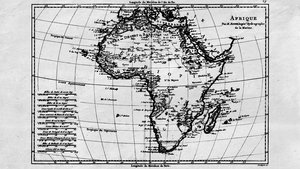
This excellent feature-length documentary - the story of the imperialist colonization of Africa - is a film about death. Its most shocking sequences derive from the captured French film archives in Algeria containing - unbelievably - masses of French-shot documentary footage of their tortures, massacres and executions of Algerians. The real death of children, passers-by, resistance fighters, one after the other, becomes unbearable. Rather than be blatant propaganda, the film convinces entirely by its visual evidence, constituting an object lesson for revolutionary cinema.
1965
Alger Et Ses Environs
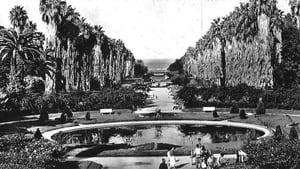
The film, shot in 1938, is part of a series entitled “The true face of Algeria”. The film highlights the proximity of Algiers to Paris and promotes air travel. The commentary supporting the images highlights the urban dynamism (“Every day, a new skyscraper replaces a wasteland”) and the comparison with Paris (“Algiers is often nicknamed the Paris of North Africa because of its elegance become proverbial). Contemporary architectural achievements are described as the sign of “grandiose modernism”: “we love the new, the bold”. But the point does not forget the buildings illustrating “the Moorish, classic and attractive style”. The description of the Casbah also attempts to understand the architectural organization but also the diversity and even the atmosphere.
1945