Watch Hezbollah: The Chronicle of a Return (1998) Online Free
Documentary tracing Hezbollah’s emergence in southern Lebanon after years of Israeli occupation, focusing on its social base, resistance activities, and the return of displaced villagers.
Cast
Hassan Nasrallah, Abbas al-Musawi, Imad Mughniyeh, Sayyed Mahdi Shamseddine
More Like This
Groenland, annexe-moi si tu peux
Greenland, a semi-autonomous territory of Denmark, is currently at the center of international covetousness and tensions. In his rivalry with China for technological supremacy, Donald Trump has made the acquisition of this Arctic territory a priority in order to secure American control over rare earth elements, of which Greenland is believed to hold one of the world's largest reserves.
2025
The cats, the sea, and everything in between.
In 2022, when the economic crisis in her native country was at its peak, she decided to visit her family there. She turned her short trip into a collage-like diary in which she reflects on her relationship with her homeland, which is in a state of protracted decay. The film is composed of spontaneous snapshots capturing the author's stay, interspersed with inserted captions serving as personal, often poetically formulated comments and observations. As a result, the film does not hide its strongly subjective perspective, but at the same time builds on it to make an important statement that shows the transformation of Lebanese society in everyday details such as the appearance of the city itself or in the intimate sphere of the author's family life.
2025
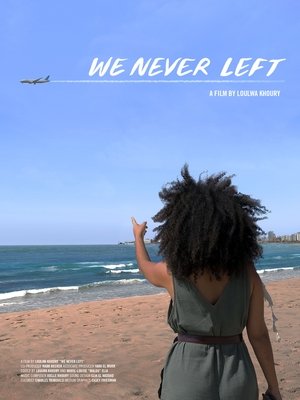
We Never Left
Set during the Lebanese revolution, WE NEVER LEFT portrays a heart-wrenching duality between Beirut and New York, an impassioned testament to the Lebanese diaspora’s unrequited but irrepressible love for their homeland.
2024

Le Baron et l'Empereur : Japon, la voie de la guerre
2023
Edge of the Valley
A nine-year-old Syrian refugee girl contemplates her increasingly bleak future after being forced to drop out of school in the midst of Lebanon’s unprecedented economic collapse and battle with Covid-19.
2021
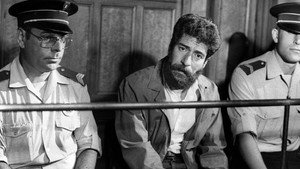
Fedayin, the fight of Georges Abdallah
A leading figure in the Palestinian cause and the fight against imperialism, the Lebanese communist activist Georges Ibrahim Abdallah had been languishing in French prisons for thirty-eight years—a unique case in France. Arrested in Lyon in 1984 with false papers, he was sentenced two years later to four years in prison for possession of weapons and explosives, then in 1987 received a life sentence for complicity in the assassinations in Paris five years earlier of an Israeli Mossad agent and an American military attaché—charges he has always denied. Although he has been eligible for release since 1999, French political authorities, under pressure from the United States and Israel, opposed his release. Interventions by Palestinian figures, his relatives, his lawyer and ex-prisoners from the extreme left, retrace the journey of the village schoolteacher who became an anti-colonial activist.
2020

The Faces of North Korea
This is a 25-minutes piece about the DPRK (North Korea), a country Vltchek visited and fell in love with. Vltchek goes against the hegemonic western propaganda that is perpetuated towards DPRK and their people, showing the beauty that resides in the country.
2018
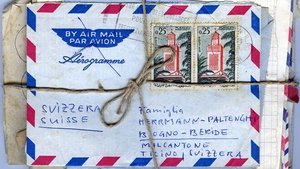
CHoosing at Twenty
Between 1954-1962, one hundred to three hundred young French people refused to participate in the Algerian war. These rebels, soldiers or conscripts were non-violent or anti-colonialists. Some took refuge in Switzerland where Swiss citizens came to their aid, while in France they were condemned as traitors to the country. In 1962, a few months after Independence, Villi Hermann went to a region devastated by war near the Algerian-Moroccan border, to help rebuild a school. In 2016 he returned to Algeria and reunited with his former students. He also met French refractories, now living in France or Switzerland.
2017
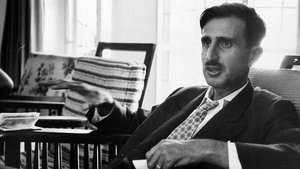
Kamal Joumblatt, Witness and Martyr
Kamal Jumblatt, the Master of Moukhtara Castle, recounts the major events of his life until his assassination on March 16, 1977. The film takes us on a global journey from Lebanon to India, in the footsteps of Kamal Jumblatt, the founder of the PSP (Progressive Socialist Party), the leader, the rebel, the reformer, the thinker, the poet, the Yogi … Kamal Jumblatt (1917-1977) becomes the last witness... of his own life.
2015
Una identidad en absurdo Vol. 1
Guillermo Gómez Álvarez explores the identity politics of Puerto Rico via archival footage from various sources that clash with nine original songs from local independent musicians and a thematic analysis from a psychoanalyst and a historian. From the juxtaposition the absurd becomes coherent and the coherent becomes absurd as Puerto Rican identity is defined and rejected almost simultaneously.
2011

The Lady of the Palace
Sayedat Al-Kasr traces the history of the Joumblatt family of Mount Lebanon from the 17th century to the present, focusing on early 20th century leader and politician Nazira Joumblatt. Born in 1889, Nazira ascended the throne of the Moukhtara palace in 1923, following the assassination of her husband Fouad and the resignation of her brother Aly Joumblatt. She presided over the region as Lady of the Palace for twenty-five years while raising her son Kamal, preparing him to take his place in a long line of Jumblatt leaders. Famous for her wisdom and strong personality, Nazira boldly entered the Lebanese political scene at a time when this field was entirely dominated by men. Unwavering, she contributed to maintaining peace and stability in Lebanon for many years, earning the respect of men and women, whether Druze or Maronites.
2004

Sociology Is a Martial Art
"I often say sociology is a martial art, a means of self-defence. Basically, you use it to defend yourself, without having the right to use it for unfair attacks." (Pierre Bourdieu) The world has witnesses who speak out loud what others keep to themselves. They are neither gurus, nor masters, but those who consider that the city and the world can be thought out. The sociologist, Pierre Bourdieu is one such witness." Over a three- year period, Pierre Carles' camera followed him through different situations: a short conversation with Günter Grass, a lively conference with the inhabitants of a working-class suburb, his relations with his students and colleagues and his plea that sociology be part of the life of the city. His thinking has a sort of familiarity, which means it is always within our reach. It is the thinking of a French intellectual who has chosen to think his times.
2001
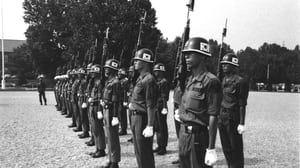
Homes Apart: Korea
They speak the same language, share a similar culture and once belonged to a single nation. When the Korean War ended in 1953, ten million families were torn apart. By the early 90s, as the rest of the world celebrated the end of the Cold War, Koreans remain separated between North and South, fearing the threat of mutual destruction. Beginning with one man's journey to reunite with his sister in North Korea, filmmakers Takagi and Choy reveal the personal, social and political dimensions of one of the last divided nations on earth. The film was also the first US project to get permission to film in both South & North Korea.
1991
The Empire Visits Us Once More
In Portobelo, two friends go to a Congo dance and witness an invasion of demons, while Panama is invaded by Americans troops in 1989: this turns into an account of what happened in the cities of Colón and Panamá.
1990
The Zerda or the Songs of Forgetting
“La Zerda and the songs of oblivion” (1982) is one of only two films made by the Algerian novelist Assia Djebar, with “La Nouba des femmes du mont Chenoua” (1977). Powerful poetic essay based on archives, in which Assia Djebar – in collaboration with the poet Malek Alloula and the composer Ahmed Essyad – deconstructs the French colonial propaganda of the Pathé-Gaumont newsreels from 1912 to 1942, to reveal the signs of revolt among the subjugated North African population. Through the reassembly of these propaganda images, Djebar recovers the history of the Zerda ceremonies, suggesting that the power and mysticism of this tradition were obliterated and erased by the predatory voyeurism of the colonial gaze. This very gaze is thus subverted and a hidden tradition of resistance and struggle is revealed, against any exoticizing and orientalist temptation.
1983

Algeria, Year Zero
Documentary on the beginnings of Algerian independence filmed during the summer of 1962 in Algiers. The film was banned in France and Algeria but won the Grand Prize at the Leipzig International Film Festival in 1965. Out of friendship, the production company Images de France sent an operator, Bruno Muel, who later declared: "For those who were called to Algeria (for me, 1956-58), participating in a film on independence was a victory over horror, lies and absurdity. It was also the beginning of my commitment to the cinema."
1965
The Land
The Land documents the uprising of the people of Bisri and activists from all of Lebanon against the construction of the dangerous dam leading up to the Bisri Valley's liberation. Farmers and shepherds discuss their fears of losing the land and their intimate relationship with it. It also presents the project's seismic and geological dangers, its futility, the conflicts of interest surrounding its construction, and its destruction of a rich and significant area in every respect.
Lebanese, Hostages of Their City
Jocelyne Saab toured the city of Beirut devastated by Israeli bombings. She assesses the number of victims and the extent of the destruction.
1982
Colonial Times
Three centuries of Venezuela's history as a Spanish colony are considered from economic, political and social standpoints; evocations of the past are compared to the present. Based on the ideas and research of Federico Brito Figueroa, Alfredo A. Alfonso, Miguel A. Saignes, Josefina Jordan, and Thaelman Urgelles among others.
1976
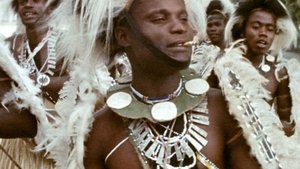
The Pan-african Festival in Algiers
Festival panafricain d'Alger is a documentary by William Klein of the music and dance festival held 40 years ago in the streets and in venues all across Algiers. Klein follows the preparations, the rehearsals, the concerts… He blends images of interviews made to writers and advocates of the freedom movements with stock images, thus allowing him to touch on such matters as colonialism, neocolonialism, colonial exploitation, the struggles and battles of the revolutionary movements for Independence.
1969