Watch Kamal Joumblatt, Witness and Martyr (2015) Online Free
Kamal Jumblatt, the Master of Moukhtara Castle, recounts the major events of his life until his assassination on March 16, 1977. The film takes us on a global journey from Lebanon to India, in the footsteps of Kamal Jumblatt, the founder of the PSP (Progressive Socialist Party), the leader, the rebel, the reformer, the thinker, the poet, the Yogi … Kamal Jumblatt (1917-1977) becomes the last witness... of his own life.
Cast
Kamal Joumblatt
More Like This
The cats, the sea, and everything in between.
In 2022, when the economic crisis in her native country was at its peak, she decided to visit her family there. She turned her short trip into a collage-like diary in which she reflects on her relationship with her homeland, which is in a state of protracted decay. The film is composed of spontaneous snapshots capturing the author's stay, interspersed with inserted captions serving as personal, often poetically formulated comments and observations. As a result, the film does not hide its strongly subjective perspective, but at the same time builds on it to make an important statement that shows the transformation of Lebanese society in everyday details such as the appearance of the city itself or in the intimate sphere of the author's family life.
2025
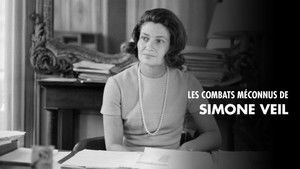
Les combats méconnus de Simone Veil
Women's work, gender equality, prison conditions, AIDS patients, humanization of hospitals, parental authority, equal pay... Simone Veil fought many battles that are little known today. As we prepare to celebrate the 50th anniversary of the law on abortion, enacted on January 17, 1975, the time has come to tell her story in a new way through this portrait of a woman ahead of her time: in the light of her other struggles.
2025
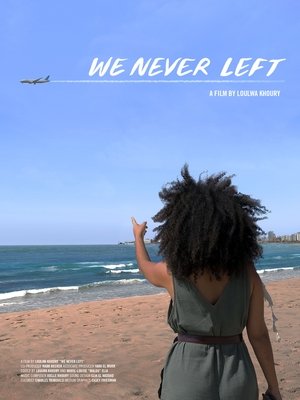
We Never Left
Set during the Lebanese revolution, WE NEVER LEFT portrays a heart-wrenching duality between Beirut and New York, an impassioned testament to the Lebanese diaspora’s unrequited but irrepressible love for their homeland.
2024
Fouad Elkoury par Fouad
Fouad Elkoury's unique journey, between photojournalism and art photography, from his early days immersed in the complex and tragic history of Lebanon and the Israeli-Palestinian conflict, to his travels from the port of Marseille to Istanbul, from Turkey to Egypt, from the 1970s to the present day, punctuated by the photographs that made him famous. An intimate and privileged encounter with one of the greatest photographers in the Arab world, through his personal archives, his travel stories, and his life stories.
2024

Pierre Clément, Cinéma et Révolution
Pierre Clément, student and photographer of René Vauthier, first accompanied him to Tunisia to make a film on the country's independence in 1957. Destiny led him to Algeria and his presence in February 1958 at the Tunisian-Algerian border changed his life. . Forever. He took his camera and photographed the attacks on Sakia Sidi Youssef before committing himself body and soul to the Algerian cause. Shortly after, he directed the film “Algerian Refugees” before being arrested, tortured and imprisoned, while his third film, “The National Liberation Army in Almaki”, was not finished. Abdel Nour Zahzah, a director who commemorates Pierre Clément, the director who risked his life, the brother of the Algerian resistance, who disappeared in 2007.
2023
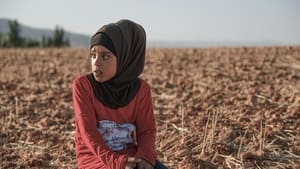
Edge of the Valley
A nine-year-old Syrian refugee girl contemplates her increasingly bleak future after being forced to drop out of school in the midst of Lebanon’s unprecedented economic collapse and battle with Covid-19.
2021

Le jour est la nuit
Beyrouth, spring 2020. Is the uprising in Lebanon merely on hold?
2021

Maintenant
Yes, you have to scream louder.
2021
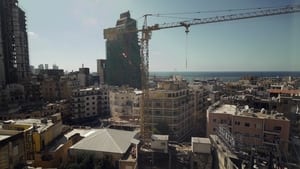
Recovery
Jean-Claude walks his dog in a neighborhood forever stuck in reconstruction. On his trip, he wonders about life, mortality, and 'what if' scenarios while remembering fragments from the direct impact of the second that almost cost him his life on August 4. At the moment of the explosion, the end of the world, bodies, buildings, roads, and cities may shatter. Perhaps the universe itself breaks apart. But the most severe fragmenting remains that of memory. A picture here and a sound there are vaguely reconstituted. Can a future be built from such a memory? Can it rebuild what was lost? Is it time to leave?
2021

Edgar Morin, un penseur à Paris
2019
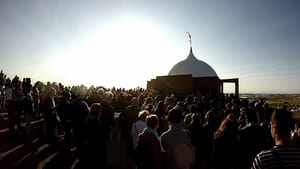
The Search for the Meaning
"The Search for the Meaning" is a collective experience, carried out with the audiovisual contribution of countless people who record their testimonies and spiritual experiences in 19 countries, to show a new spirituality that is being born...
2019
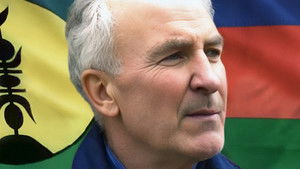
Jean-Jacques de Félice, The Passion For Justice
From the rights of minors before the juvenile court, young offenders from the neighborhoods of eastern Paris, or children of Algerian origin from the shantytowns of Nanterre, to the defense of colonized Kanaks and Polynesians; from the fight for conscientious objector status to the denunciation of torture and the death penalty, lawyer Jean-Jacques de Félice has been involved in every struggle. His pacifism knows no bounds: with organizations like Cimade, LDH, and the Louis-Lecoin Committee, he assists draft dodgers in numerous countries. These include Portuguese conscientious objectors refusing to fight in the wars in Angola and Mozambique, American deserters opposed to the Vietnam War, and Israeli objectors refusing to serve in the Occupied Territories. It is no surprise that, as early as 1971, he was one of the very first lawyers representing the farmers of the Larzac plateau.
2018
Jean-Marie Serreau, découvreur de théâtres
2016
Waltz with Bashir
An Israeli film director interviews fellow veterans of the 1982 invasion of Lebanon to reconstruct his own memories of his term of service in that conflict.
2008

We Loved Each Other So Much
Inhabitants of Beirut talk about their love for the singer Fairuz.
2003
Persona Non Grata
2003 documentary film produced by Oliver Stone for the HBO series America Undercover about the conflict in occupied Palestine. He speaks with Ehud Barak and Benjamin Netanyahu, former prime ministers of Israel, Yasser Arafat, late president of the Palestinian National Authority, and various Palestinian activists resisting the oppression of the zionist regime.
2003
The Land
The Land documents the uprising of the people of Bisri and activists from all of Lebanon against the construction of the dangerous dam leading up to the Bisri Valley's liberation. Farmers and shepherds discuss their fears of losing the land and their intimate relationship with it. It also presents the project's seismic and geological dangers, its futility, the conflicts of interest surrounding its construction, and its destruction of a rich and significant area in every respect.

Sociology Is a Martial Art
"I often say sociology is a martial art, a means of self-defence. Basically, you use it to defend yourself, without having the right to use it for unfair attacks." (Pierre Bourdieu) The world has witnesses who speak out loud what others keep to themselves. They are neither gurus, nor masters, but those who consider that the city and the world can be thought out. The sociologist, Pierre Bourdieu is one such witness." Over a three- year period, Pierre Carles' camera followed him through different situations: a short conversation with Günter Grass, a lively conference with the inhabitants of a working-class suburb, his relations with his students and colleagues and his plea that sociology be part of the life of the city. His thinking has a sort of familiarity, which means it is always within our reach. It is the thinking of a French intellectual who has chosen to think his times.
2001
Écoutez Mouna
Everyone knows Aguigui Mouna, the jester who harangues the crowds on the Beaubourg esplanade in Paris and rides his bicycle through demonstrations. But many don't know the story of André Dupont, a Savoyard raised in tough conditions, forced into violence in the navy to rise to power and into resourcefulness in civilian life to survive. Antibes, 1952, the transformation: Aguigui Mouna is born. Laughter, solidarity, non-violence, humanism—Mouna has found the meaning of his existence. He will try to share them with all the robots of this "poop-pee-capitalist" society. A comic book character who, through his adventures, reveals the absurdities of his century.
1989
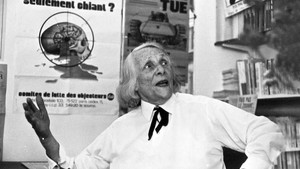
Écoutez May Picqueray
"Well, I believe in anarchy! And I believe it will come true one day." That's what "May the Rebel," a union activist, anti-militarist, and anarchist, always ready to denounce oppression and defend victims, affirms at 85. Born in Brittany, she earned her living at age 10 delivering butter. In Paris, at 20, she became involved with the Anarchist Union. Sébastien Faure became her mentor. She used a grenade to trigger the Sacco-Vanzetti affair. A union delegate in Moscow in 1922, she sang "Hymn to Anarchy" before Trotsky. Children during the Spanish Civil War, Jews during the Second World War, conscientious objectors alongside Louis Lecoin during the Algerian War, and later, through her newspaper Le Réfractaire, the Larzac, Plogoff, and Creys-Malville protests—all these were battlegrounds for May Picqueray. To the very end, she remained true to her commitment to defending peace and individual liberties.
1984