Watch Hans Heinz Holz: Spekulatives Denken (2019) Online Free
These last major lectures by Hans Heinz Holz (1927–2011) follow his philosophical reflection from Parmenides to Karl Marx. They were recorded in October 2009 at his home in Sant’Abbondio, Switzerland.
More Like This
Le deuxième sexe : Sur les traces de Simone de Beauvoir
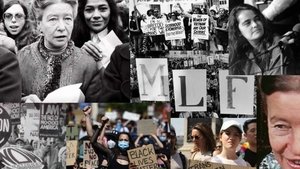
Published in 1949, The Second Sex became the bible of global feminism. An essential work that passionately advocates for gender equality, women's independence, and the liberation of morals. Today, how does this seminal work continue to resonate in our contemporary world? Conceived as an initiatory journey to the origins of Simone de Beauvoir's thinking, the film The Second Sex: In the Footsteps of Simone de Beauvoir takes us to the United States, to the places that inspired the philosopher and nourished her theories. An American road trip bringing together the worst and the best, predatory capitalism and mad love. A unique reinterpretation in the company of the great thinkers of our century.
2025

Looking for Simone
In 1949, philosopher and novelist Simone de Beauvoir wrote the groundbreaking The Second Sex, launching a disruptive discourse on women’s oppression and second-class citizenship. This film dissects the origins and relevance of this bible of feminism, charting de Beauvoir’s fact-finding journey across the US to research her book. The timely and fascinating film honors de Beauvoir’s brilliance and limitations, connecting her revolutionary ideas to the pressing issues women face today.
2024
El filósofo y el estudiante
2024

Hannah Arendt, la liberté d'être libre
In a time of resurgence of social protests, political radicalization and distrust of power, Arendt's thought has never been more relevant: A critical thinker according to some or a conservative according to others, this great figure of the intellectual world remains, in many ways, an enigma. Who was Hannah Arendt?
2023
Being 97
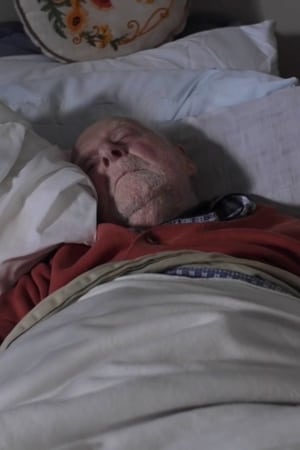
Herbert Fingarette once argued that there was no reason to fear death. At 97, his own mortality began to haunt him, and he had to rethink everything.
2018
Tawai: A Voice from the Forest
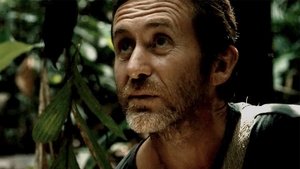
Explorer Bruce Parry visits nomadic tribes in Borneo and the Amazon in hope to better understand humanity's changing relationship with the world around us.
2017
Archangels Don't Play Pinball
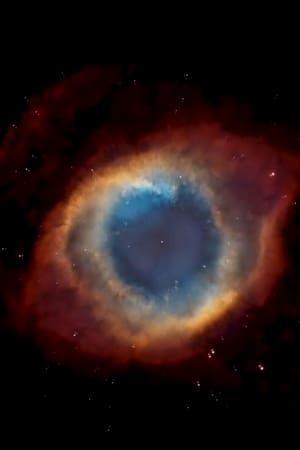
A film essay on origin, life, religion, decay and more.
2014
I Think You're Totally Wrong: A Quarrel
On the first day of shooting, James Franco, David Shields, and Caleb Powell throw out the script when a real-life argument breaks out between the three of them about what can and can't be used in the film. Shields and Franco browbeat Powell to sacrifice everything for the sake of the film; Powell threatens to leave; Shields feels guilty about betraying Powell; and Franco wants Shields and Powell to confess all for the sake of the film. A debate, nearly to the death, about life and art.
2014
The Pervert's Guide to Cinema
A hilarious introduction, using as examples some of the best films ever made, to some of Slovenian philosopher and psychoanalyst Slavoj Žižek's most exciting ideas on personal subjectivity, fantasy and reality, desire and sexuality.
2006
The Projection Has Begun
Sancho Panza enters a movie theatre in a provincial city. He is looking for Don Quixote and he finds him sitting off to the side and staring at the screen. The theatre is almost full; the balcony is entirely occupied by noisy children… La proiezione è cominciata (The Projection Has Begun) is an adaptation of The Six Most Beautiful Minutes in the History of Cinema by Giorgio Agamben. It is a portrait in 24 daguerreotypes per second.
2006
Nietzsche's Thinking Places
The favourite places for thinking of the philosopher Friedrich Nietzsche - Sorrento, Engadine, Venice, Genoa, Rapallo, Nice, Turin - with passages from his letters and notebooks that explain why they were so important to him.
2003
Bruce Lee: A Warrior's Journey
Documentary on the legendary martial artist Bruce Lee, with a focus on the production of his unfinished film Game of Death. Using interviews and behind-the-scenes footage, Lee aficionado John Little paints a portrait of the world's most famous action hero, concluding with a new cut of Game of Death's action finale, reconstructed from Lee's notes and recently-recovered footage.
2000
Wandering Marxwards
A political and poetic wondering/wandering about the relevance and context of re-reading Marx 150 years after the publication of The Communist Manifesto
1999
Anarchism in America
A colorful and provocative survey of anarchism in America, the film attempts to dispel popular misconceptions and trace the historical development of the movement. The film explores the movement both as a native American philosophy stemming from 19th century American traditions of individualism, and as a foreign ideology brought to America by immigrants. The film features rare archival footage and interviews with significant personalities in anarchist history including Murray Boochkin and Karl Hess, and also live performance footage of the Dead Kennedys.
1983
Pebbles in the Flood
Musings on life and literature in this student drama made by the Cambridge Film Unit.
1975
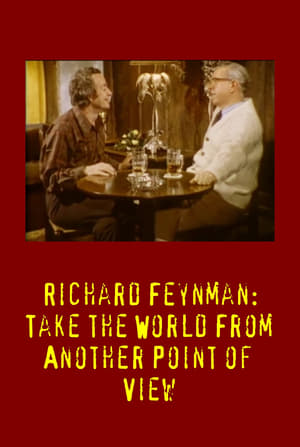
Take the World From Another Point of View
In 1973 Yorkshire public television made a short film of the Nobel laureate while he was there. The resulting film, Take the World from Another Point of View, was broadcast in America as part of the PBS Nova series. The documentary features a fascinating interview, but what sets it apart from other films on Feynman is the inclusion of a lively conversation he had with the eminent British astrophysicist Fred Hoyle.
1973
Work as Play
Alan Watts discusses the Western dichotomy of work and play, and explains that when you take the play out of work life becomes joyless drudgery.
1973
Conversation with Myself
Alan Watts talks about our perception of the world, and how we derive metaphysics from it. Watts recorded this video in 1971 as a pilot for a public television series in the United States.
1972
A rebelión da lectura
Philosophie et vérité
A discussion between Jean Hyppolite, Georges Canguilhem, Paul Ricoeur, Michel Foucault and Alain Badiou on the subject of philosophy and truth. Curated by Dina Dreyfus.
1965