Watch Habilito: Debt for Life (2010) Online Free
Documents the conflicts and tensions that arise between highland migrants and Mosetenes, members of an indigenous community in the Bolivian Amazon. It focuses particularly on a system of debt peonage known locally as ‘habilito’. This system is used throughout the Bolivian lowlands, and much of the rest of the Amazon basin, to secure labor in remote areas.
More Like This

Nothing Remains Nothing Disappears
A Berlin street corner is slowly changing: an aging supermarket turns into a construction site and finally a new building. People restock shelves, demolish walls, take breaks and count money. Those who work here participate in the making and unmaking of the place. How does it shape the conditions of their labor? Between supermarket aisles, construction scaffolding and exposed concrete, different versions begin to overlap. Repetitions appear like echoes between worlds, both playful and eerie.
2026
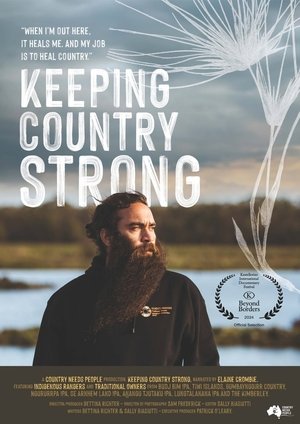
Keeping Country Strong
Keeping Country Strong is a new documentary by Country Needs People From the heart of the desert to the islands and estuaries of Sea Country, Indigenous Protected Areas span over 110 million hectares of land and sea and now cover over 54% of Australia’s reserves on land. Indigenous Rangers are on the frontline. Working in some of the most remote corners of the planet they are safeguarding endangered species, fighting wildfires and invasive species, and practising culture in the face of a changing climate. FEATURING Indigenous Rangers and Traditional Owners from Budj Bim IPA, Gaagal Wajaarr Proposed Sea Country IPA, Ngururrpa IPA, Tiwi Islands Proposed IPA, Anangu Tjutaku IPA, Lungtalanana IPA, Mayala IPA & SE Arnhem Land IPA.
2025

Beyond the Ruins
Embark on a captivating journey that delves into the essence of Yucatecan Maya life in the 21st century. This feature-length documentary unfolds against the backdrop of Coba, the second largest Maya ceremonial center in the ancient world. From this archaeological marvel, the film ventures deep into the lush jungles and intimate villages, offering a poignant exploration of two indigenous families committed to preserving their rich heritage. At its core, Beyond the Ruins weaves a tapestry that illuminates the profound interconnectedness of existence, as mirrored in the ancient Maya philosophy of "in lak' ech, a lak' en" - where "I am you; you are me." The film not only resurrects a vibrant but often overlooked culture; it also invites viewers to contemplate the universal lessons embedded in Maya wisdom. Through this evocative lens, audiences discover not only a living legacy but also a source of inspiration to enhance their own quality of life.
2024
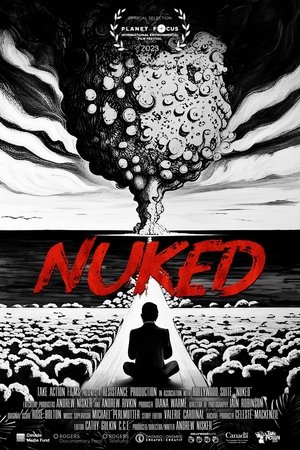
NUKED
The US detonated 67 nuclear weapons over the Bikini Atoll in the Marshall Islands during the Cold War, the consequences of which still reverberate down four generations to today. "NUKED," is a timely new feature documentary focussing on the human victims of the nuclear arms race, tracing the displaced Bikinian's ongoing struggle for justice and survival even as climate change poses a new existential threat. Using carefully restored archival footage to resurrect contemporaneous islanders’ voices and juxtaposing these with the full, awesome fury of the nuclear detonations, NUKED starkly contrasts the official record with the lived experience of the Bikinians themselves, serving as an important counterpoint to this summer’s Oppenheimer.
2023
Homebound
Through first person narration, Tari reveals personal stories related to her decision to work in Taiwan, her strained family relationships, the risks involved in working abroad and the traps she has fallen into.
2022
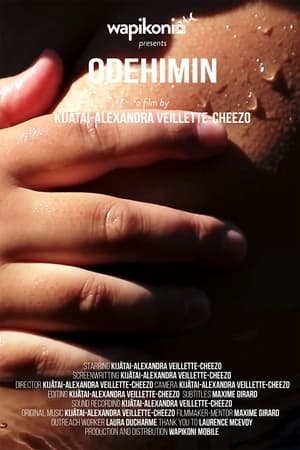
Heart Berry
A lyrical film ode to the odehimin or heart berry. A two-spirit Anishnaabe person finds themself in a dark place with their body. They undertake a healing journey, stating aloud their intentions and reconnecting with the land and the water for strength. As they get more in touch with their body and the beings around them, we begin to see them heal.
2021
Inhabitants
For millennia, Native Americans successfully stewarded and shaped their landscapes, but centuries of colonization have disrupted their ability to maintain their traditional land management practices. From deserts, coastlines, forests, mountains, and prairies, Native communities across the US are restoring their ancient relationships with the land. As the climate crisis escalates these time-tested practices of North America's original inhabitants are becoming increasingly essential in a rapidly changing world.
2021
One Heart: One Spirit
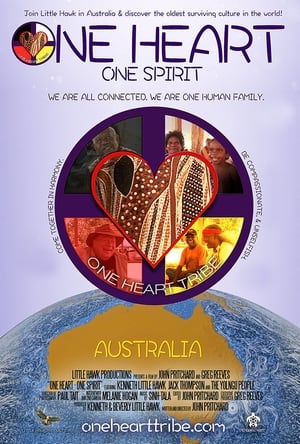
An Aboriginal Australian and Native American documentary narrated by award-winning actor Jack Thompson, One Heart-One Spirit tells the story of Kenneth Little Hawk, an elder Micmac/Mohawk performing artist, meeting the oldest surviving culture on the planet: the 40,000 year old Yolngu nation located in northern Australia.
2017
Walkers of time
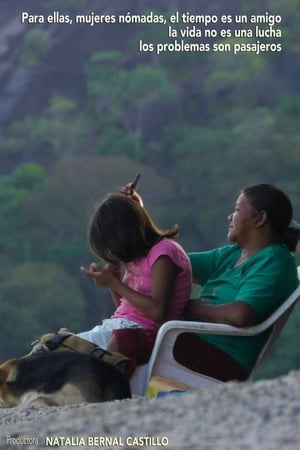
María is an Amorúa girl; an indigenous group that traveled the savannas of Orinoquía as nomads. She lives with her grandmother Matilde, her sister diana and her cousins in Puerto Carreño, in the Colombia-Venezuela border. The amorúa are considered wild and are not literate. Matilde wants her granddaughters to learn to write and read to live better in this town of "rational whites" as they call us. The director follows María's life for 8 years from her childhood to her adolescence and invites her to travel the places her grandma did as a nomad.
2017

Living with Giants
Living with Giants delves into the imaginative world of Paulusie Kasudluak, a young Inuk facing responsibilities as he transitions into adulthood. The film portrays his thoughts, his dreams, and his beliefs, and allows for an intimate immersion into his life. Paulusie is a caring son to his ailing father and a good boyfriend. But what begins as the story of an innocent teenager quickly becomes the struggle of a young man coping with the guilt of having made a huge mistake. Tragically, Paulusie takes the most dramatic decision and takes his own life. Living with Giants remains a poetic journey of resilience that echoes issues that are far greater than Paulusie's personal story.
2016
O Retorno da Terra Tupinambá
2015
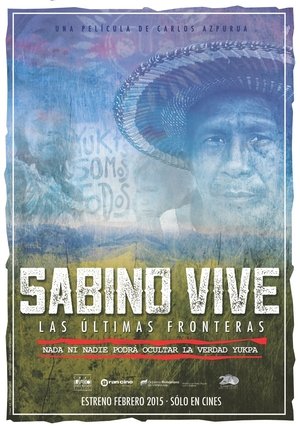
Sabino vive: las últimas fronteras
The documentary recreates the facts in the life of the Yukpa Chief, Sabino Romero, an indigenous fighter killed on March 3, 2013, in the Chaktapa community of the Sierra de Perija in Zulia state, Venezuela. The film reflects the infinite struggle of Sabino and his people, accompanied by the social groups, in this story of truly libertarian images made with blood and fire, revealing the skein of interests that forged and carried out Sabino's murder, and the attitude Inhuman and murderous of those who made it another victim of history.
2015
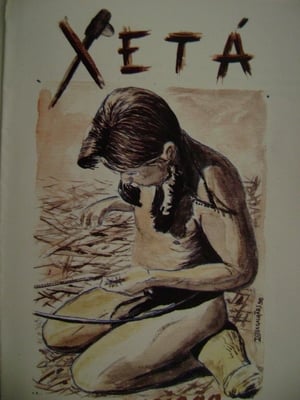
Xetá
2010
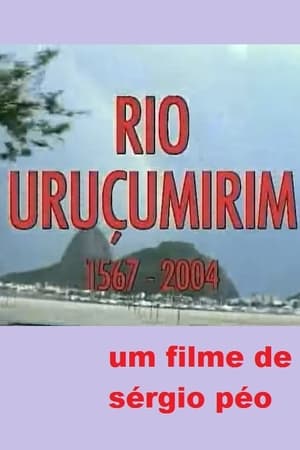
Rio Uruçumirim
Rescue bridge of the Tupinambá de Uruçumirim village, headquarters of the Tamoia Confederation until 1567, when it was destroyed in a genocidal operation, commanded by Portuguese led by Estácio de Sá, with the support of the Jesuits Manuel da Nóbrega and Anchieta, here founding the city of Rio de January. Testimony and contemporary point of view from Pajé Sapaim Kamayurá.
2009
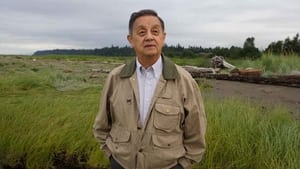
Writing the Land
In this short documentary, a Musqueam elder rediscovers his Native language and traditions in the city of Vancouver, in the vicinity of which the Musqueam people have lived for thousands of years. Writing the Land captures the ever-changing nature of a modern city - the glass and steel towers cut against the sky, grass, trees and a sudden flash of birds in flight and the enduring power of language to shape perception and create memory.
2007
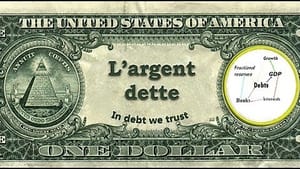
Money as Debt
Paul Grignon's 47-minute animated presentation of "Money as Debt" tells in very simple and effective graphic terms what money is and how it is being created
2006
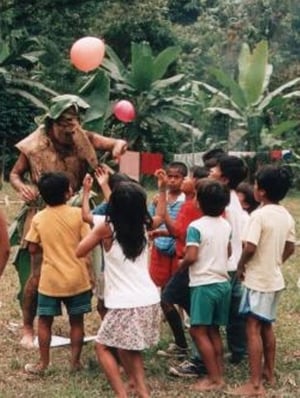
The Call of Fayu Ujmu
A 13-year-old Indian boy is found unconscious after being attacked in the jungle by the evil spirit Fayu Ujmu. A shaman attempts to ritually tame the spirit and advises the boy’s father to capture it. This story is based on a Chachi Indian legend; it was shot with indigenous inhabitants of the jungle community of Loma Linda, on the Rio Cayapas.
2002
Foster Child
Gil Cardinal searches for his natural family and an understanding of the circumstances that led to his becoming a foster child. An important figure in the history of Canadian Indigenous filmmaking, Gil Cardinal was born to a Métis mother but raised by a non-Indigenous foster family, and with this auto-biographical documentary he charts his efforts to find his biological mother and to understand why he was removed from her. Considered a milestone in documentary cinema, it addressed the country’s internal colonialism in a profoundly personal manner, winning a Special Jury Prize at Banff and multiple international awards.
1987
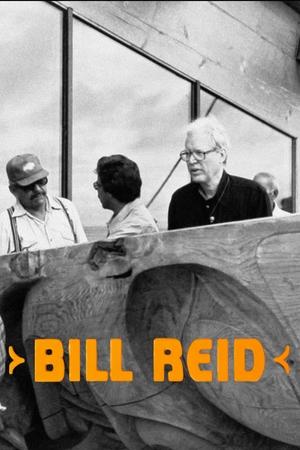
Bill Reid
Follows Haida artist Bill Reid, from British Columbia. A jeweller and wood carver, he works on a traditional Haida totem pole. We watch the gradual transformation of a bare cedar trunk into a richly carved pole to stand on the shores of the town of Skidegate, in the Queen Charlotte Islands of B.C.
1979
The Unconditioned Unconcealment
1974