Watch Grenada: Confronting the Past (2022) Online Free
In the eighteenth century, the family of BBC World News anchor and correspondent, Laura Trevelyan, were absentee slave owners on the island of Grenada, profiting for years from the sale of sugar harvested from five different sugar cane plantations. When slavery was abolished in 1834, the UK government paid compensation to slave owners, but the enslaved received nothing. In the wake of the racial reckoning in America following the death of George Floyd, Grenada's national commission on reparations for slavery has begun to meet and debate what reparations means. In this film, Laura she travels to Grenada to try and learn more about the legacy of slavery on Grenada and her family's involvement in the slave trade.
Cast
Laura Trevelyan, Nicole Phillip-Dowe, Dunbar 'DC' Campbell, Garfield Hankey, Arley Gill
More Like This
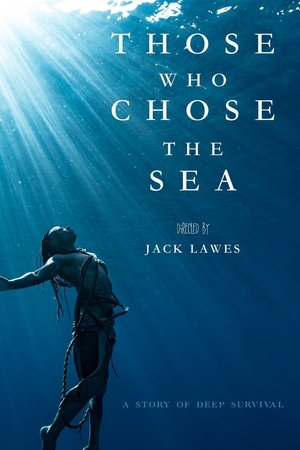
Those who Choose the Sea
Inspired by the powerful true story of the Igbo Landing of 1803, where a group of enslaved Africans chose the ocean over slavery. This poetic film follows African freediver Tatiana Mendes as she confronts her own inner turmoil beneath the surface. Through the discipline of freediving, she dives into more than just water. She descends into inherited trauma, ancestral memory, and the quiet violence of modern life.
2025

1798 - Revolta dos Búzios
One of the most important events in Brazilian history, the Búzios Revolt of 1798 was led by dozens of black men who rose up to overthrow the colonial government, proclaim independence and establish a democratic Republic, free from slavery. The boldness of these men called on the people to make the Revolution and the conspiracy spread to the city of Bahia. The seizure of power is near. But the movement is denounced, the government sets up a Devassa against hundreds of people and four of them are hanged and quartered.
2024
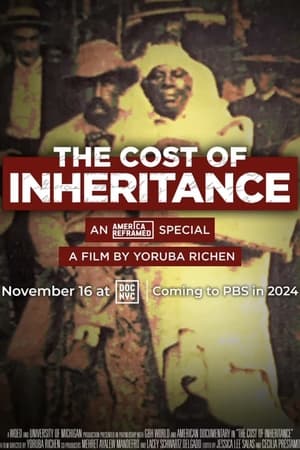
The Cost of Inheritance
The decades-long debate surrounding reparations is fraught, mired in racial tension and the semantics of restorative justice. While the national conversation remains stalled due to legislative inaction, communities across the country examine their histories and take it upon themselves to arrange their own form of reparations. This detailed investigation of restitution presents accounts of everyday people confronting the past and exploring the possibilities of wealth transfer.
2023
Le Baron et l'Empereur : Japon, la voie de la guerre
2023
Who We Are: A Chronicle of Racism in America
Jeffery Robinson's talk on the history of U.S. anti-Black racism, with archival footage and interviews.
2022

The Faces of North Korea
This is a 25-minutes piece about the DPRK (North Korea), a country Vltchek visited and fell in love with. Vltchek goes against the hegemonic western propaganda that is perpetuated towards DPRK and their people, showing the beauty that resides in the country.
2018

The Cult Next Door
In 2013, three women emerged from a flat in Brixton. They had been held there for decades by Aravindan Balakrishnan, a revolutionary Maoist who controlled the women with brainwashing techniques and tales of a sinister, world-controlling machine he called 'Jackie'.
2017
Palm Trees in the Snow
Spain, 2003. An accidental discovery leads Clarence to travel from the snowy mountains of Huesca to Equatorial Guinea, to visit the land where her father Jacobo and her uncle Kilian spent most of their youth, the island of Fernando Poo.
2015
Una identidad en absurdo Vol. 1
Guillermo Gómez Álvarez explores the identity politics of Puerto Rico via archival footage from various sources that clash with nine original songs from local independent musicians and a thematic analysis from a psychoanalyst and a historian. From the juxtaposition the absurd becomes coherent and the coherent becomes absurd as Puerto Rican identity is defined and rejected almost simultaneously.
2011
Andrew Jackson: Good, Evil & The Presidency
A fascinating account of the presidency of Andrew Jackson, who was both one of America's great presidents and a borderline tyrant. The seventh president shook up the glossy world of Washington, DC with his "common-man" methods and ideals, but also oversaw one of the most controversial events in American history: the forced removal of Indian tribes, including the Cherokees, from their homes.
2007
The Warrior
In 1375, China was in chaos between Yuan Dynasty and Ming Dynasty. Coryo (an ancient kingdom of Korea then) sent a delegation of many diplomats, soldiers and a silent slave to make peace with the new Chinese government. However, this delegation got charged as spies and sent in exile to a remote desert.
2001
Amistad
In 1839, the slave ship Amistad set sail from Cuba to America. During the long trip, Cinque leads the slaves in an unprecedented uprising. They are then held prisoner in Connecticut, and their release becomes the subject of heated debate. Freed slave Theodore Joadson wants Cinque and the others exonerated and recruits property lawyer Roger Baldwin to help his case. Eventually, John Quincy Adams also becomes an ally.
1997
Homes Apart: Korea
They speak the same language, share a similar culture and once belonged to a single nation. When the Korean War ended in 1953, ten million families were torn apart. By the early 90s, as the rest of the world celebrated the end of the Cold War, Koreans remain separated between North and South, fearing the threat of mutual destruction. Beginning with one man's journey to reunite with his sister in North Korea, filmmakers Takagi and Choy reveal the personal, social and political dimensions of one of the last divided nations on earth. The film was also the first US project to get permission to film in both South & North Korea.
1991

Out of Africa
Tells the life story of Danish author Karen Blixen, who at the beginning of the 20th century moved to Africa to build a new life for herself. The film is based on her 1937 autobiographical novel.
1985
Spartacus
The rebellious Thracian Spartacus, born and raised a slave, is sold to Gladiator trainer Batiatus. After weeks of being trained to kill for the arena, Spartacus turns on his owners and leads the other slaves in rebellion. As the rebels move from town to town, their numbers swell as escaped slaves join their ranks. Under the leadership of Spartacus, they make their way to southern Italy, where they will cross the sea and return to their homes.
1960
The Ten Commandments
Escaping death, a Hebrew infant is raised in a royal household to become a prince. Upon discovery of his true heritage, Moses embarks on a personal quest to reclaim his destiny as the leader and liberator of the Hebrew people.
1956
Green is the Mountain
Historical documentary about the life of Victor Schoelcher, a French politician and abolitionist active from 1848 to 1893.
1950
Utopia
In 1695, a family of slaves organize a rebellion to flee in search of the utopian Quilombo dos Palmares following a call from the spiritual helm. The group travels a risky path to find the quilombo at the height of a great war. But the war is not the end.
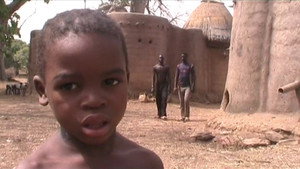
Equiano in Africa
An investigation into the kidnapping of Olaudah Equiano and the British slave trade. Olaudah Equiano, also known as Gustavas Vassa, earned his place in history by writing what is considered the first Slave Narrative. Equiano’s book, The Interesting Narrative of the Life of Olaudah Equiano, or Gustavas Vassa, the African, has been analyzed from dozens of angles by countless historians and scholars. It is considered both a window into the life of a slave and freedman in the mid-eighteenth century, and into life in Africa at that time. The Interesting Narrative may also be a window into the mid-eighteenth century experience of a gay or bisexual African man.
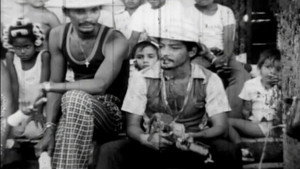
La canción de nosotros
A musical group of young people from Viejo Veranillo perform protest songs in favor of the sovereignty of Panama. Set in 1976, a year before the signing of the Torrijos-Carter Treaties, the members of the group led by “Chirri”, vocalist and ukulele player, tell of their experiences in the neighborhood and their disagreements with the US military on the border that divided its community with the old Canal Zone.
1976