Watch Gold Underground (2011) Online Free
Yulin, once the poorest region of Northwest China, has rapidly become "China's Kuwait" for the mining industry launched in recent years. People rush into the coal mine and other coal-related businesses, hoping to get rich overnight. They are possessed by anxiety and restlessness. However, it seems they have no other choices…
More Like This

Twenty Two
Follow the lives of the elderly survivors who were forced into sex slavery as “Comfort Women” by the Japanese during World War II. At the time of filming, only 22 of these women were still alive to tell their story. Through their own personal histories and perspectives, they tell a tale that should never be forgotten to generations unaware of the brutalization that occurred.
2017

Water Margin
Part mournful meditation through documentary footage, part experimental narrative. This film looks at the life of the Chinese who have been displaced within their own society.
2016

Papa Rainbow
In China, most families have difficulties facing their lesbian, gay, bisexual and/or transgender (LGBT) children. They have to contend with common social beliefs that homosexuality is shameful, abnormal, a perverted condition caused by deviant family relationships. Many parents see their kids as their property, and fathers often assert their authority to ensure that no harm comes to the family reputation. The documentary 'Papa Rainbow' features six Chinese fathers who talk openly and freely about their experiences with their LGBT children. Speaking out against discrimination and stigma, they redefine what it means to protect a household. They fully embrace their kids for who they are, and become pioneer activists fighting for an equal and diverse society.
2016
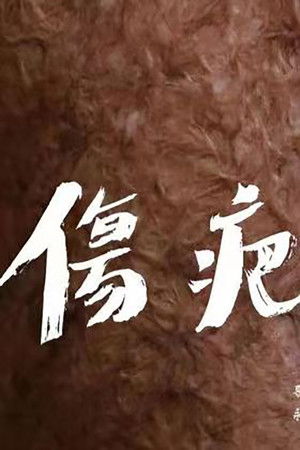
SCAR
Scars, which are unfortunate or unexpected results, are also signs of healing. This new connective tissue replaces the process of injured tissues, and at the same time it becomes a metaphor for the pain and frustration of life: the sadness of the body, the union of pain... In short, scars have become a proof, a proof of existence, a proof of alive, a proof of pain, and a proof of a certain age. Beginning in 1949, in this vast land, these various scars, these healing marks, patterns, sad shapes, bring personal memories, collective pains, the marks of history, and come together Gaze, the meaning of the record. This film is the first part of the "Scar" project, the story of 110 Chinese scars.
2015
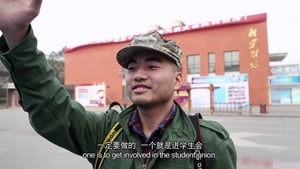
A Young Patriot
A documentary chronicling the coming of age of a young chinese man.
2015
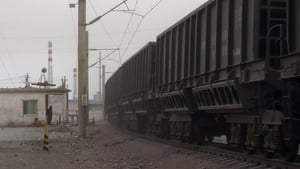
The Iron Ministry
Filmed over three years on China’s railways, The Iron Ministry traces the vast interiors of a country on the move: flesh and metal, clangs and squeals, light and dark, and language and gesture. Scores of rail journeys come together into one, capturing the thrills and anxieties of social and technological transformation. The Iron Ministry immerses audiences in fleeting relationships and uneasy encounters between humans and machines on what will soon be the world’s largest railway network.
2014
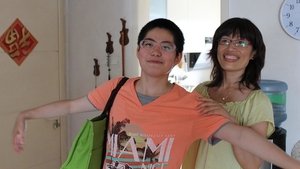
Mama Rainbow
For Chinese parents, finding out that their kid is gay usually presents a major tragedy, with the big majority utterly unable to accept the homosexuality of their son or daughter. However, during recent years a fresh rainbow wind has been blowing over the Chinese mainland: a pioneer generation of Chinese parents has been stepping up and speaking out on their love for their gay kids. This documentary features 6 mothers from all over China, who talk openly and freely about their experiences with their homosexual children. With their love, they are giving a whole new definition to Chinese-style family bonds.
2012
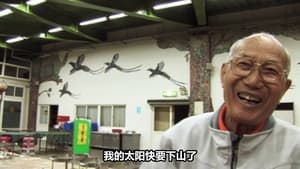
Go Grandriders
17 riders with avarage age 81 decide to follow the dream of their youth and start their journey to ride around Taiwan island.
2012
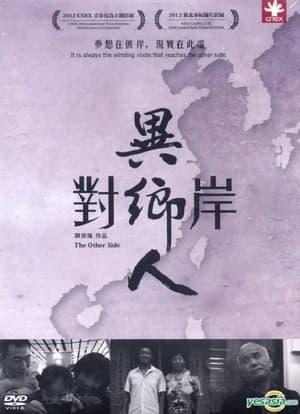
The Other Side
After 30 years of cold war, Taiwan and China finally opened cross-strait trade and tourism in 1980. However, through decades of political and educational vilification of their counterparts by the KMT and CCP, and despite close economic and cultural ties, what lies beneath the diplomatic relations is a disconnect and mistrust that cannot be denied. KE is a failed business in Taiwan who hopes to start over as a 'Taiwanese Expat' in Shenzheng, China with a Taiwanese company. Lili, a laborer from China, meets her Taiwanese husband online and moves to Taiwan in hopes of a better life. Both KE and Lili cross the straits in hope of achieving what they cannot find in their homeland. But how much do they really know about that country across the straits?
2012

Be a Woman
Over the course of 3 years, Fan Popo visited a bar called “Only-Love” in Nanning, China, getting to know the dancers and drag queens there and discovering who they really were behind their exuberant costumes and personas.
2011
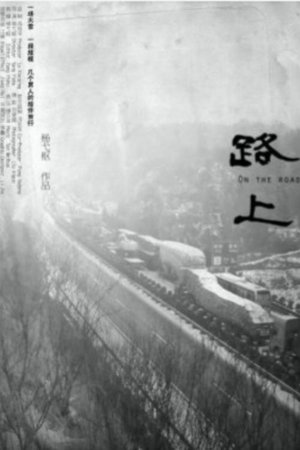
On the Road
Only a few days before the Spring Festival of 2008, several truck drivers set off from Nantong, Jiangsu Province, to Guizhou province to deliver goods. But what they didn't expect was that they ran into a big snowstorm not long after their departure. What would these drivers do after they got caught up in a snowstorm and coudn't do nothing about it but wait? How would they react to this unexpected halt? And what would happen to this convoy?
2010
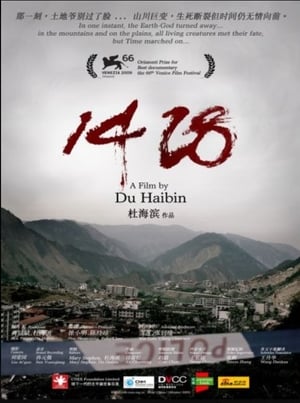
1428
The "Great Sichuan Earthquake" took place at 14:28 on May 12, 2008. In the days after, ordinary people salvage destroyed pig farms in the mountains, collect cheap scrapped metals, or pillaging other victims' homes. Behind the media circus of official visits is an inconsolable grief of families searching for loved ones. As the Lunar New Year approaches, vagabonds and family tell of the ill-handling of rebuilding schemes and misuse relief funds. As they prepare for another visit from a high official, the refugees are swept out of the town and into tent cities. The promise to put a roof over their heads before winter seems impossible to keep.
2009
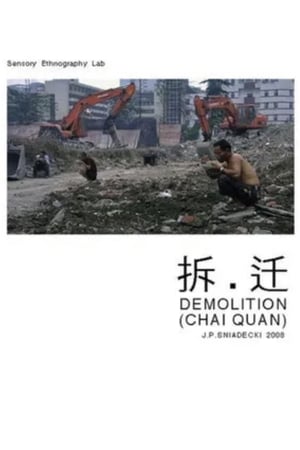
Demolition
"If the old doesn't go, the new never comes" recites a teenager hanging out near a demolition site in the center of Chengdu, the Sichuan capital in western China. In Demolition, filmmaker J.P. Sniadecki deconstructs the transforming cityscape by befriending the migrant laborers on the site and documenting the honest, often unobserved, human interactions, yielding a wonderfully patient and revealing portrait of work and life in the shadow of progress and economic development.
2008
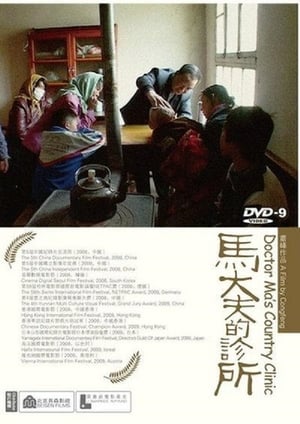
Doctor Ma's Country Clinic
"Huangyangchuan, Gansu province, China. It's an arid mountain area with poor roads. Ma Bingcheng is well-respected local doctor, so many patients (most of them farmers) come to see him every day. In his small clinic, people chat with each other about their lives, local conditions, or the people they know. The clinic seems to open up like a microcosm, the information and experiences of different people intertwine, revealing the conditions of typical Chinese farmers, and the typical fates of both young and old--"
2008
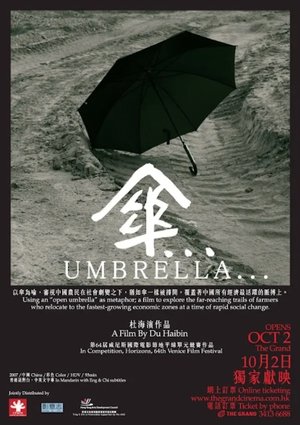
Umbrella
Workers, peasants, soldiers, students and merchants were five groups of Chinese society in the 1950s, after the so-called elimination of the exploited class. Borrowing this concept, the umbrella is taken as the clue to rediscover changes in various social classes after the economic reform, and to analyze the social problems in China. Workers making umbrellas, merchants selling umbrellas, students looking for jobs in the rain. Umbrella is used as a metaphor that can be seen everywhere. As the raindrop, what we see is sometimes clear, sometimes untraceable.
2007

Torch Troupes
In this vivid portrait of China's musical heritage, Sichuan Opera performers strive to keep a centuries-old artform alive. After thriving for 300 years, Sichuan Opera is an endangered art form. Having survived the Cultural Revolution, state-sponsored opera troupes now face extinction in the era of private enterprise. Opera master Li Baoting began his career at eight, but now performs pop songs with showgirls in cheap bars. His colleague Wang Bin performs in travelling tents, trying to resist the massive cultural changes threatening to wipe out this artform.
2006
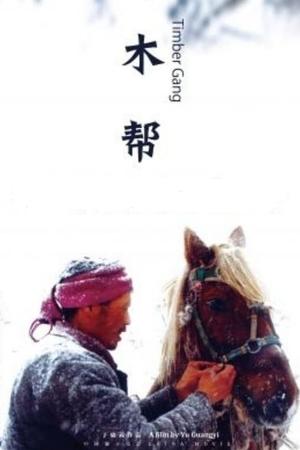
Timber Gang
Yu Guangyi's stunning debut explores a grueling winter amongst loggers in Northeast China as they employ traditional practices through one last, fateful expedition. For generations, the lumberjacks of Heilongjiang, China have made their living harvesting timber amidst a barren, wintry landscape. These woodcutters confront the elements, living in makeshift cabins surrounded by snow and ice. Hand tools, sleds and horses are the only technology they employ to drag massive trees down the perilous slopes of Black Bear Valley. At constant risk of injury and death, they attempt to appease the mountain gods with ancient rituals and sacrifices. Despite their heroic efforts to subsist, the deforestation caused by their decades-long customs may lead to their ultimate demise.
2006
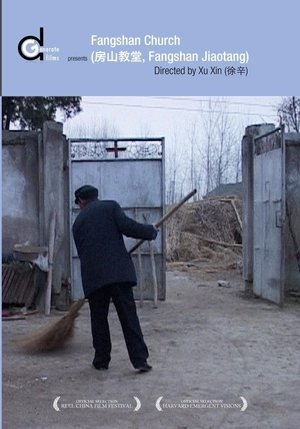
Fangshan Church
A lively community of Christians inhabit Fangshan, a remote rural town in Jiangsu Province. At the start of the millennium, a church was built there with support of local inhabitants' relatives from Taiwan. On Sundays, up to 900 people gather to worship, while spending most of their days maintaining a modest living as farmers. Their faith governs how they handle family conflicts, illnesses and other difficulties. Still, they must contend with constraining forces in their community, from ancient folk religious practices to laws forbidding evangelism.
2005
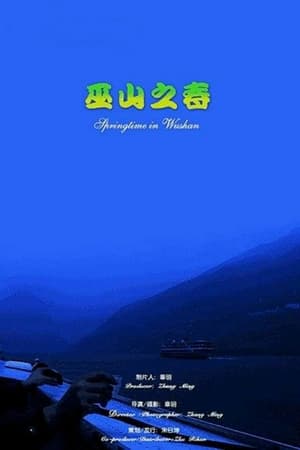
Springtime in Wushan
Zhang Ming went back to his hometown Wushan to record the last images before it being changed forever by the upcoming Three Gorges Dam.
2003
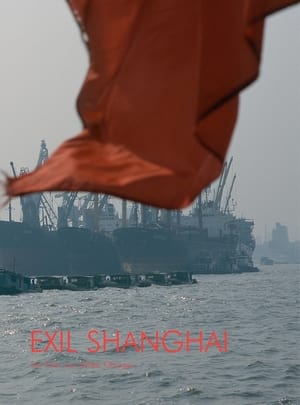
Exile Shanghai
Six life stories of German, Austrian and Ashkenazi Jews which intersect in exile in Shanghai. Out of narratives, photographs, documents and new images of the biggest and most contradictory metropolis of the Far East an entity develops in which the historic exile takes and turns on a completely current power and appeal.
1997