Watch Galoot (2003) Online Free
A film essay by Asher de Bentolila Tlalim, an Israeli filmmaker living in London, GALOOT ("Exile" in Hebrew) is an extended meditation on the Israeli-Palestinian conflict through the eyes of those living at a distance. Through international visits (London, Israel, Morocco and Poland) and dialogue-with Palestinian refugees, the new immigrants to Israel who now occupy their homes, the current occupants of his family's former house in Tangiers, the residents of the former village of his wife's family in Lisensk, a scientist, a jazz musician, and others-the filmmaker explores the position of exile, with its unique pain and perspective on what others may be too close to perceive.
More Like This

The Night Won't End
As Israel’s bombing campaign continues in Gaza and the humanitarian crisis deepens to catastrophic levels, the Biden administration has not wavered in its support for Israel. From air strikes to field executions, Fault Lines investigates the killings of civilians by the Israeli military in Gaza and the role of the United States in the war.
2024

Stern: The Man, the Gang, and the State
In an intricate web of alliances and enmities, can one's adversary's adversary truly become an ally? And yet, what if that adversary happens to be the most notorious anti-Semitic criminal in history?

In Their Hands
Unable to return to Colombia, Francisco Godoy searches for belonging in the Netherlands. Alongside fellow newcomers Liu and Aleksandr, he rebuilds his life through friendship and the puppet theatre he once left behind.
2026
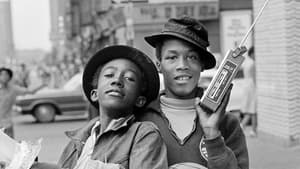
Ernest Cole: Lost and Found
More than 60,000 of Ernest Cole’s 35mm film negatives were inexplicably discovered in a bank vault in Stockholm, Sweden. Most considered these forever lost, especially the thousands of pictures he shot in the U.S. Told through Cole’s own writings, the stories of those closest to him, and the lens of his uncompromising work, the film is a reintroduction of a pivotal Black artist to a new generation and will unravel the mystery of his missing negatives.
2024
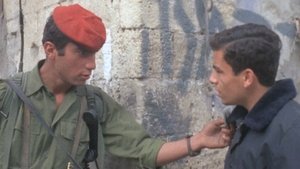
Israel Palestine on Swedish TV 1958-1989
Archival film maestro Göran Hugo Olsson has assembled—from a vast catalogue of footage in the vaults of Sweden’s national television service SVT—accounts of the Israeli-Palestinian conflict as witnessed and represented by Swedish journalists. Stories of the beginning of the Israeli state interwoven with the Palestinian struggle for independence. News coverage with Yasser Arafat and interviews with Israeli foreign minister Abba Eban during a visit to Sweden unseen since first broadcast. From the tenth anniversary of Israel’s founding to the First Intifada, perspectives and encounters with statesmen, civilians, revolutionaries, and intellectuals tell the story from myriad angles of an evolving media landscape, revivifying a history of the ongoing conflict.
2024

The Killing Roads
The Killing Roads is a gripping documentary that exposes the terror unleashed on October 7, 2023, when Hamas launched coordinated attacks across the roads of southern Israel. Through raw, unfiltered stories from victims, survivors, and first responders, the film reveals the unimaginable violence that turned Israel’s peaceful roads into scenes of horror.
2024
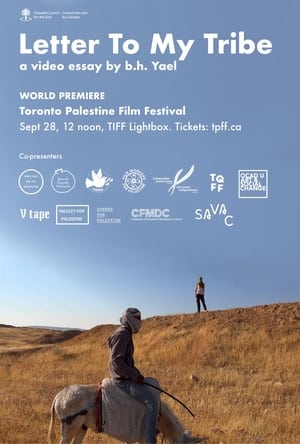
Letter to My Tribe
Letter to My Tribe started with a question: Why don’t more Jews and Israelis speak out about Palestine? Over many years my mother, who represents a more messianic perspective, and I have had numerous arguments, some recorded, some not. These form the backbone of this video essay in which Israelis and Jews, journalists, activists and a rabbi are interviewed, and in which documentation of actions on the ground, in the West Bank, are woven with more personal family histories and journeys to Iraq and to Poland.
2024
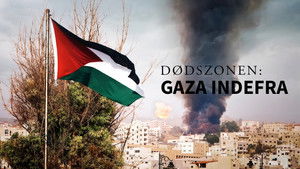
Kill Zone: Inside Gaza
The story of the Israeli military assault on Gaza. Seen through the eyes of children, journalists and doctors, Dispatches takes an unflinching look at the horrific challenges and heartbreaking loss. Made by 12 Palestinian film-makers who risked their lives to depict the ongoing assault, this documentary confronts us with the loss and suffering of people whose gaze we have met.
2024

Shâd Bâsh
2024
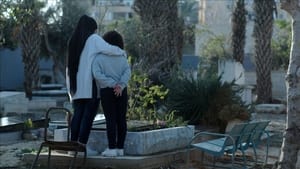
Mourning in Lod
MOURNING IN LOD, takes a microcosmic look at the Israeli-Palestinian conflict through Musa, Yigal, and Randa — three people whose fates become inextricably linked in a vicious cycle of violence. Lod/Lydd is a “mixed” city inhabited by Arabs and Jews who live side by side in a strained coexistence. In May 2021, two of these three people lost their lives and and one regained hers — thanks to an unlikely organ transplant. The outpouring of love, anger, forgiveness and sorrow that follows in their wake is a ray of light that offsets a collective state of mourning with no end in sight.
2023

The Mystery of Marilyn Monroe: The Unheard Tapes
This documentary explores the mystery surrounding the death of movie icon Marilyn Monroe through previously unheard interviews with her inner circle.
2022
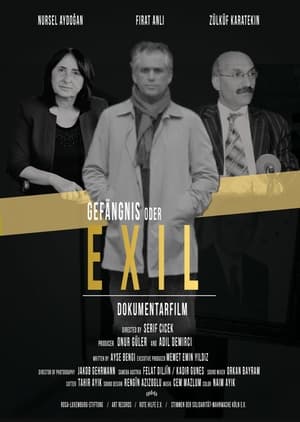
Prison or Exile
Nursel Aydoğan, Fırat Anlı and Zülküf Karatekin are linked by political exile in Europe after threatened prison sentences in Turkey.
2021
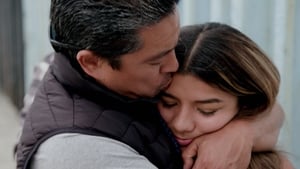
Walls of Silence
Mexico─United States border bar, “Trump Wall” is full of displaced migrants’ grief. Gaston who came to America as a teenager, is expelled from the States at his 40s and meets his family at the Wall. Bassam and Rami, becomes a dad who lost their daughter by each other. This film describes the people who lost their family by the wall and includes the views of refugees, human rights. Actor Jung Woo Sung participated in narration of the film.
2019

Shadow World
A detailed investigation into the political and economic interests that, since the beginning of the 20th century, have pulled the strings of the arms trade, hidden in the shadows, feeding the shameful corruption of politicians and government officials and promoting a state of permanent war throughout the world, while they cynically asked for a lasting and universal peace.
2016
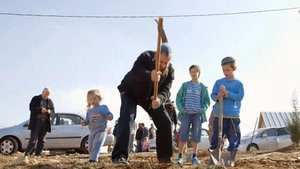
The Settlers
In the nearly 50 years since Israel's decisive victory in the 1967 Six-Day War, hundreds of thousands of Israeli citizens have established expanding communities in the occupied territories of the West Bank. Frequently coming into direct conflict with the region's Palestinian inhabitants, and facing the condemnation of the international community, the settlers have been viewed by some as the righteous vanguard of modern Zionism and by others as overzealous squatters who are the greatest impediment to the possibility of peace in the region.
2016

Cheikh El Hasnaoui, from the White House to the Blue Ocean
Cheikh El-Hasnaoui is an Algerian singer who left his country in 1937 without ever setting foot there again. Between 1939 and 1968 he composed most of his repertoire in France. For many years the Algerian cafes of Paris were the stages of his shows. With a handful of artists of his generation, he laid the foundations of modern Algerian song. A fervent defender of women's rights, he claims, as a pioneer, the fight for identity for a plural Algeria. At the end of the Sixties, he ended his artistic career. On July 6, 2002 he died in Saint-Pierre de la Réunion, where he is buried to this day. This 80-minute documentary follows in the footsteps of this extraordinary character. From Kabylia to Saint-Pierre de a Réunion via the Casbah of Algiers and the belly of Paris.
2014
Lejos de la isla
Prior to Fidel Castro's reign, Cuba was open to immigration. However, once Castro proclaimed himself dictator of Cuba, one of the largest exodus recorded began, one that continues today, 47 years after the Cuban Revolution. Six central characters of the film discuss in detail their personal experiences through Operation Pedro Pan, the Freedom Flights, El Mariel, the Rafter Crisis, and the Cuban Visa Lottery.
2007
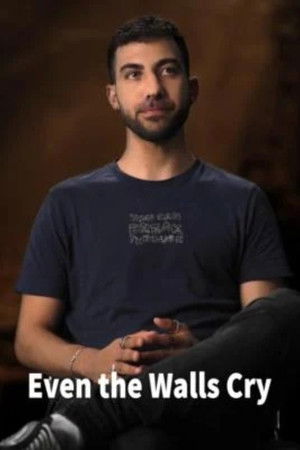
Even the Walls Cry
October 7, 2023 was one of the deadliest days of fighting ever in Israel, with around 1,200 people killed after Hamas launched its attack and 250 taken hostage – many of whom have either died in captivity or not yet released. The project features testimony from four victims and first responders, who witnessed the massacre and its aftermath: a farmer who helped rescue young people, a young survivor of the Nova music festival who took refuge in a shelter only to witness friends being murdered, an ultra-orthodox musician who volunteered to identify victims, and a mother whose son was kidnapped and taken to Gaza. A sentence uttered by the musician, who had seen 100 dead bodies in a single day, was the inspiration behind the title.
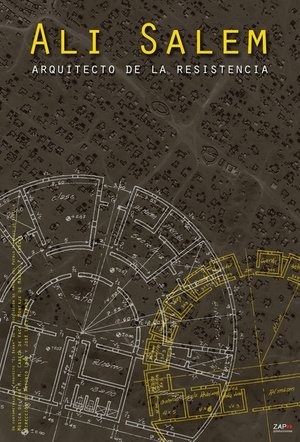
Ali Salem, architect of resistance
Ali Salem Hamudi Mohamed - Yahdih, was born in 1955 in El Aaiún (Western Sahara). He completed his secondary schooling in the "Spanish" Sahara. A scholarship allowed him to enrol at the Universidad de la Peninsula in 1975, but Morocco's invasion of the Sahara led him to return to the city of his birth and go into exile with his people, participating in the resistance and helping to organise the Tindouf Refugee Camps (Algeria). In 1980, the Polisario Front and the Government of Cuba offered him the opportunity to study Architecture at the University of Havana. On his return to the Camps in 1985 he worked for the SADR's Department of Construction. He designed more than twenty public buildings, including town halls, schools and nursery schools, and also collaborated with international aid organisations to build hospitals and training colleges. All of these buildings were built collectively by the Saharan people. ;In 1999 he emigrated to Spain. His family joined him five years later.
2008
Where is Iraq?
Seventy-five days before the U.S. Army captured Saddam Hussein, an Iraqi-Canadian filmmaker tries to re-enter his homeland after 27 years of forced exile. In Jordan, he meets other Iraqis who are no longer able to cross the border: workers without jobs, truckers, cab drivers and anxious refugees. Worn down by years of war, sanctions, arbitrary arrests, torture and fear of execution, the men angrily recall the darkest years of the fallen regime. Still stunned by the course of events and uncertain about the future, they have no faith in the Americans, whom they believe are out for their oil. "Are we another Palestine?" asks one of them. Shot in the thick of the action amid the ongoing chaos, the film reveals Iraqi opinions and their versions of the unfolding story.
2004