Watch Stern: The Man, the Gang, and the State Online Free
In an intricate web of alliances and enmities, can one's adversary's adversary truly become an ally? And yet, what if that adversary happens to be the most notorious anti-Semitic criminal in history?
Cast
Ilan Pappe
More Like This
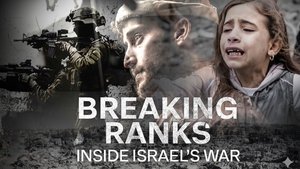
Breaking Ranks: Inside Israel's War
Breaking Ranks: Inside Israel’s War presents the first-hand recollections of IDF soldiers who have broken official silence to share their experiences of the war in Gaza - accounts that may raise serious questions about conduct on the ground and potential breaches of international law. Directed by award-winning filmmaker Ben Zand, the film features exclusive interviews with Israel Defense Forces (IDF), reservists and veterans - many speaking for the first time - who served during the war in Gaza. Their testimonies describe what they recall as indiscriminate bombardment, instances where Palestinian civilians were used as human shields, and an operational culture that some soldiers characterised as “no innocents in Gaza.”
2025
A Propaganda Film by Betar USA
The Grayzone presents a behind-the-scenes portrait of Betar USA, the militant Zionist street group that claims credit for guiding the Trump administration's jailing and attempted deportation of pro-Palestine student activists.
2025

La scomparsa di Bruno Bréguet
In 1970, the barely twenty-year-old high school student Bruno Breguet was arrested in Israel while trying to smuggle explosives into the country for the Palestinian resistance. He became radicalized during his imprisonment and joined the group around the terrorist Carlos after his release. In 1995, he mysteriously disappears.
2024

Netanyahu, America & the Road to War in Gaza
As the war in Gaza continues with devastating consequences, a major 90-minute documentary offers a sweeping examination of the critical moments leading up to this crisis over the course of the past three decades, and the pivotal role of a central player: Israeli Prime Minister Benjamin Netanyahu. Starting with the Oslo peace accords and continuing through the Oct. 7 Hamas attack and the ongoing war in Gaza, the documentary draws on years of reporting and is an incisive look at the long history of failed peace efforts and violent conflict in the region — and the increasing tensions between Israel and its ally, the U.S., over the war’s catastrophic toll and what comes next.
2023

Breaking Bread
In Breaking Bread, exotic cuisine and a side of politics are on the menu. Dr. Nof Atamna-Ismaeel - the first Muslim Arab to win Israel's MasterChef - is on a quest to make a social change through food. And so, she founded the A-sham Arabic Food Festival in Haifa. There, pairs of Arab and Jewish chefs collaborate on mouthwatering dishes like kishek (a Syrian yogurt soup), and qatayef (a dessert typically served during Ramadan), as we savor the taste of hope and discover the food of their region free from political and religious boundaries.
2022
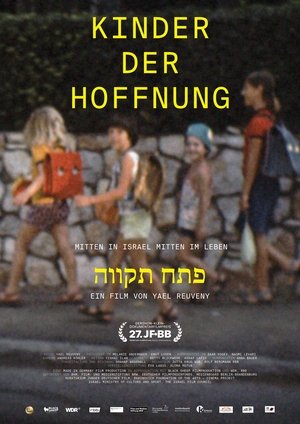
Promised Lands
An Israeli director currently living in Berlin returns to Israel to meet some of her friends from primary school. She learns what has been happening in their lives since their paths parted while we get a glimpse of different Israelis.
2021

The Tank and the Olive Tree, Another History of Palestine
The Tank and The Olive Tree recalls a certain number of forgotten fundamentals and sheds new light on the history of Palestine. By combining geopolitical analysis, interviews with international personalities who are experts on the subject and testimonies from Palestinian and French citizens, this documentary offers the keys to understanding what the media call the Israeli-Palestinian conflict. Enough to rid people's minds of clichés and prejudices! If The Chariot and the Olivier is intended to be educational, it speaks above all of a magnificent territory, and of a people who constantly affirm that “to live is already to resist”...
2019
This Is Not a Movie: Robert Fisk and the Politics of Truth
For more than forty years, British journalist Robert Fisk has reported on some of the most violent conflicts in the world, from Northern Ireland to the Middle East, always with his feet on the ground and a notebook in hand, travelling into landscapes devastated by war, ferreting out the facts and sending reports to the media he works for with the ambition of catching the interest of an audience of millions.
2019
The Oslo Diaries
A group of Israelis and Palestinians come together in Oslo for unsanctioned peace talks during the 1990s in order to bring peace to the Middle East.
2018
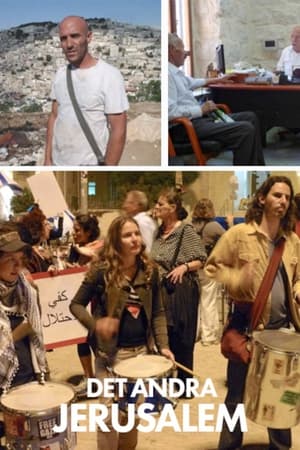
The Other Jerusalem
Archaeological gardens and tunnels are built. Khaled and other Palestinians lose their homes. Lawyer Ziad gets angry new clients every day. Arieh and other Israeli settlers move in. PeÅ Holmqvist and Suzanne Khardalian follow a turbulent Jerusalem, 50 years after Israel took full control.
2017
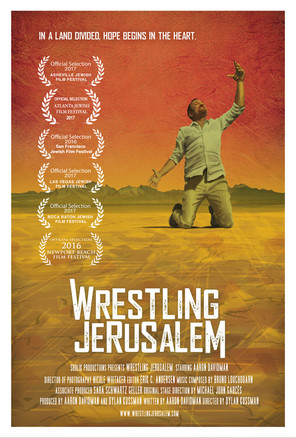
Wrestling Jerusalem
Writer-actor Aaron Davidman embodies seventeen different characters in and around the sacred city of Jerusalem as he takes us on an eye-opening journey into the heart of the Israeli-Palestinian story. Exploring universal questions of identity and human connection, the film is about one man's effort to embrace a multiplicity of conflicting viewpoints, chronicling a brave exploration of the complex humanity at the heart of one of the world's most troubling conflicts.
2016
The Occupation of the American Mind
Over the past few years, Israel's ongoing military occupation of Palestinian territory and repeated invasions of the Gaza strip have triggered a fierce backlash against Israeli policies virtually everywhere in the world—except the United States. This documentary takes an eye-opening look at this critical exception, zeroing in on pro-Israel public relations efforts within the U.S.
2016
Rachel
Rachel Corrie, a young American woman and her friends attempt to stop a bulldozer from clearing out some homes and other buildings. Corrie was run over and killed. Witnesses claim it was deliberate.
2009

Jerusalem Cuts
One war, ten days, three stories: the Old City of Jerusalem, at the dawn of a new Middle East. For the Brits, it’s the shameful end of 30 years Mandate. For the Jews, it’s the birthday of their State. And for the Palestinians, it’s a catastrophe. Only now, 60 years later, images can be shown from three opposing points of view, telling a whole new story.
2008

Palestine Blues
Follows the repercussions of the Israeli Security Wall and Settlement expansion in the engulfed/annexed Palestinian farming communities of the West Bank and the Gaza Strip, examining the grassroots resistance movement that sprang up against it. An interminable road trip across hard and liquid borders, across a terrain that is being erased as it is being traversed.
2006
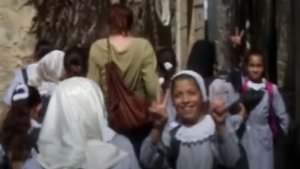
Visit Palestine
What drives a young, well-educated Westerner to volunteer as a “peace activist” in the Middle East? Caiomhe Butterly is one of a growing number of volunteers who risk their own safety to intervene in the long-running and bloody conflict between Israel and Palestine. Several internationals, including her, have now been injured. Some have died. In this film, she describes witnessing the aftermath of the attack on Jenin in April 2002. The film follows her work, the main emphasis being “the accompaniment of communities at risk”. Despite being threatened, shot in the leg and deported later that year, she is determined to go back.
2005
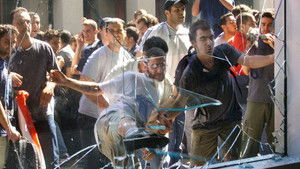
Discordia
In the fall of 2002, it was announced that Benjamin Netanyahu would deliver a speech at Concordia University in Montreal, and reaction from the student body was swift and sudden.
2004
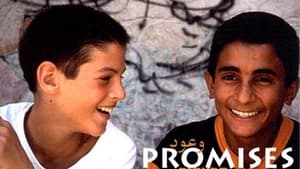
Promises
Documentarians Justine Shapiro and B.Z. Goldberg traveled to Israel to interview Palestinian and Israeli kids ages 11 to 13, assembling their views on living in a society afflicted with violence, separatism and religious and political extremism. This 2002 Oscar nominee for Best Feature Documentary culminates in an astonishing day in which two Israeli children meet Palestinian youngsters at a refugee camp.
2001
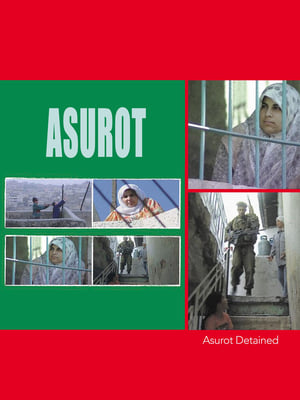
Detained
Najwa, Nawal, and Siham, three Palestinian widows, live with their 11 children in a house on Shuhada Street in Hebron. Their house lies on the border; the façade is under Israeli occupation, the Palestinian Authority controls the back. At the entrance to the house is a military post; on the roof the Israeli army has placed a watch point over Palestinian Hebron. The three women, trapped in the middle and constantly surrounded by Israeli soldiers, carry on their difficult lives in a perverse situation: the occupation becomes a routine, the absurd becomes a given. This is the story of an occupation that extends to the staircase and the roof of the house, where it encounters poverty, loneliness, pain, but also the small joys of everyday life. This is an internal prison, the external one is the ongoing occupation.
2001
Kafr Kassem
On the eve of the Israeli attack on Egypt in 1956, Israel declares martial law in all the occupied Arab territories without any previous notice. When the villagers of Kafr Kassem returned home from the fields, they were butchered and killed in what is known today as the massacre of “Kafr Kassem”.
1974