Watch Flowers of Rwanda (2008) Online Free
Rwanda. 14 years after the genocide that took the lives of more than 800,000 people. What situation is the country in now? What feelings reign in the hearts of the victims? Can victims and executioners coexist? What value does education have in a society that has experienced genocide? Can it happen again? Who should act when a genocide is taking place? Do we have any responsibility as individuals?
More Like This
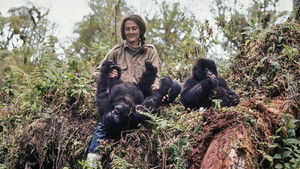
Dian Fossey: Ihr Leben für die Gorillas
She was the first to study gorillas in their natural environment: the high mountains of Rwanda, where she settled in 1967. For nearly twenty years, Dian Fossey lived with the gorillas, observed their behavior, and changed the way people viewed them. Her relentless fight against poaching prevented the species from becoming extinct. But in December 1985, the primatologist was murdered, and the mystery surrounding her death remains unsolved. Former colleagues, scientists, and biographers shed light on the impact of her work, but also on the darker sides of her personality and her uncompromising commitment.
2025

Ibuka, Justice
Valentine and Jean-Claude start a new life in Kigali with their newborn baby, Justice. Their country, already battered by racial propaganda and brutality, finally seems ready for peace and justice.
2024
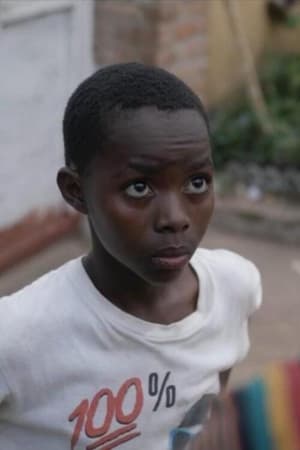
In the Shade of the Hills
Amani is 31. When he was an infant, he survived the genocide against Rwanda’s Tutsi population. Three decades later, Amani has set up an organisation in Nyamirambo, one of the more economically impoverished districts of the country’s capital, Kigali. It employs creativity, artistic practice and performance to grapple with poverty and generational trauma – acknowledging that deep-seated ideologies can easily foment prejudice and create an environment that proved so catastrophic in the past.
2024
Rwanda, vers l'apocalypse
2024

Traces of Responsibility
The interactive roadmovie follows the trail of a convicted war criminal with ties to Switzerland. On a journey through contemporary Rwanda, the viewer decides how deeply he wants to immerse himself in the story.
2024

The 600: The Soldier’s Story
The story of 600 men who protected and rescued civilians during the Rwandan genocide before helping to liberate their country in 1994.
2019
Lions Unleashed
In Rwanda, Africa, a new era is dawning after a brutal civil war ripped through the country, killing close to two million people and wiping out its most iconic wildlife: the regal lion. Now, 25 years later, the big cats are being reintroduced to the region to reclaim their throne. Follow this magnificent seven, a collection of five females and two males, as they travel thousands of miles from South Africa to Akagera National Park and attempt to figure out their new land, form relationships, and restore the pride of a nation.
2017
I Married My Family's Killer
Childhood sweethearts Beatrice and Purudenci plan to wed until Beatrice becomes hunted by Purudenci's family during the 1994 genocide in Rwanda.
2014
Unforgiven: Rwanda
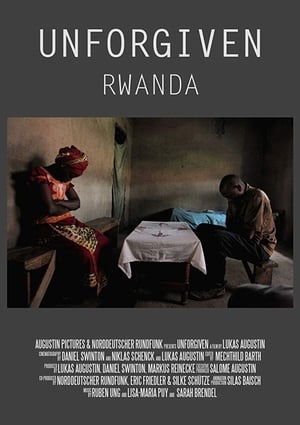
What is a socially acceptable conversation when your family's killer sits down to dinner? 'Unforgiven' explores the interactions between murderers, rapists, thieves and their victims in this documentary exploring the power of restorative justice, forgiveness and reconciliation 20 years after the Rwandan Genocide.
2014
Football Rwanda, Fields of Memories
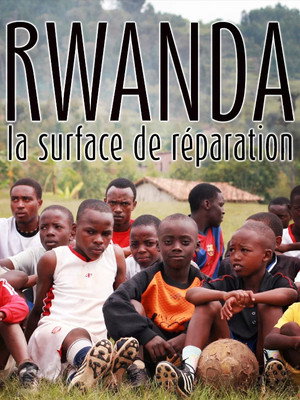
More than 15 years after leaving the country, Eugène Murangwa, the former goalkeeper of the most popular club in Rwanda and national team, returns to his native land to pass on the values of a sport which saved him in 1994 to the young people of an association that he created with former football players. Illustrated with previously unseen archives, the film throws a new light on the history of Rwanda through football, a sport which served the “civilizing” mission of the colonizer, allowed the Hutu Power to mobilize the youth and helped the reconstruction of the country after the genocide.
2014
The Diary of Immaculée
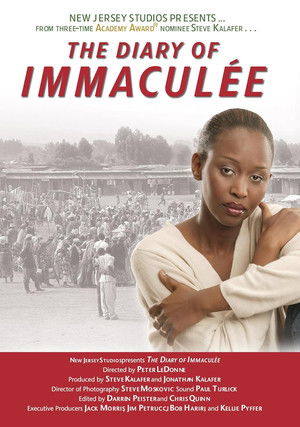
Peter LeDonne and Steve Kalafer chronicle the extraordinary life of Immaculée Ilibagiza, a young African woman who escaped genocide in Rwanda and ultimately found refuge in the United States. Seeking shelter with an Episcopalian minister, Immaculée hid from her attackers inside a bathroom for three long months but stayed centered through prayer and faith.
2006
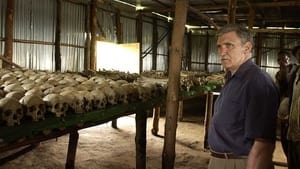
Shake Hands with the Devil: The Journey of Roméo Dallaire
The story of Canadian Lt. Gen. Roméo Dallaire and his controversial command of the United Nations mission to Rwanda during the 1994 genocide. The documentary was inspired by the book Shake Hands with the Devil: The Failure of Humanity in Rwanda which was published in 2003.
2005
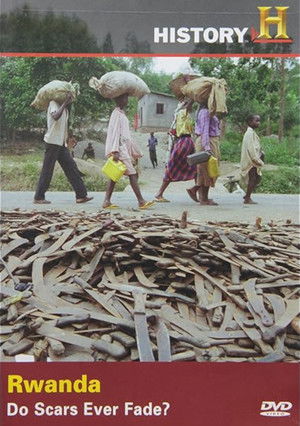
Rwanda: Do Scars Ever Fade?
This 90-minute special presents the complex and riveting history of Rwanda, providing an in-depth look at the propaganda campaign that's crucial to understanding how genocide leaders got ordinary citizens to participate. In 1994, the small African country was awash in blood. An estimated 75 percent of the Tutsi minority was slaughtered, and in just 100 days, more than 800,000 were killed. And, at least 50,000 politically moderate Hutus also perished. We explore the 1994 genocide and post-genocide period, and grapple with the question: How does a country recover from its haunted past? Unfolding through firsthand experiences of Rwandans who lived through the genocide, we document stories of survivors, perpetrators, and government officials and sort through the difficulties of balancing justice with reconciliation.
2004
Rwanda: History of a Genocide
French documentary about genocide in Rwanda
2004

Ghosts of Rwanda
Ghosts of Rwanda marks the 10th anniversary of the Rwandan genocide with a documentary chronicling one of the worst atrocities of the 20th century. In addition to interviews with key government officials and diplomats, this documentary offers eyewitness accounts of the genocide from those who experienced it firsthand. FRONTLINE illustrates the failures that enabled the slaughter of 800,000 people to occur unchallenged by the global community.
2004
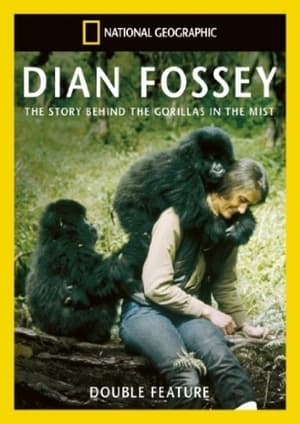
The Lost Film of Dian Fossey
From 1968 to 1972, photographer and filmmaker Bob Campbell documented the activities of Dian Fossey as she developed a cross-species bond with Rwandan mountain gorillas. Campbell shot 70,000 feet of film, but only a fraction of his material was edited into the lecture presentation that preceded Fossey's Gorillas in the Mist. This program compiles highlights from the previously unreleased footage, offering an unforgettable glimpse into the gorilla community and Fossey's relationship with it. Her methods may not entirely jibe with those of modern conservationists, but there is no denying the profound impact of her work on current research and eco-activism.
2002
Der Mörder meiner Mutter - Eugénie will Gerechtigkeit
2001
La France au Rwanda : « Une neutralité coupable »
1999
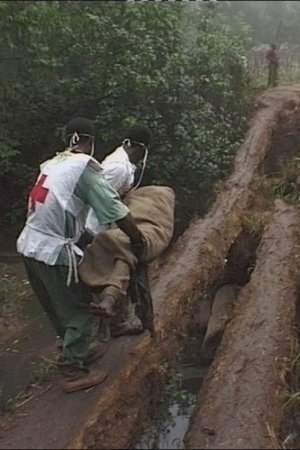
Kisangani Diary
Along an overgrown rail track south of the Zairean town Kisangani, a UN expedition together with a handful of journalists discover “lost” refugees. They are eighty thousand Hutus from far away Rwanda, the last survivors of three years of hunger and armed persecution that transpired throughout the vast Congo basin. The Hutu-refugees leave the forest, gathering in two gigantic camps. Hundreds of refugees die every day from diseases and malnutrition The Rwandans are promised repatriation with airplanes out of Kisangani. The film traces those refugees into the heart of the rainforest, and the hopeless attempts to help them.. But only four weeks later, the unprotected UN-camps are again attacked by machine-gun fire, deliberately massacred by factions of the rebel army (AFDL) of today’s Democratic Republic Congo. Eighty thousand men, women and children disappear once again back into the jungle. (jedensvet.cz)
1998
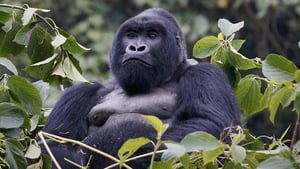
Mountain Gorilla
Mountain Gorilla takes us to a remote range of volcanic mountains in Africa, described by those who have been there as ""one of the most beautiful places in the world"", and home to the few hundred remaining mountain gorillas. In spending a day with a gorilla family in the mountain forest, audiences will be captivated by these intelligent and curious animals, as they eat, sleep, play and interact with each other. Although gorillas have been much-maligned in our popular culture, viewers will finally ""meet the legend"" face to face, and learn about their uncertain future.
1992