Watch Kisangani Diary (1998) Online Free
Along an overgrown rail track south of the Zairean town Kisangani, a UN expedition together with a handful of journalists discover “lost” refugees. They are eighty thousand Hutus from far away Rwanda, the last survivors of three years of hunger and armed persecution that transpired throughout the vast Congo basin. The Hutu-refugees leave the forest, gathering in two gigantic camps. Hundreds of refugees die every day from diseases and malnutrition The Rwandans are promised repatriation with airplanes out of Kisangani. The film traces those refugees into the heart of the rainforest, and the hopeless attempts to help them.. But only four weeks later, the unprotected UN-camps are again attacked by machine-gun fire, deliberately massacred by factions of the rebel army (AFDL) of today’s Democratic Republic Congo. Eighty thousand men, women and children disappear once again back into the jungle. (jedensvet.cz)
More Like This
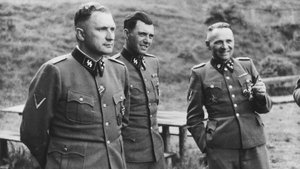
Bullets And Blueberries
The Holocaust began with the indiscriminate mass shootings by the Einsatzgruppen in the bloodlands of Eastern Europe and was perfected in the gas chambers at Auschwitz. “Bullets And Blueberries” explores the motives, methods and madness of the perpetrators, using never-before-seen images captured by the killers themselves — images that fully capture the banality of evil.
2025
The Boy of The Fish
"The Boy Of The Fish" follows Noon, a young boy living in a Syrian refugee camp, who finds solace and a sense of freedom in a whale-shaped doll he names "Bahr." Set against the challenging realities of camp life, Noon’s journey is both a story of resilience and a testament to the boundless imagination of childhood. Through vivid symbolism and a unique soundscape, the film explores themes of loss, hope, and the longing for freedom amidst confinement. Shot entirely on an iPhone due to restrictions in the conflict zone, the film combines raw authenticity with poetic depth to capture the emotional landscape of a young soul navigating adversity.
2024
From London to Gaza
London students and academics protest the genocide in Gaza.
2024

Abo Jabal
It is May 8, 2024, and Israel is preparing to launch a destructive military operation in Rafah. Tahani, a Palestinian woman who has been internally displaced multiple times since the beginning of the attacks on Gaza, wonders where she and her children can find refuge once again. The film provides a glimpse into her family’s life before and after October 7, depicting the anguish of a mother who, marked by a painful loss, struggles to find peace.
2024
Son of the Streets
13-year-old Khodor is a child whose family tries to issue him an ID document that proves his existence and gives him the right to education, health-care and movement outside of the Palestinian refugee camp of Shatila in Beirut, Lebanon. Through the process, many of the family's old secrets are revealed.
2020
Standed
In the Mediterranean, the sea on which our civilization was founded, miles of refugees await Europe to welcome them. "Stranded" approaches the daily life of these long-term refugees, in occupied buildings or in refugee camps At the gates of Europe these people try to keep hope alive while they live.
2019
Because I am
Based on a poem by a Zimbabwean LGBT activist written in response to the gay hate speech that is being perpetuated president Robert Mugabe. The film was shot in South East London UK with a cast of six women from several African countries playing multiple roles in this portrayal of being a lesbian in homophobic Zimbabwe. Five of the actors and the producer are refugees who fled their countries in fear of persecution for their sexuality.
2016
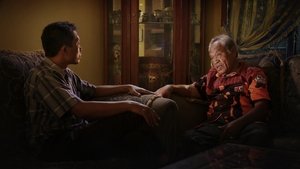
The Look of Silence
An Indonesian man with a communist background named Ramli was brutally murdered when the "Communist" purge occurred in 1965. His remaining family members lived in fear and silence until the making of this documentary. Adi, a brother of his, decided to revisit the horrific incident and visited the men who were responsible for the killings and one survivor of the purge. These meetings uncovered sadistic details of the murders and exposed raw emotions and reactions of the killers' family members about what happened in the past - much to Adi's disappointment.
2014
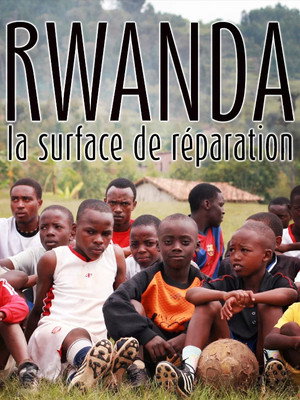
Football Rwanda, Fields of Memories
More than 15 years after leaving the country, Eugène Murangwa, the former goalkeeper of the most popular club in Rwanda and national team, returns to his native land to pass on the values of a sport which saved him in 1994 to the young people of an association that he created with former football players. Illustrated with previously unseen archives, the film throws a new light on the history of Rwanda through football, a sport which served the “civilizing” mission of the colonizer, allowed the Hutu Power to mobilize the youth and helped the reconstruction of the country after the genocide.
2014
OLO, the Boy from Tibet
A 6-year-old Tibetan boy leaves his family and flees to a refugee camp in northern India.
2012
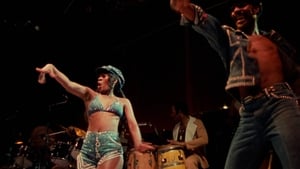
Soul Power
Soul Power is a 2008 documentary film about the Zaire 74 music festival in Kinshasa which accompanied the Rumble in the Jungle heavyweight boxing championship match between Muhammad Ali and George Foreman in October 1974. The film was made from archival footage; other footage shot at the time focusing on the fight was edited to form the film When We Were Kings.
2009
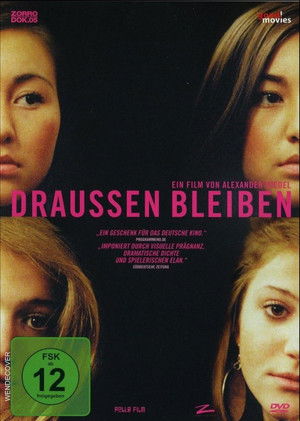
Draussen bleiben
2007
The Devil Came on Horseback
While serving with the African Union, former Marine Capt. Brian Steidle documents the brutal ethnic cleansing occuring in Darfur. Determined that the Western public should know about the atrocities he is witnessing, Steidle contacts New York Times reporter Nicholas Kristof, who publishes some of Steidle's photographic evidence.
2007
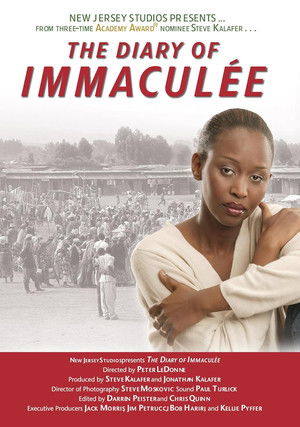
The Diary of Immaculée
Peter LeDonne and Steve Kalafer chronicle the extraordinary life of Immaculée Ilibagiza, a young African woman who escaped genocide in Rwanda and ultimately found refuge in the United States. Seeking shelter with an Episcopalian minister, Immaculée hid from her attackers inside a bathroom for three long months but stayed centered through prayer and faith.
2006
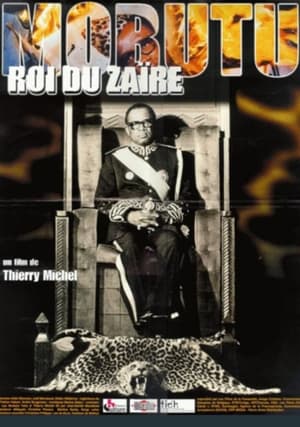
Mobutu, King of Zaire
This film is the result of more than two years of work tracking down archive material and witnesses close to Mobutu in Africa, Europe and the U.S. More than 950 hours of footage have been seen by the world. Among the 104 hours selected as the basis for this film, are 30 hours of archives recently discovered in Kinshasa and never before released. Completing these exceptional documents, are more than 50 hours of interviews with those close to the former president and the events surrounding his reign, conducted by the director in Kinshasa, Brussels, Paris and Washington. Like a vast historical puzzle, this film pieces together the tragic history of a country, and its self-styled leader - the dictator, Mobutu Sese Seko, "King of Zaïre".
1999
Hitler's Forgotten Victims
The story of black and mixed race people in Nazi Germany who were sterilised, experimented upon, tortured and exterminated in the Nazi concentration camps. It also explores the history of German racism and examines the treatment of Black prisoners-of-war. The film uses interviews with survivors and their families as well as archival material to document the Black German Holocaust experience.
1997
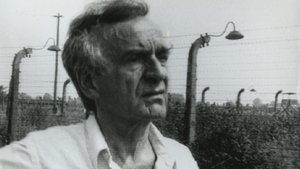
Elie Wiesel Goes Home
A documentary chronicling the adolescent years of Elie Wiesel and the history of his sufferings. Eliezer was fifteen when Fascism brutally altered his life forever. Fifty years later, he returns to Sighetu Marmatiei, the town where he was born, to walk the painful road of remembrance - but is it possible to speak of the unspeakable? Or does Auschwitz lie beyond the capacity of any human language - the place where words and stories run out?
1997
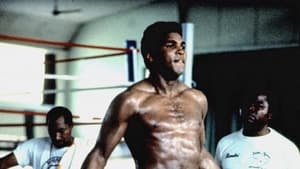
When We Were Kings
It's 1974. Muhammad Ali is 32 and thought by many to be past his prime. George Foreman is ten years younger and the heavyweight champion of the world. Promoter Don King wants to make a name for himself and offers both fighters five million dollars apiece to fight one another, and when they accept, King has only to come up with the money. He finds a willing backer in Mobutu Sese Suko, the dictator of Zaire, and the "Rumble in the Jungle" is set, including a musical festival featuring some of America's top black performers, like James Brown and B.B. King.
1996
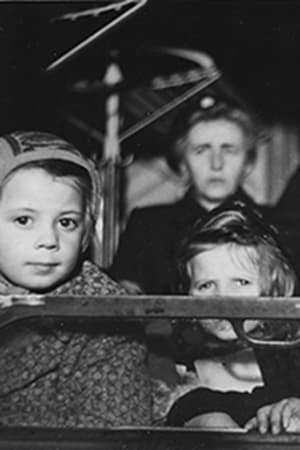
Report on the Refugee Situation
An unclassifiable cross between documentary and fiction, Kipp takes the viewer through refugee camps bordering Soviet-occupied areas of Germany.
1949
Last Words
Linguist-philologist Mark Janse discovers speakers of the Cappadocian language – previously assumed extinct, linguists worldwide are exhilarated at the discovery, but Janse realizes the rediscovered language is doomed to die anyway.