Watch Five Directors On The Battle of Algiers (2004) Online Free
This 17-minute documentary is featured on the 3-Disc Criterion Collection DVD of The Battle of Algiers (1966), released in 2004. An in-depth look at the Battle of Algiers through the eyes of five established and accomplished filmmakers; Spike Lee, Steven Soderbergh, Oliver Stone, Julian Schnabel and Mira Nair. They discuss how the shots, cinematography, set design, sound and editing directly influenced their own work and how the film's sequences look incredibly realistic, despite the claim that everything in the film was staged .
Cast
Brahim Hadjadj, Mohamed Ben Kassen, Spike Lee, Oliver Stone, Mira Nair, Steven Soderbergh, Julian Schnabel, Gillo Pontecorvo
More Like This

Breakdown: 1975
In 1975, as America faced social and political upheaval, filmmakers turned chaos into art.
2025
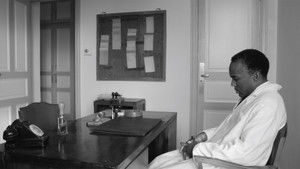
True Chronicles of the Blida Joinville Psychiatric Hospital in the Last Century, when Dr Frantz Fanon Was Head of the Fifth Ward between 1953 and 1956
1953, colonized Algeria. Fanon, a young black psychiatrist is appointed head doctor at the Blida-Joinville Hospital. He was putting his theories of ‘Institutional Psychotherapy’ into practice in opposition to the racist theories of the Algies School of Psychiatry, while a war broke out in his own wards.
2025
Un bain en hiver
“Our memories are marked by smells. Bound together by their olfactory sensitivity, a daughter leads her father to question his family heritage: together they go through their double mourning, that of a grandmother and a childhood in Algeria. How do you face up to the fear of vanishing ghosts?”
2024
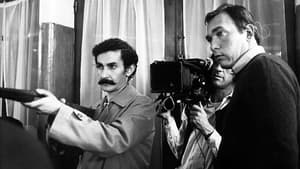
Zinet, Algiers, Happiness
Who remembers Mohamed Zinet? In the eyes of French spectators who reserve his face and his frail silhouette, he is simply the “Arab actor” of French films of the 1970s, from Yves Boisset to Claude Lelouch. In Algeria, he's a completely different character... A child of the Casbah, he is the brilliant author of a film shot in the streets of Algiers in 1970, Tahya Ya Didou. Through this unique work, Zinet invents a new cinema, tells another story, shows the Algerians like never before. In the footsteps of his elder, in the alleys of the Casbah or on the port of Algiers, Mohammed Latrèche will retrace the story of Tahya Ya Didou and its director.
2023
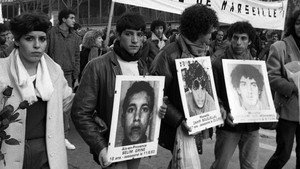
1983, The Marchers for Equality
In the 1980s, young people of North African descent born in France and a priest from the Lyon suburbs organized the "March of the Beurs." Launched on October 15, 1983, by seventeen people from the La Cayolle neighborhood in Marseille following a racist crime, the march concluded two months later—on December 3—on the streets of Paris, with 100,000 participants. This movement demanded equal rights. Was their cry heard?
2023

The Desert Rocker
The Desert Rocker is an intimate, witty and profound portrait of the extraordinary Hasna El Becharia, a pioneer Gnawa artist. The first musician to break through the social barrier of this culture, she empowers and inspires women of all ages by reclaiming a musical tradition reserved for men for centuries . A singularly talented artist, she leads women to redefine their roles and challenge cultural norms , one musical performance at a time.
2022

Discovering Christmas Films
Gathering for a Christmas lunch, the film critics and writers of Discovering Film discuss the merits of 20 films from Bill Murray's star turn in Scrooged, the James Stewart classic It's a Wonderful Life, Ingmar Bergman's Fanny & Alexander, to Bruce Willis' memorable Die Hard.
2018
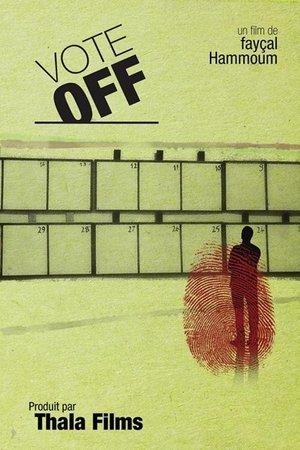
Vote off
Fayçal Hammoum recounts the 2014 presidential election through non-voting inhabitants of Algiers who, like him, are in their thirties. Be it Bilel, a grocer by default exposed to his customers’ political babbling, or the more politically-charged comments of Younes, a militant FM radio journalist opposed to President Bouteflika’s fourth term, the variety of conversational scenes in no way changes the determination not to vote for an old man who has been invisible for almost two years. The rappers Omar and Brahim are as bereft of hope and voter’s cards as the Tellek webradio DJ, since “the match is fixed”. Moving away from his focus on this subject to film their daily life, the filmmaker draws the portrait of a generation who, as Bilal says with poignant simplicity, “just wants to live
2017
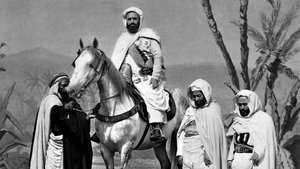
Abd El-Kader
Illustrated with archival photographs, animations and live action, this film explores the history and historical and spiritual heritage of Emir Abd El-Kader. Algerian leader of the 19th century, was admired by Abraham Lincoln and celebrated to this day by the Red Cross as a great humanitarian. Emir Abd el-Kader, the man who challenged the French armies from 1832 to 1847 before creating the bases of a real Algerian state, is today considered by independent Algeria as one of the most outstanding figures. of its history. The nobility of his attitude after his capture and the very effective protection he brought to the Christians of Damascus at the end of his life also earned him great prestige among his former adversaries. A documentary told in dialectal Arabic by the voice of Amazigh Kateb.
2014
La Langue de Zahra
2011
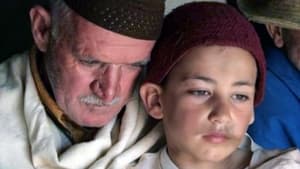
Mouloud Feraoun
Docufiction about Mouloud Feraoun, an author who upholds the great values of the Universal Man. It is in the name of man that Feraoun stands up against injustice. It is in the name of man that he is tormented by war. Feraoun is a solitary creator who suffers to the point of wishing for liberating madness. It is through his work that the portrait of a humble and discreet author, a talented writer and convictions emerges. Most of the time, I let him talk about himself in simple and fair words. I compile his moments of hope, worry, dreams and fears. During all my research, a generous and good Mouloud Feraoun stood out to me who did not hesitate to expose an inhuman and shameful colonial system. His clear and straightforward voice echoes the cry of a people from whom he has never separated.
2009
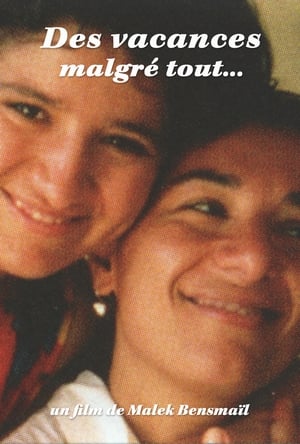
Holidays Despite All
Immigrated to the Paris region since 1964, Kader decides to spend the summer holidays with his family in his native village, not far from Algiers. These few weeks, so eagerly awaited by both sides, constitute a special moment full of strong emotions. The camera follows the family in their meetings, their reunions, their difficulties, their visions of the country and its region, the celebrations, the weddings, their return to France… This film raises many questions. Within this family itself, between those who stayed in the country and those who emigrated to France, how do we perceive the situation in Algeria? What hopes do each of them have for their country? What about the Franco-Algerian relationship? Contemporary immigration? The desire for exile of Algerians today? Different discourses on both sides of the Mediterranean? The desires of each of them…
2001
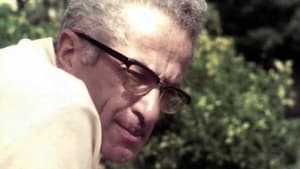
Da L'Mulud
An emblematic figure in the defense of Berber culture, Mouloud Mammeri (1917-1989) experienced numerous confrontations with the authorities in Algeria, including the suspension in 1973 of the teaching of Berber at university and the ban of the conference he was to deliver on March 10, 1980 at the University of Tizi Ouzou on ancient Kabyle poetry... which will be the detonator of the powerful and harshly repressed cultural demands movement of April 1980, also called the Berber Spring. Mouloud Mammeri is one of the "historians" of French-speaking Algerian literature from the middle of the last century who, through his pen, gave back the soul to a country by giving it back its voice.
1987
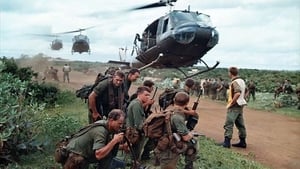
Hearts and Minds
Many times during his presidency, Lyndon B. Johnson said that ultimate victory in the Vietnam War depended upon the U.S. military winning the "hearts and minds" of the Vietnamese people. Filmmaker Peter Davis uses Johnson's phrase in an ironic context in this anti-war documentary, filmed and released while the Vietnam War was still under way, juxtaposing interviews with military figures like U.S. Army Chief of Staff William C. Westmoreland with shocking scenes of violence and brutality.
1974

Algeria 1954, The Revolt Of A Colonized
This film presents the point of view of an Arab from Algeria who rebels against colonization. He analyzes the process of awareness, the transition to revolt, to armed insurrection. Algeria and the settlers are seen through this lens and not the way a Frenchman saw the country. He gives voice to the Arabs at a time when this word was not heard: sometimes it was not even produced, at least publicly. The testimonies are based on real propositions, most of them were made to the author during his stay in Algeria from 1948 to 1956, then in 1958 and 1959. The comments are borrowed from the texts of Arab theorists of the revolution Algerian. This film thus completely evacuates the point of view of those who are not insurgents; he does not give the opinion of the colonists. It is the direct expression of what was the revolt of a colonized person: it thus constitutes the very type of the historical document.
1974
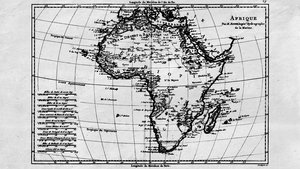
Dawn of the Damned
This excellent feature-length documentary - the story of the imperialist colonization of Africa - is a film about death. Its most shocking sequences derive from the captured French film archives in Algeria containing - unbelievably - masses of French-shot documentary footage of their tortures, massacres and executions of Algerians. The real death of children, passers-by, resistance fighters, one after the other, becomes unbearable. Rather than be blatant propaganda, the film convinces entirely by its visual evidence, constituting an object lesson for revolutionary cinema.
1965
Afrique 50
The first French anti-colonialist film, derived from an assignment in which the director was to document educational activities by the French League of Schooling in West Africa. Vautier later filmed what he actually saw: “a lack of teachers and doctors, the crimes committed by the French Army in the name of France, the instrumentalization of the colonized peoples.” For his role in the film, Vautier was imprisoned for several months. The film was banned from public screening for more than 40 years.
1950
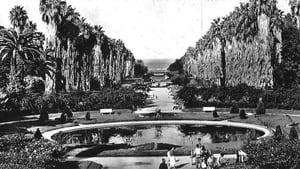
Alger Et Ses Environs
The film, shot in 1938, is part of a series entitled “The true face of Algeria”. The film highlights the proximity of Algiers to Paris and promotes air travel. The commentary supporting the images highlights the urban dynamism (“Every day, a new skyscraper replaces a wasteland”) and the comparison with Paris (“Algiers is often nicknamed the Paris of North Africa because of its elegance become proverbial). Contemporary architectural achievements are described as the sign of “grandiose modernism”: “we love the new, the bold”. But the point does not forget the buildings illustrating “the Moorish, classic and attractive style”. The description of the Casbah also attempts to understand the architectural organization but also the diversity and even the atmosphere.
1945
Mémoires du 8 mai 1945

Le Grand Désert
In 1950, the explorer Roger Frison-Roche made a crossing of more than a thousand kilometers on the back of a camel with the photographer Georges Tairraz II, in the heart of the Sahara, from Hoggar then Djanet in Algeria to Ghat in Libya. From their journey they brought back a large number of color films and documents. Among thousands of photos, they selected 47 images which reflect the various aspects of these immense spaces which occupy a third of Africa in the book "The Great Desert". “The Great Desert, 1000 kilometers on camelback” is the eponymous 85-minute documentary of this epic, released in 1950.
1950