Watch Fight, Blood and Spirit (2015) Online Free
More Like This
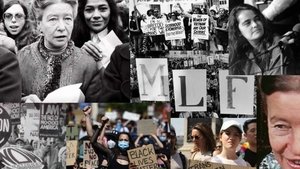
Le deuxième sexe : Sur les traces de Simone de Beauvoir
Published in 1949, The Second Sex became the bible of global feminism. An essential work that passionately advocates for gender equality, women's independence, and the liberation of morals. Today, how does this seminal work continue to resonate in our contemporary world? Conceived as an initiatory journey to the origins of Simone de Beauvoir's thinking, the film The Second Sex: In the Footsteps of Simone de Beauvoir takes us to the United States, to the places that inspired the philosopher and nourished her theories. An American road trip bringing together the worst and the best, predatory capitalism and mad love. A unique reinterpretation in the company of the great thinkers of our century.
2025

Don Barry: A Quixotic Exploration
Amid Guanajuato's vibrant streets, an aging filmmaker becomes a modern Don Quixote, joined by a spirited young animator as his loyal Sanchia. Together, they navigate themes of mortality, unfulfilled dreams, and the fragile line between madness and clarity, uncovering the transformative power of light, art, and the landscapes that shape our souls.
2024

Fairtex 'The Real Deal'
A traveler finds Muaythai as a hobby in the land of smiles, thailand. Following a visit at fairtex gym, meeting the fighters at the gym, he finally realizes the life; Pattaya has to offer. Mastering Muaythai, with his statement ' Where Borne fighters appear, legends are made', he soon learned the arts of the fighting style and as a freelance legendary fighter his nickname evolve to "The Real Deal".
2023

Hannah Arendt, la liberté d'être libre
In a time of resurgence of social protests, political radicalization and distrust of power, Arendt's thought has never been more relevant: A critical thinker according to some or a conservative according to others, this great figure of the intellectual world remains, in many ways, an enigma. Who was Hannah Arendt?
2023
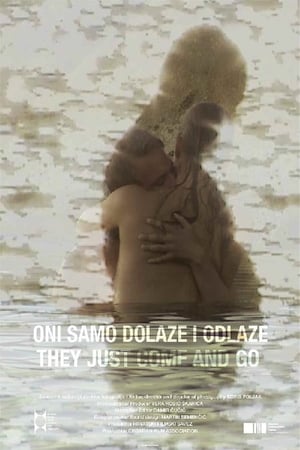
They Just Come and Go
The film follows morning events at Bacvice beach. At dawn, before sunrise, the beach becomes a place of an unusual clash. From nearby clubs and cafes, numerous groups of young people cross the beach on their way home. At the same time, older people start coming. They walk, come, pass by and go.
2017
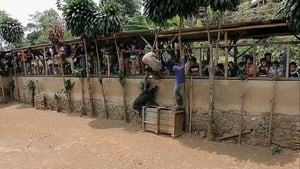
Canine
A family in rural area of West Java, Indonesia enjoys their time with 'Ngadu Bagong', a sundanese traditional game where dogs put to fight against a wild boar in a single event. Ngadu Bagong has always been some sort of animal abuse but it's been in the tradition for a long time. Ade Rohmat has been in the game for a long time; a hobby that he now passes on to his daughter, Ilma Nurjanah. The potentially controversial Ngadu Bagong has always brought intense emotion, prestige, and fortune upon its practicioners.
2016
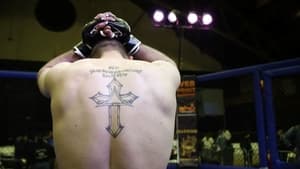
Fight Church
A documentary about the confluence of Christianity and mixed martial arts, including ministries which train fighters. The film follows several pastors and popular fighters in their quest to reconcile their faith with a sport that many consider violent and barbaric. Faith is tried and questions are raised. Can you really love your neighbor as yourself and then punch him in the face?
2014
Still
The documentary tells the story of Uschi, a farmer living free and recluded in the bavarian alps. Shot in epic black and white pictures, Still follows Uschi's life over a ten year period. From an untroubled summer of making cheese through pregnancy and the uncertain future of the parental farm, Matti Bauer portrays Uschi's struggle to keep alive the dream of a way of life that has become rather untypical in this day and age.
2014
Frank Shamrock: Bound by Blood
Shamrock: Bound by Blood, a gripping 65-minute documentary that airs Thursday on Spike (11 p.m. ET), stirs up a few ghosts still haunting the MMA personality. There's a lot of story to tell (Spike producers said they bandied the fighter's 2012 memoirs around the office to begin), but wisely, Shamrock focuses mostly on Frank's deteriorated relationship with his iconic brother Ken. Frank and Ken, a weathered UFC Hall of Famer still trying to ply his trade at age 49, haven't spoken in nearly 15 years. ... For MMA enthusiasts, Shamrock will be an enlightening hour. It also takes a more serious tone than Spike's previous MMA programming. But at its heart, Shamrock is not about MMA. It's about love and hurt, and finding forgiveness and acceptance in the face of dysfunction. For Frank, on his own road of self-improvement, it was about finding peace.
2013
Fight Life
Chronicles the daily lives of professional MMA fighters from all different levels over the course of one year.
2012
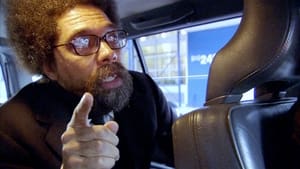
Examined Life
Examined Life pulls philosophy out of academic journals and classrooms, and puts it back on the streets. Offering privileged moments with great thinkers from fields ranging from moral philosophy to cultural theory, Examined Life reveals philosophy's power to transform the way we see the world around us and imagine our place in it.
2008
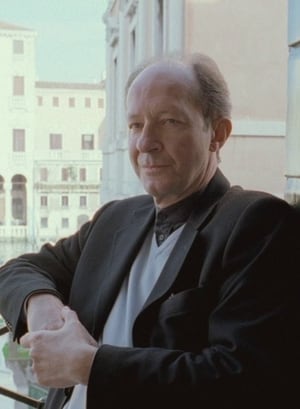
The Projection Has Begun
Sancho Panza enters a movie theatre in a provincial city. He is looking for Don Quixote and he finds him sitting off to the side and staring at the screen. The theatre is almost full; the balcony is entirely occupied by noisy children… La proiezione è cominciata (The Projection Has Begun) is an adaptation of The Six Most Beautiful Minutes in the History of Cinema by Giorgio Agamben. It is a portrait in 24 daguerreotypes per second.
2006
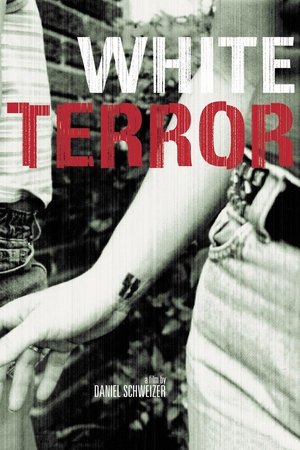
White Terror
A video about Neo-Nazis originating in Sweden provides the starting point of an investigation of extremists' networks in Europe, Russia, and North America. Their propaganda is a message of hatred, war, and segregation.
2005
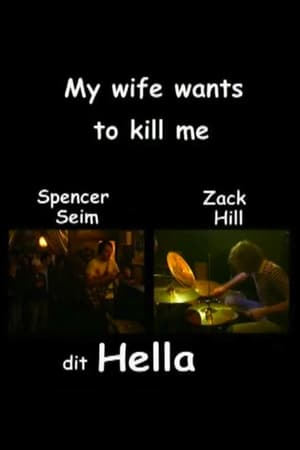
My wife wants to kill me
Film about the band Hella's 2005 European tour.
2005
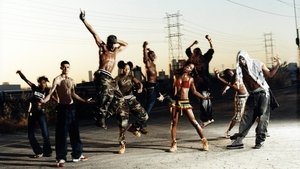
Rize
A documentary film that highlights two street derived dance styles, Clowning and Krumping, that came out of the low income neighborhoods of L.A.. Director David LaChapelle interviews each dance crew about how their unique dances evolved. A new and positive activity away from the drugs, guns, and gangs that ruled their neighborhood. A raw film about a growing sub-culture movements in America.
2005
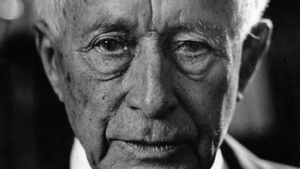
102 Years in the Heart of Europe: A Portrait of Ernst Jünger
102 Years in the Heart of Europe: A Portrait of Ernst Jünger (Swedish: 102 år i hjärtat av Europa) is a Swedish documentary film from 1998 directed by Jesper Wachtmeister. It consists of an interview by the journalist Björn Cederberg with the German writer, philosopher and war veteran Ernst Jünger (1895-1998). Jünger talks about his life, his authorship, his interests and ideas. The actor Mikael Persbrandt reads passages from some of Jünger's works, such as Storm of Steel, The Worker, On the Marble Cliffs and The Glass Bees.
1998

HIV=AIDS: Fact or Fraud?
One of the most powerful video documentaries of our time boldly reveals the modern medical-industrial complex’s dire descent into utter corruption. HIV/AID$ - A deadly and dangerous DECEPTION! This feature-length expose explains exactly how the 300-Billion-dollar AID$ fraud began, why HIV can NOT be the cause of AIDS, what the real causes could be, and who manipulates the public’s good intentions while poisoning hundreds of thousands with toxic drugs that cause the very disease they are supposed to prevent.
1996
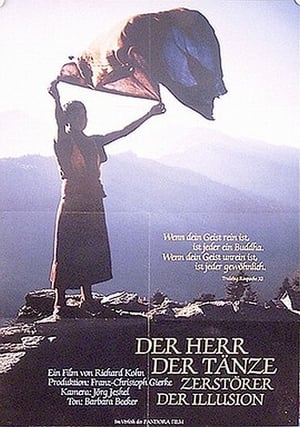
Lord of the Dance/Destroyer of Illusion
The documentary focuses on the annual Mani Rimdu festival of Tibet and Nepal, an event which encapsulates the Himalayan Buddhist experience.
1985
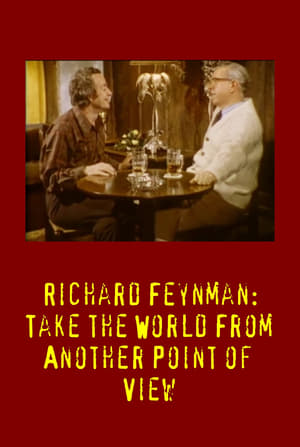
Take the World From Another Point of View
In 1973 Yorkshire public television made a short film of the Nobel laureate while he was there. The resulting film, Take the World from Another Point of View, was broadcast in America as part of the PBS Nova series. The documentary features a fascinating interview, but what sets it apart from other films on Feynman is the inclusion of a lively conversation he had with the eminent British astrophysicist Fred Hoyle.
1973

A Propos D'Un Crime
In 1967, Visconti came to Algiers for the filming of The Stranger with Mastroianni and Anna Karina. Camus, during his lifetime, had always refused to allow one of his novels to be brought to the screen. His family made another decision. The filming of the film was experienced in Algiers, like a posthumous return of the writer to Algiers. During filming, a young filmmaker specializing in documentaries Gérard Patris attempts a report on the impact of the filming of The Stranger on the Algerians. Interspersed with sequences from the shooting of Visconti's film, he films Poncet, Maisonseul, Bénisti and Sénac, friends of Camus, in full discussions to situate Camus and his work in a sociological and historical context. “The idea is for us to show people, others, ourselves as if they could all be Meursault, or at least the witnesses concerned to his drama.”
1967