Watch Evocação de Barahona Fernandes (2005) Online Free
"Evocação de Barahona Fernandes" is a short documentary directed by José Barahona, focusing on his grandfather, the esteemed Portuguese psychiatrist Barahona Fernandes. The film delves into Fernandes's influential anthropological-medical model and its significant contributions to the field of psychopathology. Through intimate storytelling, the documentary offers a personal perspective on Fernandes's legacy, highlighting his profound impact on understanding mental health and the human psyche.
Cast
António Barahona Fernandes
More Like This
The Milwaukee Cannibal
With documentary cartoonist Derf Backderf, a poignant look back at the story of ‘My Friend Dahmer’, an investigative graphic novel exploring existential issues. The author sets out to explore his adolescence, which was overshadowed by Jeffrey Dahmer, a former high school friend who went on to become a serial killer.
2026

ZAAD
ZAAD tells the autobiographical story of Dries Meddens. After the death of his mother, the care for Dries' bipolar father falls on his plate. He discovers how crudely and ruthlessly society and psychiatry treat patients. His father eventually dies in solitary confinement. While emptying his parent’s home, Dries discovers an old letter from his grandfather. The man appears to have led a busy, productive life. He is the founder of an internationally renowned seed breeding company and still has time to paint, write diaries and conduct intensive correspondence. Dries finds similarities between his grandfather, his father and himself. Slowly the fear grows that his father's psychiatric illness might be hereditary. Strolling through the family’s film and photo archives, with dramatic and sometimes hilarious finds, Dries tries to find answers. He also consults a psychiatrist. Together the consultations and reviewing of his archival material help Dries look at bipolarity with new eyes.
2025
SOS jeunesse en détresse
Today in France, one in five young people suffers from severe depressive symptoms, and the number of minors visiting psychiatric emergency rooms has tripled in the last five years. Despite the political will that has been demonstrated, child psychiatry is nevertheless faced with a severe lack of resources. The interminable waiting times for treatment are causing a surge in prescriptions for psychotropic drugs.
2025
At Averroes & Rosa Parks
Averroès and Rosa Parks: two units of the Esquirol Hospital, which - like the Adamant - are part of the Paris Central Psychiatric Group. From individual interviews to «carer-patient» meetings, the filmmaker focuses on showing a form of psychiatry that continually strives to make room for and rehabilitate the patients’ words. Little by little, each one eases open the door to their world. Within an increasingly worn-out health system, how can the forsaken be given a place among others.
2024

Satan Wants You
The story of how the Satanic Panic of the 1980s was ignited by "Michelle Remembers", a memoir by psychiatrist and his patient. The book relied on recovered-memory therapy to uncover Michelle's abduction by baby-stealing Satanists.
2023
Into Light
A mother embarks on a journey of acceptance and joy while supporting her child's gender transition in this heartfelt portrayal of single parenting and navigating the complexities surrounding gender and consent.
2021
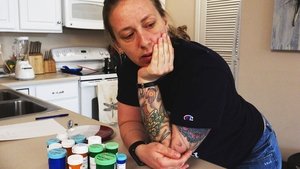
Medicating Normal
One in five Americans is taking a psychiatric drug, including millions of children. Pharmaceutical companies have over-hyped the benefits of these drugs, while hiding the risks and severe side effects including physiological dependence. "Medicating Normal" explores what happens when for- profit medicine intersects with human beings in distress.
2020
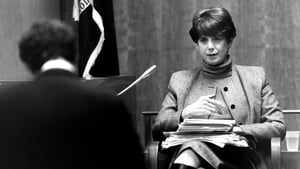
Crazy, Not Insane
Fascinated by the human brain and its capacity for ruthlessness, psychiatrist Dr. Dorothy Otnow Lewis has spent her life investigating the interior lives of violent people. With each case, she came closer to developing a unified field theory of what makes a killer. Along the way - steering away from the conventional wisdom of her colleagues - she explored the world of multiple personality disorder.
2020

Letters from Generation Rx
As a result of the 2008 documentary"Generation Rx," thousands of people wrote director Kevin P. Miller to share their experiences on psychiatric drugs. Miller combines their gripping tales with the latest mental health research, science, and medical health perspectives.
2017
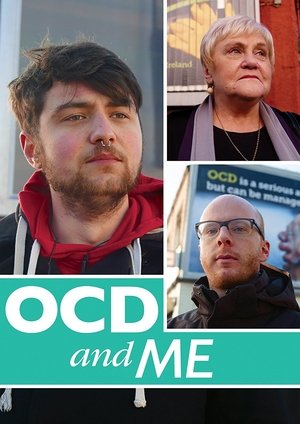
OCD and Me
Do you REALLY know what OCD is? Dig beyond the stereotypes in this documentary, profiling multiple people who deal with this mental illness in all its known and often unknown forms every single day.
2016

What About ME?
Inside the dramatic search for a cure to ME/CFS (Myalgic Encephalomyelitis/Chronic Fatigue Syndrome). 17 million people around the world suffer from what ME/CFS has been known as a mystery illness, delegated to the psychological realm, until now. A scientist in the only neuro immune institute in the world may have come up with the answer. An important human drama, plays out on the quest for the truth.
2016
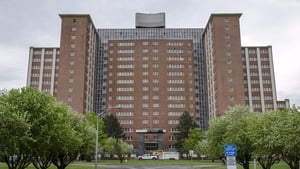
Echo Of The Past: The Terrence Tower
A historical documentary documenting the rise, function, and abandonment of a 17 story building that once housed The Rochester Psychiatric Center. This film tells the story of the building through historical footage, interviews of former staff and patients who recount their memories of the behemoth facility while also exploring the abandoned building as it is today.
2012
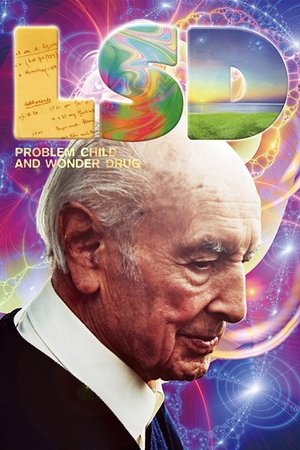
LSD: Problem Child and Wonder Drug
LSD: Problem Child and Wonder Drug captures the fascinating story of LSD as it is eloquently told by Dr. Albert Hofmann, the 100-year-old sage-scientist who brought LSD into the world. With interviews and presentations by Rick Doblin, Alex Grey, Ralph Metzner, Carl Ruck, Goa Gil, and others, this historic message from the father of LSD is a timeless relic and an immediate source of inspiration. The story is told through an account of the 2006 International LSD Symposium in Basel, Switzerland. At the now-legendary conference, eighty speakers and two thousand participants gathered for three days in honor of Dr. Hofmann's 100th birthday and to hear Dr. Hofmann speak about his life, his discovery, and his thoughts on the psychedelic experience. It was also an occasion for leading doctors, researchers, artists and thinkers in the psychedelic field to present their work.
2009
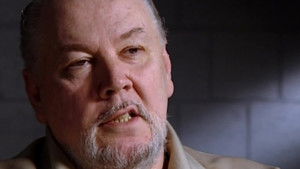
The Iceman and the Psychiatrist
For the third time, HBO cameras go inside Trenton State Maximum Security Prison--and inside the mind of one of the most prolific killers in U.S. history--in this gripping documentary. Mafia hit man Richard Kuklinski freely admits to killing more than 100 people, but in this special, he speaks with top psychiatrist Dr. Park Dietz in an effort to face the truth about his condition. Filled with more never-before-revealed confessions, it's the most chillingly candid Iceman special yet as it combines often-confrontational interview footage between Kuklinski and Dietz with photos, crime reenactments and home movies that add new layers to this evolving and fascinating story.
2004
At Folsom Prison with Dr. Timothy Leary
At Folsom Prison with Dr. Timothy Leary is an extraordinary counterculture document, filmed during Leary’s incarceration there. Under 30 minutes in length, this 1973 film shows Leary at his most engaging and personable. It’s a testament to his considerable charm that he was able to pull off such a performance, considering that the prison warden and other officials were sitting across the room listening as this was filmed. Leary discusses his jailbreak (intimating that the daughter of a United States senator he refuses to name helped him), the revolution in consciousness and drugs, Eldridge Cleaver and what it feels like to be an imprisoned philosopher.
1973
The Circle
Produced in 1967, this black and white film is an inmate's view of Daytop, a drug treatment centre on Staten Island, New York, where addicts learn to get along without drugs. Uncompromising, often brutal group therapy sessions are designed to shake loose the excuses a victim makes for himself. The people and situations shown are authentic; only one actor was employed. The results obtained at Daytop are regarded by some psychiatrists as a breakthrough.
1967
DEPO: AKIL HASTANESİNDE HAYAT
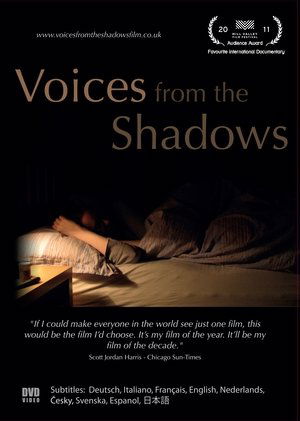
Voices from the Shadows
‘Voices from the Shadows’ shows the brave and sometimes heartrending stories of five ME patients and their carers, along with input from Dr Nigel Speight, Prof Leonard Jason and Prof Malcolm Hooper. These were filmed and edited between 2009 and 2011, by the brother and mother of an ME patient in the UK. It shows the devastating consequences that occur when patients are disbelieved and the illness is misunderstood. Severe and lasting relapse occurs when patients are given inappropriate psychological or behavioural management: management that ignores the severe amplification of symptoms that can be caused by increased physical or mental activity or exposure to stimuli, and by further infections. A belief in behavioural and psychological causes, particularly when ME becomes very severe and chronic, following mismanagement, is still taught to medical students and healthcare professionals in the UK. As a consequence, situations similar to those shown in the film continue to occur.
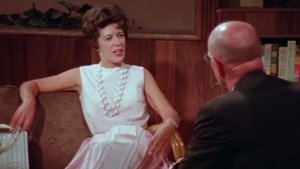
Three Approaches to Psychotherapy
An actual patient, Gloria Szymanski, allowed herself to be filmed while engaged in therapy with three different therapists, distinguished by their different orientations but sharing their therapeutic endeavors. Poster illustration by Kati Szilágyi.
1965
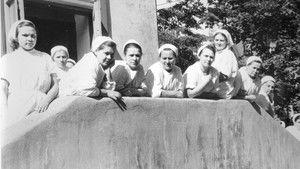
Psychiatry in Russia
In 1955, Albert Maysles traveled by motorcycle throughout Russia. During this trip, he shot what was to become his first film, 'Psychiatry in Russia', an unprecedented view into Soviet mental healthcare. Originally televised by the David Garroway Show on NBC-TV in 1956.
1955