Watch Eating With Cannibals (2011) Online Free
National Geographic joins author and explorer Piers Gibbon as he investigates one of mankind's ultimate taboos: cannibalism. Gibbon treks into the rain forest of Papua New Guinea to find tribe members who ate human flesh. And, meets the members of the once-feared Biami tribe to witness their ritual techniques.
Cast
Piers Gibbon
More Like This
The Queen of the Cannibals
An interview with actress Me Me Lai on her work in the three Italian cannibal-themed movies "The Man from Deep River", "Last Cannibal World" and "Eaten Alive", as well as on her participation in Lars von Trier's "Element of Crime".
2024
Into the Jungle
Conservationists Jim and Jean Thomas braved the steamy jungles of Papua New Guinea to save a tree kangaroo from extinction and ended up providing water and sanitation to ten thousand people in one of the most remote places on earth.
2018
Caniba
Caniba is a fresco about flesh and desire. It reflects on the discomfiting significance of cannibalism in human existence through the prism of one Japanese man, Issei Sagawa, and his mysterious relationship with his brother, Jun Sagawa.
2017
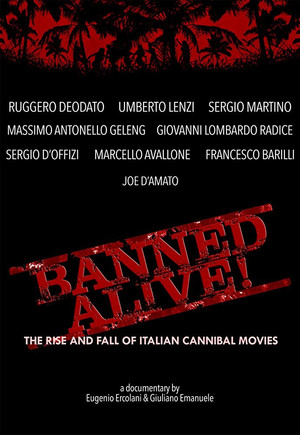
Banned Alive! The Rise and Fall of Italian Cannibal Movies
2 1/2 hour-documentary on the rise and fall of one of the most controversial Italian genres every created. Starting with Deep River Savages arriving to the infamous Cannibal Ferox.
2016
The Road to Home
The Road to Home (2015), tells the story of Benny Wenda, the Nobel Peace Prize nominated West Papuan independence leader, in his ongoing struggle to free his people from Indonesian colonial rule. Since his dramatic escape from an Indonesian prison in 2002, where he was held in isolation and tortured as a political prisoner, Benny has been an unceasing crusader on the international scene, campaigning to bring about an end to the suffering of his people at the hands Indonesia's brutal colonial regime. Granted political asylum in the UK, Wenda's freedom of movement was restricted in 2011 when, at the behest of the Indonesian government, Interpol issued a 'red notice' putting him at extreme risk of extradition should he travel.
2015
Interview with a Cannibal
Issei Sagawa murdered an innocent woman and spent three days eating her flesh. Due to loopholes in the law, Issei is a free man to this day. Sagawa was declared insane and unfit for trial and was institutionalized in Paris. His incarceration was to be short, however, as the French public soon grew weary of their hard-earned francs going to support this evil woman-eater, and Issei was promptly deported. Herein followed a bizarre and seemingly too convenient set of legal loopholes and psychiatric reports that led doctors in Japan declaring him "sane, but evil." On August 12, 1986, Sagawa checked himself out of Tokyo's Matsuzawa Psychiatric hospital, and has been a free man ever since.
2012
The Last Confession of Alexander Pearce
Eight men escape from the most isolated prison on earth. Only one man survives and the story he recounts shocks the British establishment to the core. This story is the last confession of Alexander Pearce.
2009
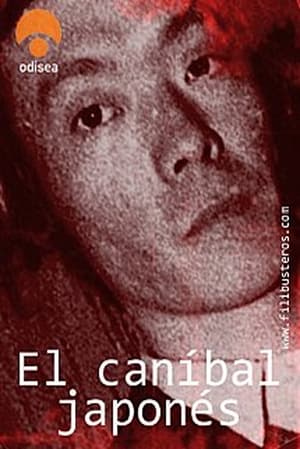
The Cannibal That Walked Free
The Cannibal that Walked Free (also known as Cannibal Superstar ) is a British documentary produced by Visual Voodoo for Channel Five which explores - through direct access - the bizarre psychology and twisted celebrity fame that surrounds Japanese cannibal Issei Sagawa.
2007
Land of the Morning Star
The western half of the island of New Guinea has been known by many names including Netherlands New Guinea, West Papua, Irian Jaya and Papua. It is an extraordinary place where snow-capped mountains drain into massive rivers and 250 languages are spoken. For centuries, the world has jostled for control of this rugged, isolated region, with its abundant natural resources and strategic position. Through eyewitness accounts and rare archival film, this fascinating documentary paints a picture that is intimate in detail but epic in scope. It is a sweeping saga of colonial ambitions, cold war sellouts and fervent nationalism, which highlights the role of players such as Australia and the UN at crucial points.
2003
Serial Killers: The Real Life Hannibal Lecters
This documentary examines a selection of real life serial killers and compares them to the fictional Hannibal Lecter.
2001

Black Harvest
Joe Leahy is the half-caste son of one of the first explorers of the Papua New Guinean interior. The documentary explores his relationship with the tribes that work his coffee plantation and explores what happens when the coffee market situation becomes more difficult.
1992
Echoes from a Sombre Empire
Documentary examining Bokassa's rule in the Central African Republic using the testimony of witnesses and visits to key sites.
1990
Man without Pigs
John Waiko is the first Papua New Guinea man to graduate with a PhD and be appointed a professor. He returns to the Binandere clan and his small village of Tabara in the Northern Province of PNG. Once there, he has to organise a celebration for his achievements with his family’s help. Since he has been away for most of his life, he has no recognised wealth in the village (the pigs used for gift giving), nor a network of supporters or knowledge of the preparation and rituals for having such a celebration. He wants the event to happen quickly but that’s not the way it works in Tabara. Man without pigs focuses on the antagonism aroused by the clash between traditional customs and Western values in this remote PNG community.
1990

Papua New Guinea: Anthropology on Trial
"Papua New Guinea: Anthropology on Trial" was a 1983 episode of the PBS science documentary series NOVA. It explored the field of anthropology, particularly in the context of Papua New Guinea, from the perspective of the people being studied.
1983
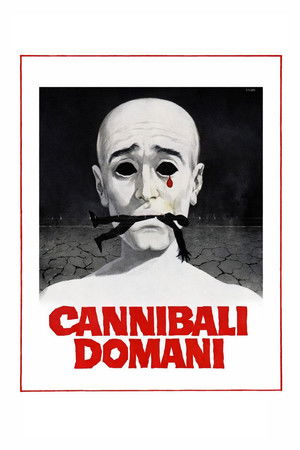
Cannibals Tomorrow
It is a documentary, which submits to the public the most dramatic, subhuman situations in which men find themselves living in all corners of the world. From India to Brazil, from the African nations of the Sahel to Bolivia, the camera ruthlessly shows the images of a humanity marginalized in a thousand ways by the so-called"civil consortium".
1983
Faces of Death
A collection of death scenes, ranging from TV material to homemade super 8 movies.
1978
Ileksen: Politics in Papua New Guinea
A companion to Yumi yet, O’Rourke and Kildea’s Ileksen (derived from the English 'election’) documents Papua New Guinea’s first general election in 1977. The film records a broad cross-section of candidates who, without an extended media network at their disposal, rely on relentless campaigning, ingenuity and personal charisma to attract votes. Emphasising the divide between coastal people and highlanders, Ileksen looks at the election campaign, election day and the political manouvering that goes with the formation of a government.
1978
Dead Birds
An ethnographic documentary documenting the ritual warfare cycle, social life, and belief systems of the Dani people of the Baliem Valley in western New Guinea.
1963

The Fabulous South Seas
The island of New Guinea is the setting for this film, which focuses on the landscape, the life of the Papuans and their ritual festivals and spirit dances. The colorful birds of paradise are the pride of the islanders. Among the more than 40 species, the smallest, the "Little King" with blood-red plumage, can also be found on the island.
1960

Cannibal Island
Though the release date says 1956, this film consists mostly of footage from a 1931 documentary called "Gow the Killer." It was the first sound film to deal with cannibalism, as it documented the social life and customs of primitive tribes that in fact did engage in cannibalism.
1956