Watch Devils Reign (2013) Online Free
More Like This
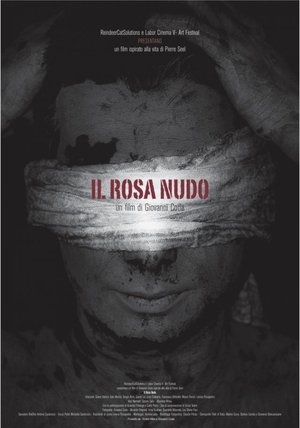
Naked Rose
Among the millions of victims of the Nazi madness during the Second World War, Pierre Seel was charged with homosexuality and imprisoned in the Schirmeck concentration camp. He survived this terrifying experience of torture and humiliation, and after the war he married, had three children, and tried to live a normal life. In 1982, however, he came to terms with his past and his true nature and decided to publicly reveal what he and thousands of other homosexuals branded with the Pink Triangle had undergone during the Nazi regime. Il Rosa Nudo (Naked Rose), inspired by the true story of Pierre Seel, depicts in a theatrical and evocative way the Homocaust, focusing on the scientific theories of SS Physician Carl Peter Værnet for the treatment of homosexuality, which paved the way for the Nazi persecution of gay men.
2013
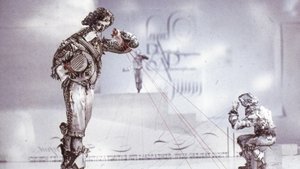
Anamorphosis
The Quays' interest in esoteric illusions finds its perfect realization in this fascinating animated lecture on the art of anamorphosis. This artistic technique, often used in the 16th- and 17th centuries, utilizes a method of visual distortion with which paintings, when viewed from different angles, mischievously revealed hidden symbols.
1993
Black Hole Radio
Black Hole Radio is an installation that consists of taped confessions of callers of the New York City Phone Confession Line and video images. The Phone Confession Line is based on anonymous callers ringing to confess on things they had done or thought like adultery, theft, murder or regrets. Thereafter anybody could call and listen to the confessions. Although making a confession was free, listening to a confession costs money. After Cohen got his hands on the confessions, he used them as an audio heartbeat to accompany video-images of every day life in New York City he had taken over the years. This installation is a portrait of the city with its dark secrets, hushed voices and nocturnal images. In this way Cohen tries to bring across an experience to the viewer that relies on absence, waiting and the effort to hear something in the dark.
1992
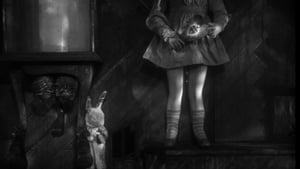
Stille Nacht II: Are We Still Married?
Stop-motion animated short film with a white ball, a rabbit, and a girl, and a voice singing "Are We Still Married".
1992
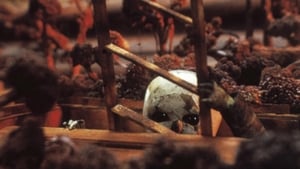
The Comb
A porcelain doll’s explorations of a dreamer’s imagination.
1991
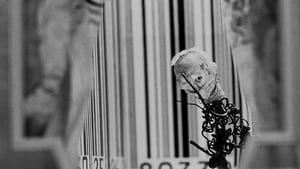
Rehearsals for Extinct Anatomies
Stop-motion animated short film in which, among other things, a man made of wire looks malevolent.
1988
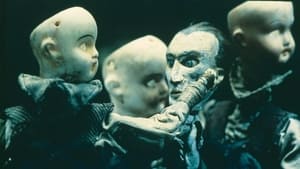
Street of Crocodiles
A puppet, newly released from his strings, explores the sinister room in which he finds himself.
1986
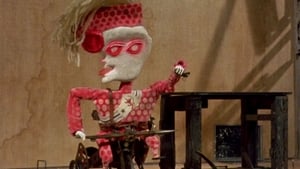
This Unnameable Little Broom
Stop-motion animated short film in which a puppet on a trike captures a puppet bird-man.
1985
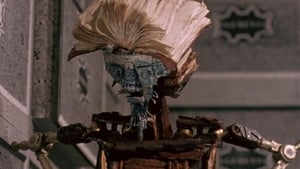
The Cabinet of Jan Švankmajer
In Prague, a professorial puppet, with metal pincers for hands and an open book for a hat, takes a boy as a pupil. First, the professor empties fluff and toys from the child's head, leaving him without the top of his head for most of the film. The professor then teaches the lad about illusions and perspectives, the pursuit of an object through exploring a bank of drawers, divining an object, and the migration of forms. The child then brings out a box with a tarantula in it: the professor puts his "hands" into the box and describes what he feels. The boy receives a final lesson about animation and film making; then the professor gives him a brain and his own open-book hat.
1984
Lapse Communication
Writes Kobayashi, "In 1972 I started a series of participatory performances where the first person performs an ambiguous action in front of a recording camera; the next person watches the recorded footage and imitates the action in front of a recording camera; the third person repeats the same procedure using the second person's video recording, and so on. Within the repetition of recording and action, the original gesture is transformed by the participants' misunderstanding, interpretation, and memory."
1980
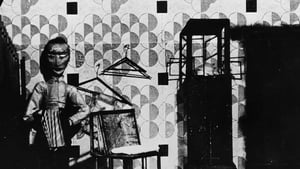
Nocturna Artificialia
Enigmatic, stop-motion, animated story of a man's day.
1979
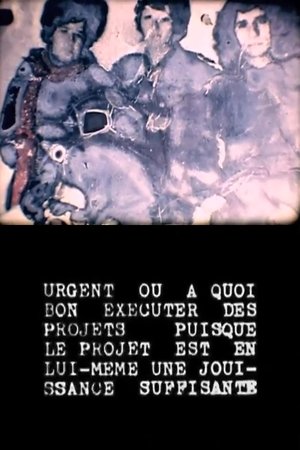
Urgent ou à quoi bon exécuter des projets puisque le projet est en lui-même une jouissance suffisante
Gérard Courant applies the Lettrist editing techniques of Isidore Isou to footage of late 70's pop culture. Courant posits that his cinema offers an aggressive détournement to the French mainstream, reifying a Duchampian view of film: "I believe in impossible movies and works without meaning... I believe in the anti-movie. I believe in the non-movie. I believe in Urgent... My first full length movie that is so anti-everything that I sometimes wonder if it really does exist!"
1977
Camera, Monitor, Frame
Camera, Monitor, Frame is the first installment of Takahiko Iimura's "Video Semiotics Triptych" (the other two works are Observer/Observed, made in 1975, and Observer/Observed/Observer, made in 1976). The work analyzes the fundamental components of video: the camera, the monitor, and the frame, focusing on the role of each within a system of video as analogous to the functions of vision and speech.
1976
Stuck
Short video art piece.
1974
Under a Bridge
In this tape, Ko Nakajima and Video Earth Tokyo interview a homeless man. The subject is initially angry and frustrated, but gradually opens up and shares stories about his life. Under A Bridge was later broadcast on cable television.
1974
What a Woman Made
In Idemitsu's seminal women's liberationist video, the image of a tampon swirling in a toilet bowl slowly appears, as the artist speaks about the troubling roles, responsibilities and expectations of women in a clinical tone. Minimal in composition, What a Woman Made is a candid critique of the treatment of women in Japanese society.
1973
Eat (Document of the Performance)
Katsuhiro Yamaguchi and Hakudo Kobayashi presented the video performance Eat at Video Hiroba's first exhibition, Video Communication DO IT YOURSELF KIT. Two performers sit at a table. One records the other eating; then they switch roles. The live video feed of the performance was displayed on a monitor in the exhibition space.
1972
Oh! My Mother
Writes Ando, "Oh! My Mother was the first work I made using a newly bought 16mm camera I had purchased with the writer Shuji Terayama in Paris. This piece was selected for the Oberhausen International Film Festival. In 1969, there were, of course, no video cameras like ones we see now, and color TVs were only found at broadcast television studios. I had just been employed at the TBS (Tokyo Broadcasting System), and I often snuck into the studios after hours to experiment with the equipment. Oh! My Mother was made using the feedback effect, which is produced by infinitely expanding the image by looping the video."
1969
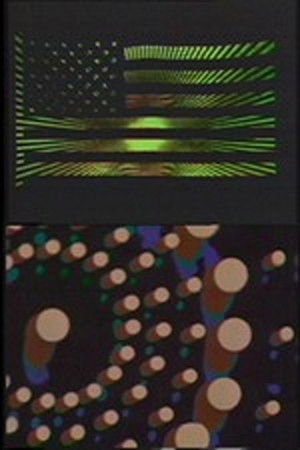
The Medium Is the Medium
Produced by WGBH-TV in Boston, the Medium Is the Medium is one of the earliest and most prescient examples of the collaboration between public television and the emerging field of video art in the U.S. WGBH commissioned artists — Allan Kaprow, Nam June Paik, Otto Piene, James Seawright, Thomas Tadlock and Aldo Tambellini — to create original works for broadcast television. Their works explored the parameters of the new medium, from image processing and interactivity to video dance and sculpture.
1969
Self Shots
Self shots are the optical Biographie of an unorthodox film producer. Director, cameraman and actor in a person, he directs the camera against itself. It plays with her, throws her into air, races over the meadows, films its movements, his face and his hands and demonstrates thereby its adventurous relationship to a 16 mm camera. Not an action thus, but filming becomes the action. The Godard' Bonmot of filming as ' truth 24 times in the second ' made Mommartz in his films conscious like hardly another. (Wilfried Reichart Kölner Stadtanz 4.1.68)
1967