Watch Deep Roots, Dark Earth: Freemining in the Forest of Dean Online Free
For centuries, freeminers have held the right to mine coal anywhere within the Forest of Dean. To become a freeminer, one must be over 21, born within the hundred of St Briavels, and have worked underground for a year and a day. Today, Forestry England administers the mining tradition, with only a few freeminers still venturing underground in search of the elusive ‘black gold,’ helping to keep this unique heritage alive. This short documentary offers a rare glimpse into the lives of those most connected to this fascinating practice. Through their eyes, we explore the dark depths beneath the ancient forest floor and uncover an enduring way of life.
Cast
Dan Howell, Mike Howell, Phil Schwarz, Lawrence Shaw
More Like This
Sheher-E-Lucknow
A docu-film about the city Lucknow where the creators ask their family members important questions they have always wanted answers to, while indulging in tomfoolery around town. The film showcases the differences in the way three different generations perceive Lucknow. An ode to the city, and an attempt to provide solace to the social misfits of the creators' hometown.
2025
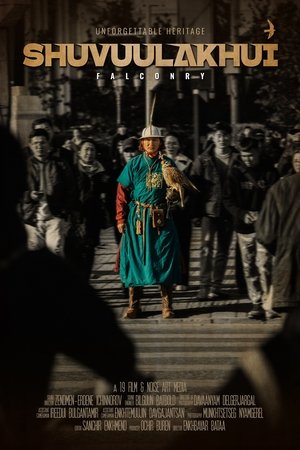
Falconry
Batbileg lives in a ger district of Ulaanbaatar with his wife and two children, making a living by training falcons for hunting and showing them to tourists. Every year, at the beginning of summer, he captures and trains the hawks, and at the start of winter, he releases them back into the wild. One of his recurring endeavors begins with training a hawk named “Andgai.”(Oath). However, laws and regulations on bird training are lacking, and the densely populated urban environment, crowded with people and buildings, is far from suitable. Batbileg aims to revive Mongolia’s ancient falconry culture, raise public awareness of the value of falcons, and pass on conservation ideals to the younger generation. Yet, in the face of the many challenges before him, he is forced to confront a dilemma: should he comply with the law, or remain faithful to his ancestral tradition?
2025
Gunnar's Last Project
At 85, Icelandic design icon Gunnar Magnússon begins a final project with help from his daughter Tinna. As his health suddenly fails, she is left to complete the work herself, turning her father’s last creation into a daughter’s final gesture of love.
2025

Sonaggios
In the Sardinian town of Tonara, where the ancient art of crafting cowbells teeters on the edge of extinction, a family battles to preserve their heritage, passing down skills to a new generation while grappling with personal struggles and the pull of modernity. English subtitles.
2025

Pāragate
From Belgium, Jialai Wang maintains contact via smartphone and camera with her mother and grandmother in China. When her grandmother’s health deteriorates, Jialai returns to Shanghai, but when she arrives, her grandmother has already died, and she is left alone with her mother. A devout Buddhist, her mother seems to pay more attention to her daily prayers, Maoist past and dog Dongdong than she does to her daughter. She herself had been abandoned as a child by her own mother, when she divorced Jialai’s grandfather and moved to the city.
2023

Thatcher vs The Miners: The Battle for Britain
On the 5th of March 1985, a crowd gathered in a South Yorkshire pit village to watch a sight none of them had seen in a year. The villagers, many of them in tears, cheered and clapped as the men of Grimethorpe Colliery marched back to work accompanied by the village’s world-famous brass band. The miners and their families had endured months of hardship. It had all been for nothing. The miners had lost the strike called on March 6th 1984. They would lose a lot more in the years to come. But was it a good thing for the country that the miners lost their last battle?
2021
Where the Land Sounds
Motivated by family memories, a filmmaker returns to the land of his mother to reflect on his identity and deep cultural heritage.
2021
The Commission
For some time now, The State Commission of the Lithuanian Language is at the center of tough discussions. For some, it’s an institution which safeguards the most important principles of the language, but for others, it’s an anachronism of the Soviet regime. This film offers a first-time glimpse into the commission’s work
2019
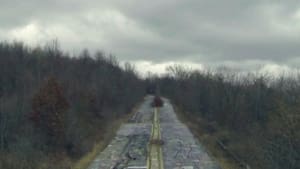
Centralia: Pennsylvania's Lost Town
A small town is overcome by a massive underground coal fire in 1962. As a result hundreds of residents had to be relocated.
2017
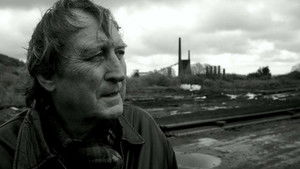
The Miners' Strike
Teaming up with director Karl Francis, Dafydd Hywel speaks to some of the coal miners and their wives who played a huge part in the Miners' Strike of 1984-5, and their descendants, who have inherited a Wales without coal mines.
2015
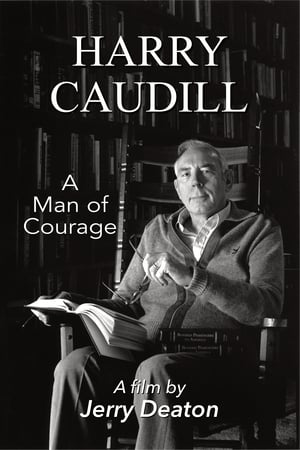
Harry Caudill: A Man of Courage
One of the most important Kentuckians of the 20th century, Harry Caudill brought the story of Appalachia to national attention when his book “Night Comes to the Cumberlands” was released in 1963. The nonfiction account of Eastern Kentucky’s coal region, part history and part polemic, eloquently recounted the exploitation of Appalachia’s land and its people by business and government interests, and made Caudill a national spokesperson for his homeland. Harry Caudill spent his life advocating for Eastern Kentucky, with the aim of helping the powerless as well as securing the region’s unmatched natural resources for future generations. His work led to lasting government reforms for Appalachia, and his legacy remains a touchstone for activists today.
2015
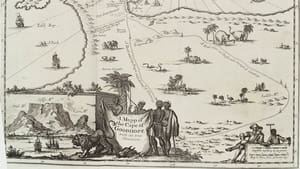
I'm Not Black, I'm Coloured: Identity Crisis at the Cape of Good Hope
In the wake of one of the worst social experiments in the history of mankind, 'I'm not Black, I'm Coloured' is one of the first documentary films to look at the legacy of Apartheid from the viewpoint of the Cape Coloured. A people who in 1994, embraced the concept of Desmond Tutu's all encompassing 'rainbow nation', but soon thereafter realized that freedom, privilege, economic growth and equality would not include them. A people who for more than 350 years has been disregarded, ignored, belittled, and stripped of anything they can call their own enduring a complex psychological oppression and identity crisis unparalleled in South African history.
2009
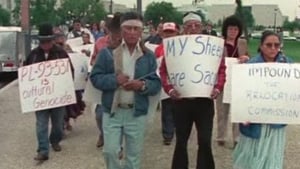
Broken Rainbow
Documentary chronicling the government relocation of 10,000 Navajo Indians in Arizona.
1985
Iron and Steel Supply of the World
Time-travel to a 1940s classroom with this exemplary educational film.
1947
De Wolkenfietsers - erfenis van een droom
On the outskirts of Den Helder lies De Nollen, an inland dune area where nature, sculpture, and painting merge into a truly immersive experience. It is the life's work of artist Rudi van de Wint. He died unexpectedly in 2006. His sons, Ruud and Gijs, carried on his dream, out of love for their father and for De Nollen. But plans for a Rudi van de Wint museum in the area led to cracks in their idyllic existence.
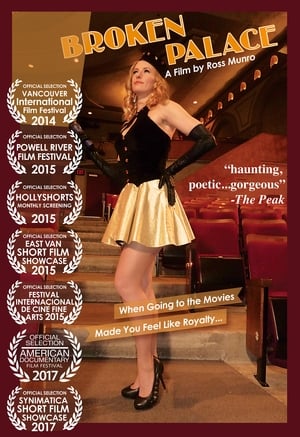
Broken Palace
A short documentary about the rapidly disappearing era of heritage movie palaces and the film going experience once offered within those hallowed walls.
2014

Profils paysans : l'approche
The first of a documentary serie about rural France.
2001

In Memory of the Land and People
“…It is a film that tells in hurried film sequences and a resonant musical score juxtaposing the sublime, funereal despair of Bartok agains tthe gut-bare tones of folk music. Gates has through his filming technique and meticulously selected mining sites, captured all the outrage and sorrow and indignity to the land and its people that strip mining represents. The film is one that all Americans should see, for it shows extremely well the price we have to pay for strip mined coal.” - Dale A. Burk, The Montana “Missoulian”
1977
Dobývání uhlí
1951
Ghuza da Sher
The story of Nisar Ahmed Khan, told through his children and the people he served, a spiritual guide whose followers still visit his tomb on his birth and death anniversaries. And alongside how his family spends a few days at the village keeping his traditions alive.