Watch Cortázar y Antín: cartas iluminadas (2018) Online Free
In the 60s and thanks to the epistolary exchange, the young filmmaker Manuel Antín and the famous writer Julio Cortázar devised four films. An ocean away, a fruitful collaboration and genuine friendship are born.
Cast
Manuel Antín, Ponchi Morpurgo, Ricardo Aronovich, Graciela Borges, Dora Baret, María Marta Antin
More Like This

Im Märchenwald der Gebrüder Grimm
They have collected legends and fairy tales that have been passed down from generation to generation, albeit with slight changes and added meanings always intended for a specific time. Tales of all the enchanted characters, the wicked witches and the knights in shining armour. Venture into the woods with us and experience amazing things. You can meet evil or find your fortune. But what is it that makes the forest so terrifyingly appealing? In all the old tales and fables there is always at least a grain of truth - a reflection of reality. We all know the forest. Yet it guards its secrets well and will not give anything away. More than two hundred years ago, it enchanted two brothers. They told each other fantastic stories from the past, which they saw as symbols of their present. In Germany, where the brothers Jacob and Wilhelm Grimm grew up, as throughout central Europe, there were once dense and vast forests and woods that surrounded villages and towns...
2021

The Irishman: In Conversation
Martin Scorsese, Robert De Niro, Joe Pesci, and Al Pacino in conversation about The Irishman.
2019
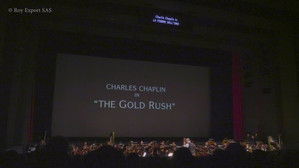
Watch the Tempo
On 18th of December 2017, the Filarmonica Teatro Regio Torino, directed by Timothy Brock, presented "The Gold Rush" by Charles Chaplin, with live performance of the soundtrack. But let's go back a few days: this short film takes us in the backstage of the concert!
2018
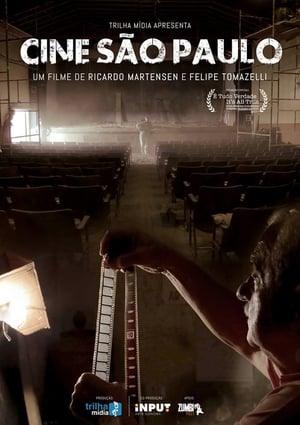
Cine São Paulo
Chico has dedicated his whole life to CINE SAO PAULO. The building, inherited from his father, is now badly deteriorated. Refurbish it, in order to make the old movie theater get back to work, becomes his great obsession.
2017
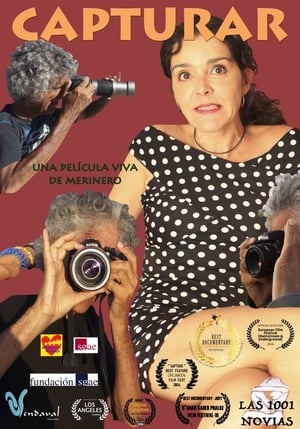
Capturar (Las 1001 novias)
2017
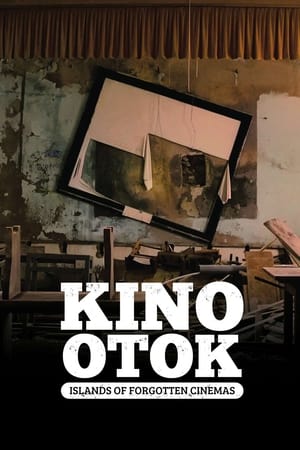
Islands of Forgotten Cinemas
A poetic documentary about the lost film culture in the small villages on the Croatian islands during the SFR of Yugoslavia.
2016
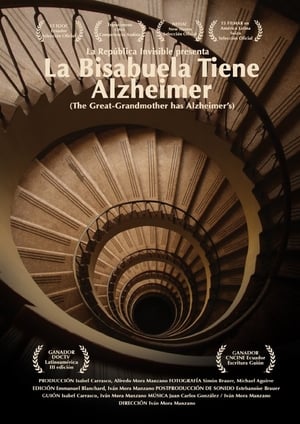
La bisabuela tiene Alzheimer
A meeting between the daughter and the grandmother of the director, Iván Mora Manzano, at a time when the memories of one, the girl’s, were taking shape, and the other’s the grandmother’s, were vanishing. This starting point is used as a pretext to talk about other topics such as the importance of family memories and the search for memory.
2012
Tin Tan
Germán Cipriano Gómez Valdés Castillo, a young radio announcer from Cuidad Juárez, succeeds in drawing attention to the pachuco movement through his character Tin Tan, laying the groundwork for a new form of binational and mass linguistic expression: Spanglish. He soon became a leading figure in theater and film on the American Continent. Singled out by critics as a destroyer of the language, he quickly won the approval of the public. His ability to improvise revolutionized the film industry. His talent as an actor, singer, dancer and comedian contributed to the Golden Age of Mexican Cinema. From El Hijo Desobediente to Capitán Mantarraya, from Cuidad Juárez to Havana, from mambo to rock, the legacy of Tin Tan makes him one of the great icons of Mexico today. This film tells his story as it has never been told before.
2010
Disney: Through the Looking Glass
Tito del Amo, a passionate 72-year-old researcher, takes the final step to unravel the enigma about the alleged Spanish origin of the American cartoonist Walt Disney, making the same journey that his supposed mother made to give him up for adoption in Chicago. A journey that begins in Mojácar, Almería, Spain, and ends in New York. An exciting adventure, like Alicia's through the looking glass, to discover what is truth and what is not, with an unexpected result.
2010

José Emilio Pacheco: me llamo Nadie
2009

Sexo en el plató
How are the sex scenes filmed? What tricks are used to fake the desire? How do the interpreters prepare and feel? Spanish actors and directors talk about the most intimate side of acting, about the tricks and work methods when narrating exposed sex. In Spain the general rule is that there are no rules. Each film, each interpreter, faces it in very different ways.
2007

Peter Lorre: The Master of Menace
Documentary overview of Peter Lorre's ascension to fame as a master purveyor of silky but disquieting peril.
1996
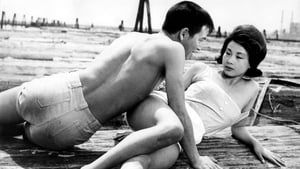
100 Years of Japanese Cinema
The story of the first century of Japanese cinema from the point of view of the controversial Japanese filmmaker Nagisa Ōshima.
1995
Franz Kafka's 'The Trial'
BBC documentary about Franz Kafka played by GREEK TV in 1990. This documentary is one of the ten films of “The Modern World: Ten Great Writers (1988)”.
1988
James Joyce's 'Ulysses'
From the series "The Modern World: Ten Great Writers", this playful documentary introduces James Joyce's most famous work "Ulysses". It includes fantastic adaptations to film from passages of the novel. It also includes excerpts from a book written by Joyce's friend, the artist Frank Budgen, entitled "James Joyce and the making of Ulysses". Amongst those interviewed is author Anthony Burgess.
1988
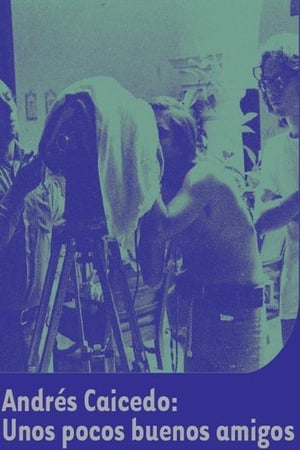
Andrés Caicedo: A Few Good Friends
Using the unfinished film, ANGELITA Y MIGUEL ÁNGEL, by Andrés Caicedo and Carlos Mayolo, as a structuring device, friends of prolific film critic and writer Andrés Caicedo, an unforgettable figure of the group of Cali in the 1970s who left an incredible amount of texts, reflect upon his life, his work, and his suicide at the age of 25, testify to his influence in the cultural life of Colombia, and remember his strong and touching personality.
1986
Thank You, Mr. Robertson
A glimpse of the pre-history of cinema starting with the projections of Etienne Gaspard Robert (also known as M. Robertson), who used magic lanterns and other optical illusions to develop the genre of the Gothic phantasmagoria in the late eighteenth century.
1985
Donoso por Donoso
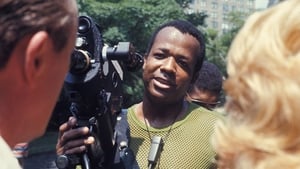
Symbiopsychotaxiplasm: Take One
In Manhattan's Central Park, a film crew directed by William Greaves is shooting a screen test with various pairs of actors. It's a confrontation between a couple: he demands to know what's wrong, she challenges his sexual orientation. Cameras shoot the exchange, and another camera records Greaves and his crew. Sometimes we watch the crew discussing this scene, its language, and the process of making a movie. Is there such a thing as natural language? Are all things related to sex? The camera records distractions - a woman rides horseback past them; a garrulous homeless vet who sleeps in the park chats them up. What's the nature of making a movie?
1968
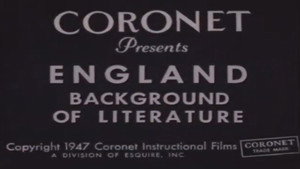
England: Background of Literature
Takes students to England to show them the land that inspired many great writers... the London of Chaucer, Dickens and Browning...the countryside which was so meaningful to Shakespeare, Keates, Wordsworth and Kipling...and the sea as Coleridge, Conrad and Masefield wrote of it.
1947