Watch Confucius (2015) Online Free
Confucius was one of history's most influential thinkers. He was a sage, philosopher and teacher who, with Socrates and Buddha, lived at an extraordinary time in the evolution of human civilization. This stunningly beautiful drama-documentary explores the life and times of Confucius, while reflecting on his influence on modern justice and morality. Today, Confucius is a window into China's rise.
Cast
Minglin Qiao, Yonglin Yu
More Like This
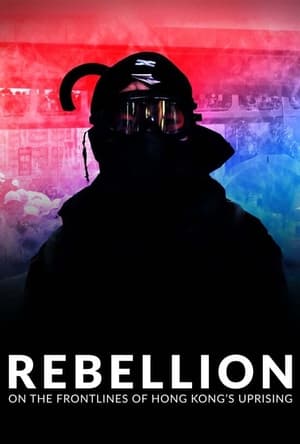
Rebellion
As the 'one country two systems' policy in Hong Kong has slowly eroded, resentment among the territory's citizens has steadily grown. What began as a series of spontaneous protests against an extradition law in March 2019 has now escalated in to a full-blown popular uprising that shows no signs of abating. ABC Four Corners reports from the frontline of the action, capturing extraordinary footage of the growing tension and violence.
2019
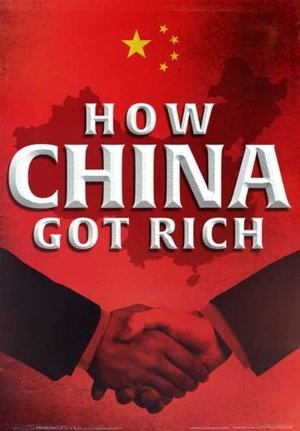
How China Got Rich
Over the last 40 years, China has been transformed out of all recognition. The scale of its growth and the sheer speed of change has been astonishing. The country has seen the largest lifting of people out of poverty that has ever taken place in human history. How did an impoverished and backward communist country become an engine of global capitalism? What lies ahead for this economic behemoth?
2019
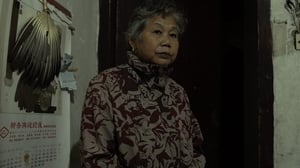
Mrs. Fang
In a quiet village in southern China, Fang Xiuying is sixty-seven years old. Having suffered from Alzheimer's for several years, with advanced symptoms and ineffective treatment, she was sent back home. Now, bedridden, she is surrounded by her relatives and neighbors, as they witness and accompany her through her last days.
2018
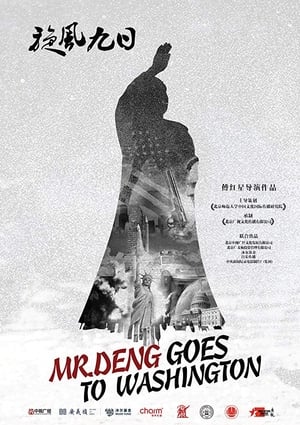
Mr. Deng Goes to Washington
2015
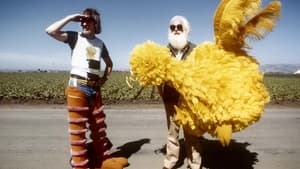
I Am Big Bird: The Caroll Spinney Story
A documentary about Caroll Spinney who has been Sesame Street's Big Bird and Oscar the Grouch since 1969. At 78-years-old, he has no intention of stopping.
2015
Dwarves Kingdom
Dwarves Kingdom is a documentary film about a theme park featuring performances by little people with dwarfism who live in a fantasy recreation of a magical empire. Built by a wealthy Chinese businessman, this other-worldly kingdom, officially called World Ecological Garden of Butterfly and Little People Kingdom, is located in the mountains surrounding the city of Kunming in Western China.
2015
Kampf um Tibet
2013
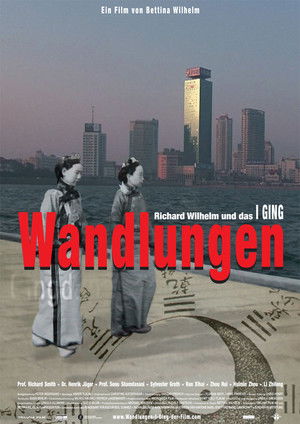
Wisdom of Changes - Richard Wilhelm and the I Ching
As a young missionary, Richard Wilhelm in 1899 to China, which was then exploited by the colonial powers. He lived there revolts against foreigners, the end of the imperial dynasties and the First World War. In these times of turbulent upheavals he was indefatigable in search of the deepest truth that helps people deal with change and able to shape their own lives. Richard Wilhelm baptized not only Chinese, but accomplished one of the largest translation services of the 20th century: Confucius, LAOTSE the most important texts of Daoism and especially the I CHING THE BOOK OF CHANGES. The book also served many readers in the West as inspiration. Wilhelm is still one of the most important mediators of Chinese culture in Europe.
2011
Tibet - Les nourritures terrestres
2011
Tibet Les nourritures spirituelles
2011
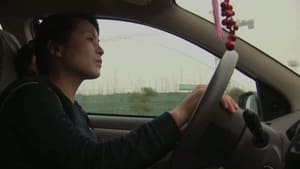
Redefining China's Family: Women
10 May 2007 - China's staggering economic growth has overshadowed a more subtle shift in Chinese society. In domestic life, many women are now ignore the advice of their mothers and grandmothers, turning instead to counselling hotlines and, increasingly, divorce.
2008
Historias de las montañas de la bruma
2008
Draussen bleiben
2007
The Great Wall of China
Channel 4 docudrama following the history of the Great Wall of China, from the earliest building of simple mud walls to the construction of the series of stone fortresses built during the 16th Century in response to continued Mongol invasion.
2007
D'une rive à l'autre
This film offers us a juxtaposed journey of two priests: Father Van Ban, a Vietnamese priest from the parish of Thy Hu in the Hé region, who after nine years of training in Paris decides to return to Vietnam, and Bernard de Terves, a young deacon from the Foreign Missions of Paris who decides to leave for China after his ordination. Their intersecting paths allow us to address themes related to East-West intercultural dialogue, particularly that of transmitting the Gospel message.
2006
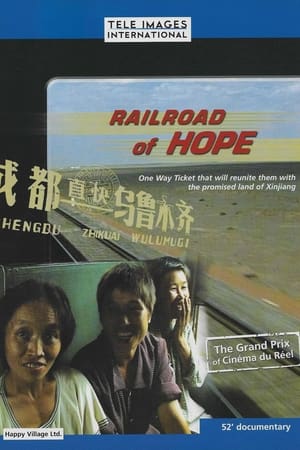
Railroad of Hope
Railroad of Hope consists of interviews and footage collected over three days by Ning Ying of migrant agricultural workers traveling from Sichuan in China's interior, to the Xinjiang Autonomous Region, China's northwest frontier.[1] Through informal interviews aboard the cramped rail cars, Ning Ying explores the hopes and dreams of the workers, many of whom have never left their homes before.
2002
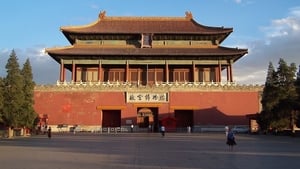
Forbidden City: The Great Within
Amidst the grand walls of the Forbidden City, the film takes us on a deep journey through the ceremonial life of the Chinese emperor, unveiling the secrets and intrigues of concubines, eunuchs, and palace maids. As the West begins to influence China in the late 19th century, the dynamics within the city shift dramatically. The film highlights the preservation and restoration of invaluable treasures and paintings, culminating in the creation of the Palace Museum. With insights from renowned China scholar, Jonathan Spence, this is an intimate exploration of the rich cultural and historical tapestry that makes up the heart of ancient China.
1995
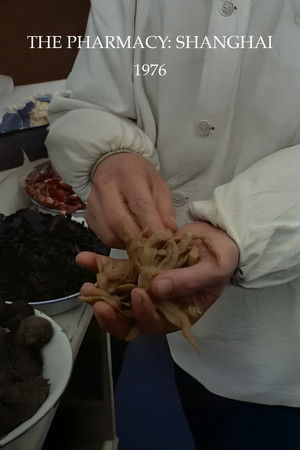
The Pharmacy: Shanghai
Filmed inside Pharmacy No. 3 in Shanghai, Joris Ivens and Marceline Loridan-Ivens document the daily work of a state pharmacy that functions as both a dispensary and a neighborhood medical center. The film focuses on routine interactions between staff and patients, revealing an integrated model of urban healthcare in 1970s China.
1976
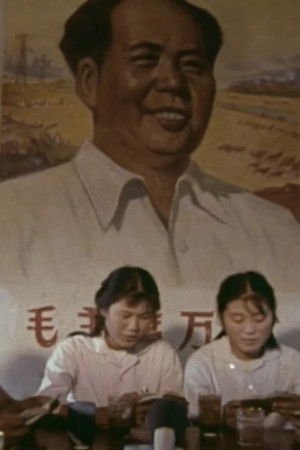
Red Guards after The Cultural Revolution
Red Guards were a student movement supported by Mao Zedong in 1966-67 during the Cultural Revolution. A group of students at Qinghua University who issued 2 big-character posters in May-June 1966 called themselves Red Guards. The students criticised the university administration of elitism and bourgeois tendencies. In August 1966 Mao Zedong expressed support for the Red Guards. This gave the student movement political legitimacy and it spread outside Beijing. The Red Guards started to attack the Four Olds and marched across China to eradicate old ideas, old cultures, old customs and old habits. Ultimately the struggle between different Red Guard factions led to a chaotic civil-war-like situation. During 1967-68 the Peoples Liberation Army got the movement under control and restored social order. Beginning late 1968 members of the Red Guard movement were sent to the countryside to undergo re-education. We met and filmed them in August 1971.
1972
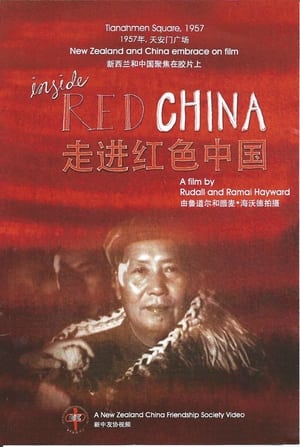
Inside Red China
October 1st, 1957. Dusk descends on Tiananmen Square, Peking. Fireworks crackle light across the night sky, above a city alive with National Day festivities and celebrations. Two intrepid New Zealand film-makers - Rudall and Ramai Te Miha Hayward - are there, documenting the life and times of communist China. The distinction of being the first English speaking foreigners to film unfettered in communist China was significant. The invitation to visit China was facilitated through the New Zealand China Friendship Society. They filmed in Canton, Shanghai, Peking (Beijing) and Wuhan. It was a small window of opportunity for Westerners to gaze on a country that was largely a mystery to the outside world since 1949. The unfortunate irony was that two of the documentaries; “Wonders of China”, and “Inside Red China”, were considered to be communist propaganda, and were not distributed outside of New Zealand.
1958