Watch Columbus Didn't Discover Us (1992) Online Free
The historic gathering of three hundred indigenous activists from North, South and Central America who met in Quito, Ecuador, in July 1990 to organize a cross-continental indigenous resistance to the Columbus Quincentennial.
More Like This

Trump's America - Power, Change, Resistance
With his ultra-conservative policies, US President Donald Trump is disrupting the global order as well as US institutions and society. Filmed less than one year after the start of his second mandate, this documentary analyses the concrete impact of his policies on the American people.
2026
Mot vinden
2025
Northlore
Weaving animation and live action, Northlore delves into the transformational stories of people living in Canada’s North and their deep connection to the land and its wildlife.
2025

The Lost Children
After a plane crash, four indigenous children fight to survive in the Colombian Amazon using ancestral wisdom as an unprecedented rescue mission unfolds.
2024
Monica in the South Seas
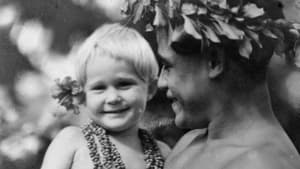
Finnish filmmaker and artist Sami van Ingen is a great-grandson of documentary pioneer Robert Flaherty, and seemingly the sole member of the family with a hands-on interest in continuing the directing legacy. Among the materials he found in the estate of Robert and Frances Flaherty’s daughter Monica were the film reels and video tapes detailing several years of work on realising her lifelong dream project: a sound version of her parents’ 1926 docu-fiction axiom, Moana: A Romance of the Golden Age.
2023
Amazônia, a Nova Minamata?
2022
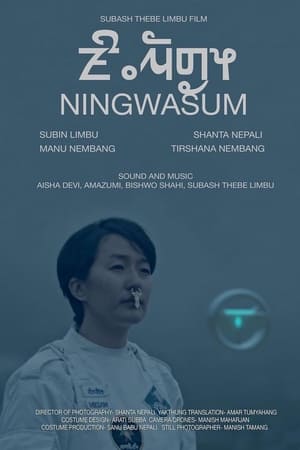
Ningwasum
Ningwasum follows two time travellers Miksam and Mingsoma, played by Subin Limbu and Shanta Nepali respectively, in the Himalayas weaving indigenous folk stories, culture, climate change and science fiction.
2022
Kímmapiiyipitssini: The Meaning of Empathy
Follow filmmaker Elle-Máijá Tailfeathers as she creates an intimate portrait of her community and the impacts of the substance use and overdose epidemic. Witness the change brought by community members with substance-use disorder, first responders and medical professionals as they strive for harm reduction in the Kainai First Nation.
2021
Deep Roots
Lonnie Kauk’s personal journey to honor his indigenous Yosemite roots, and to connect with his legendary father by repeating his iconic climbs.
2020
Rayuela Reunión 2019
The definitive documentary about Rayuela, an alternative rock band that reunited in 2019 for a final concert. What broke them apart? This question will be answered as the band's story is told.
2020
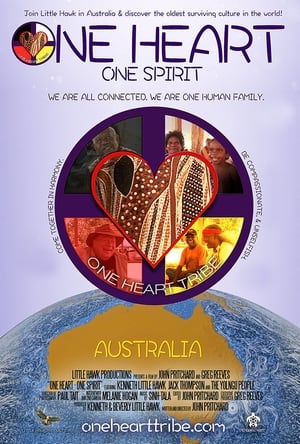
One Heart: One Spirit
An Aboriginal Australian and Native American documentary narrated by award-winning actor Jack Thompson, One Heart-One Spirit tells the story of Kenneth Little Hawk, an elder Micmac/Mohawk performing artist, meeting the oldest surviving culture on the planet: the 40,000 year old Yolngu nation located in northern Australia.
2017
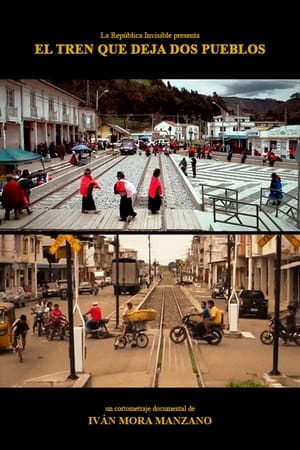
Train leaves two towns
In Ecuador, in a single day, the train passes from the mountainous Andes to the tropical coast. The roads were built between 1861 and 1908 to connect the country. Until this date, the two regions live as separate countries, although the roads connect them in less than a day. The film is an observational work that talks about space and collective memory.
2016
LaDonna Harris: Indian 101
A documentary film about Comanche activist LaDonna Harris, who led an extensive life of Native political and social activism, and is now passing on her traditional cultural and leadership values to a new generation of emerging Indigenous leaders.
2014
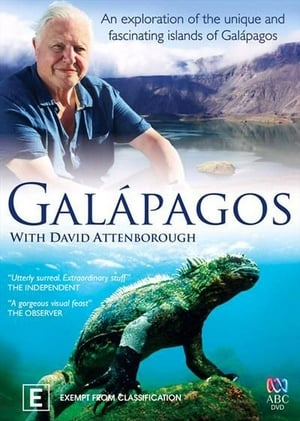
Galapagos with David Attenborough
Two hundred years after Charles Darwin set foot on the shores of the Galápagos Islands, David Attenborough travels to this wild and mysterious archipelago. Amongst the flora and fauna of these enchanted volcanic islands, Darwin formulated his groundbreaking theories on evolution. Journey with Attenborough to explore how life on the islands has continued to evolve in biological isolation, and how the ever-changing volcanic landscape has given birth to species and sub-species that exist nowhere else in the world. Encompassing treacherous journeys, life-forms that forge unlikely companionships, and survival against all odds, Galápagos tells the story of an evolutionary melting pot in which anything and everything is possible.
2013
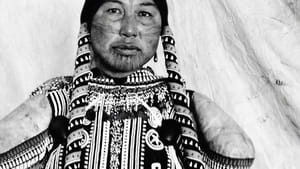
Tunniit: Retracing the Lines of Inuit Tattoos
Inuit traditional face tattoos have been forbidden for a century, and almost forgotten. Director Alethea Arnaquq-Baril, together with long-time friend and activist Aaju Peter, is determined to uncover the mystery and meaning behind this beautiful ancient tradition. Together they embark on an adventure through Arctic communities, speaking with elders and recording the stories of a once popularized female artform. Central to the film is Arnaquq-Baril’s personal debate over whether or not to get tattood herself. With candour and humour, she welcomes us into her world, to experience firsthand the complex emotions that accompany her struggle. Past meets present in this intimate account of one woman’s journey towards self-empowerment and cultural understanding.
2011
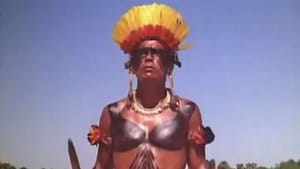
Our Indians
Yndio do Brasil is a collage of hundreds of Brazilian films and films from other countries - features, newsreels and documentaries - that show how the film industry has seen and heard Brazilian indigenous peoples since they were filmed in 1912 for the first time: idealised and prejudiced, religious and militaristic, cruel and magic.
1995
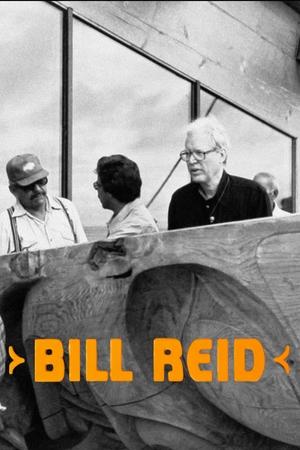
Bill Reid
Follows Haida artist Bill Reid, from British Columbia. A jeweller and wood carver, he works on a traditional Haida totem pole. We watch the gradual transformation of a bare cedar trunk into a richly carved pole to stand on the shores of the town of Skidegate, in the Queen Charlotte Islands of B.C.
1979
Cree Hunters of Mistassini
An NFB crew filmed a group of three families, Cree hunters from Mistassini. Since times predating agriculture, this First Nations people have gone to the bush of the James Bay and Ungava Bay area to hunt. We see the building of the winter camp, the hunting and the rhythms of Cree family life.
1974

This Was the Time
When Masset, a Haida village in Haida Gwaii (formerly known as the Queen Charlotte Islands), held a potlatch, it seemed as if the past grandeur of the people had returned. This is a colourful recreation of Indigenous life that faded more than two generations ago when the great totems were toppled by the missionaries and the costly potlatch was forbidden by law. The film shows how one village lived again the old glory, with singing, dancing, feasting, and the raising of a towering totem as a lasting reminder of what once was.
1970
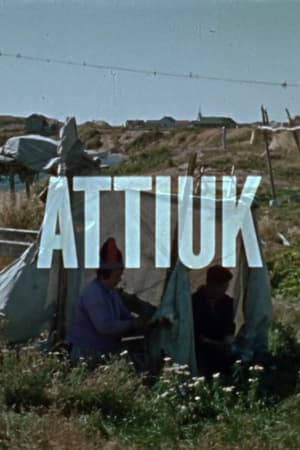
Attiuk
The people of Unamenshipu (La Romaine), an Innu community in the Côte-Nord region of Quebec, are seen but not heard in this richly detailed documentary about the rituals surrounding an Innu caribou hunt. Released in 1960, it’s one of 13 titles in Au Pays de Neufve-France, a series of poetic documentary shorts about life along the St. Lawrence River. Off-camera narration, written by Pierre Perrault, frames the Innu participants through an ethnographic lens. Co-directed by René Bonnière and Perrault, a founding figure of Quebec’s direct cinema movement.
1963