Watch Code of Tumas (2018) Online Free
“Code of Tumas ” is an effort to show the well-known events and processes of history through the eyes of a direct person with a subjective and emotional look. Letters, publicism, all creations of Juozas Tumas Vaižgantas, also memories of his contemporaries make this reconstruction possible.
Cast
Ramūnas Cicėnas, Rolandas Kazlas, Vytautas Nakutis, Alfas Pakėnas, Vytautas Ališauskas, Egidijus Aleksandravičius, Vaida Rimkutė, Sigita Švitrienė, Eglė Kerienė
More Like This

La Guerre, Donald Trump et nous : 2025, l'année de tous les dangers
2025, the year of the intensification of a total and deadly war, which nothing and no one seems able to stop, targeting military personnel and civilians, and which has now claimed more than 1.5 million lives or left that many wounded on both sides. But 2025 is also the year of our break with Donald Trump's America, an America with violent and unpredictable reactions, which risks abandoning the old continent, its most loyal ally for 80 years, for Vladimir Putin. How can we stop this bloodshed on our doorstep? How can we contain the master of the Kremlin, a dictator whose predatory logic threatens to spread beyond Ukraine? Sabotage, ghost ships, interference operations, and drone flights: he is already waging a hybrid war against the rest of Europe. Is armed conflict between Europe and Russia now a possibility?
2026

Kankles: Redefining Tradition
Vaiva Dunaitytė, a gifted 20-year-old musician, shares her lifelong journey with the Lithuanian plucked string instrument, Kanklės- an ancient tradition she’s transforming for the modern world.
2025
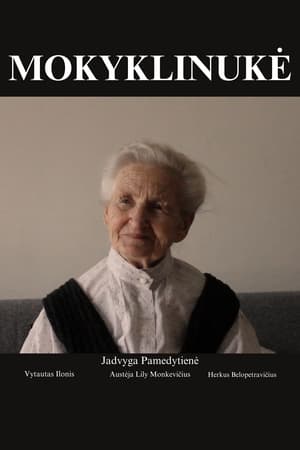
THE SCHOOLGIRL
Grandma's recount of her journey to school, but she was never alone in the forest.
2024

Burial
With striking images and meticulous sound work, Burial reminds us of the paradoxical relationship between scientific development and the destruction of nature. Questioning the effects of human activity on the planet we inhabit and which we have put at risk, the film focuses on the unsolved issues of nuclear plants and nuclear activity.
2022

One in 3 million
This is the first documentary about the singer Marijonas Mikutavičius. Marijonas Mikutavičius, who is celebrating his fiftieth birthday this year, has been on stage since he was 18 and his song "Trys milijonai (Three millions)" has been called Lithuania's second national anthem. In the film, director Eimantas Belickas allows the viewer to be with Marijonas in his intimate surroundings, without the mask. As one of the country's most popular singers, Marijonas is a man, a father, a Lithuanian citizen, just like many of us. The viewer can see this clearly in the film, but at the same time it becomes clear that creativity makes the singer a unique personality.
2021
Dance Alone
2021
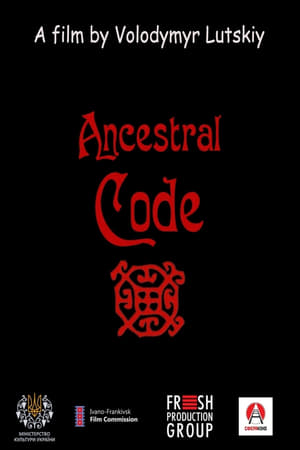
Ancestral Code
The documentary film ANCESTRAL CODE is a research into the origins of the Ukrainian and Belarusian peoples, the search for their identity through the study of the melodism of Slavic ethnographic heritage. Nowadays many people talk about brotherhood, spiritual intimacy, affinity. The authors analyze the connection between the neighboring peoples of Ukraine, Lithuania, Belarus and Poland through music and folklore.
2020
Emilia
Soviet Lithuania in 1972. A young theatre actress is trying to make a difference and tell the forbidden story of repression in a play.
2017

Master and Tatyana
Lithuanian photographer, the legend of Soviet Sixties' generation Vitas Luckus tragically passed away in 1987. Yet the life and times of the talented rebel still impassion and lead us to a journey questioning why, at all times, we are wary of those who are really free.
2015

Arvydas Sabonis 11
The film - an open, sincere, warm and funny story about Arvydas Sabonis life and career. This is particularly characteristic of a T-shirt with the number 11 worn out 2.20 m tall basketball giant Olympic and world champion, portrait.
2014

The Invisible Front
Between 1944–1953, courageous resistance movement took place in the Baltic region of Europe, uniting the partisan troops for struggle against the Soviet Union. “The Invisible Front” was a coded name used by the Soviet Interior forces to describe the resistance movement in Lithuania. Film depicts the story of the fighters through the words and experience of the partisan leader, Juozas Luksa, and interviews with eyewitnesses of those events - both the partisans and the Soviet fighters. Tales of horror, torture and courage are told in the rare archival footage that has never been screened before, and interviews with the surviving members of the resistance movement.
2014

Red Terror on the Amber Coast
Red Terror documents the soviet occupation of Lithuania and the resistance movements that sprang up in opposition to the brutal tactics used by the communists from 1941 up to 1991. Stories of deportation, life in the Gulag, exile to Siberia, KGB prison torture, confiscation of land are told by living survivors. Resistance fighters and those who aided them also share their stories for the first time to an American audience. Rare historical photos and moving images are used to bring these stories to life.
2009

The Last Days
Romance brings two warring families together in this historical drama. As citizens fight for independence in 1810s Lithuania, Tadeusz, the son of a murderer, and Zosia, a young woman, come together for a wedding against a backdrop of changing politics, ancient traditions, and the uncertain future of a country.
1999
Antigravitation
An isolated village in the Lithuanian countryside. Seated in her house, an elderly woman recites an old folk story. Then she climbs up the tall ladder that takes her to the rooftop of the church.
1995

Homeland
The film is an emotional story about fateful historical events in the 20th century, which took place in three Baltic countries- Latvia, Lithuania and Estonia. The story is also about their efforts to regain independence.
1990
I'll take Your Bread
Documentary film showing authentic Lithuanian traditions & rituals during major seasonal festivals: Winter solstice, Mardi Gras, Easter, Midsummer.
1987
Gustav J.
Portrait of 80 year old Gustav J., born in Lithuania, who became a blacksmith and whose paths of life led him to East Prussia, Russia and finally to Germany.
1973
Going Home
A home movie by Adolfas Mekas and wife Pola Chapelle on their travels to Lithuania and Europe. It was filmed concurrently with the more highly regarded “Reminiscences of a Journey to Lithuania” by Jonas Mekas, brother to Adolfas.
1972
Reminiscences of a Journey to Lithuania
Jonas Mekas weaves an elegiac diary film from his 1971–72 return to Lithuania, chronicling a visit to his birthplace of Semeniškiai after decades in exile. Blending personal memory with documentary observation, the film becomes both a portrait of homecoming and a meditation on displacement, family, and the passage of time.
1972

Nobody Wanted to Die
The film is set in Lithuania after the Second World War. It shows dramatic events in a small Lithuanian farming community, where people are split between the Soviets and the "brothers in the woods", who are fighting to defend their land from the Soviets after the end of the Second World War.
1966