Watch Classmates (2009) Online Free
Twenty plus classmates look back into the past, tracing back through a 30 year history. One after another adapts to the random events that come to shape their lives, to the four seasons of life and nature. The years they were about experience coincided with the reforms and opening up of China. Floating in the changes of the new era, some experience compromises and the loss of ideals, whilst some keep struggling ahead with great determination. Thirty years later, Lin Xin encounters his old classmates, and records their individual lives and history; the ease of monotony, the loneliness of success, the weariness of a life of plentiful, the helplessness of poverty... all come forth in the lives of these group of people, becoming an epitome of the lives of ordinary people in small to middle-sized cities in this era, and at the same time reflecting on a generation that advances forward undefeated.
More Like This
We Sit In Silence At The Memorial Table
A silent film by Vietnamese director Truong Minh Quy in collaboration with Belgian director Nicolas Graux, was shot on the set of a film by Graux. We Sit in Silence at the Memorial Table is inspired by Educational Objectives, a poem written by Aleksey Garipov and translated to English by Nicolas Graux.
2022
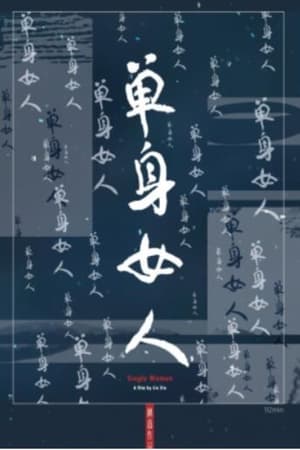
Single Woman
The film records the emotions and destinies of seven single women. Whether at a loss, confused, waiting in hope, disappointed, helpless, compromised, independent or defiant, they are closely bound up to this agitated and chaotic era. Through their different experiences they tell us about the failed marriages of middle-aged women, about life being single, and about a group of men who have not yet showed up but who appear vivid from a female perspective.
2019
Hyacinthine Scar
Hyacinthine Scar condenses the undigested emotions in me while traveling from Hong Kong to my brother’s wedding in Guam. Presences and gazes of all sorts, to look and to be looked at, repetitive camera work of the hired videographers, the vow that is rehearsed over and over again by the priest, all the uncontrollable clickings of the shutter from all us (including myself), and the endless sightings of different sides of the fragmented Western Pacific. The many spots I visited appear as though they belong to passersby. They are as real as they are dreamy.
2018

WHO IS MY LORD
The story of a girl attempted suicide for love and finally returned to religion.
2017
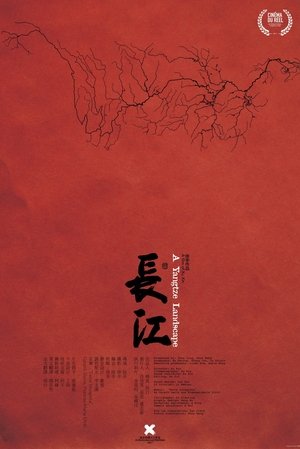
A Yangtze Landscape
A Yangtze Landscape utilizes a non-narrative style, setting off from the Yangtze's marine port Shanghai, filming all the way to the Yangtze River's source, Qinghai/Tibet - filming a total distance of thousands of kilometers. Experimental music and noise recorded live on scene are used in post-production, painstakingly paired with relatively independent visuals, creating a magically realistic atmosphere contrasted with people seeming to be 'decorative figures' right out of traditional Chinese landscape scrolls.
2017
Girl in Wheelchair
In Yuncheng County, Shandong, there is a girl born in the 90s named Han Wenjing who was paraplegic in a car accident in her childhood. As Han Wenjing gets older and older, she is worried about her future life. Marriage has become the biggest concern of parents. Han Wenjing got acquainted with a soldier online, but finally broke up under his father's opposition. The younger sister-in-law also had a dispute between the two over her marriage. When Han Wenjing was depressed, her father proposed to carry her to Liangshan. First, fulfilling Han Wenjing's wish was also compensation for Han Wenjing. Later, Han Wenjing met a dumb while studying e-commerce sales. The dumb liked her very much. Both parents were satisfied when they met. However, Han Wenjing felt that she still couldn't accept the disabled and wanted to try to combine healthy people, even if it failed. Under the pressure of her parents and sister-in-law on Han Wenjing, Han Wenjing still insists on her choice
2017
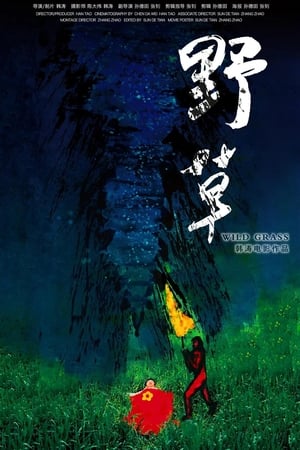
WILD GRASS
2017
Water Margin
Part mournful meditation through documentary footage, part experimental narrative. This film looks at the life of the Chinese who have been displaced within their own society.
2016

MAGUEY
This story is about the group's marvellous life without money.The film tell this story from six points of view: the screenwriter, the recording, the photography, the art, the performer and the director.
2016
SCAR
Scars, which are unfortunate or unexpected results, are also signs of healing. This new connective tissue replaces the process of injured tissues, and at the same time it becomes a metaphor for the pain and frustration of life: the sadness of the body, the union of pain... In short, scars have become a proof, a proof of existence, a proof of alive, a proof of pain, and a proof of a certain age. Beginning in 1949, in this vast land, these various scars, these healing marks, patterns, sad shapes, bring personal memories, collective pains, the marks of history, and come together Gaze, the meaning of the record. This film is the first part of the "Scar" project, the story of 110 Chinese scars.
2015
The Blind Storytellers
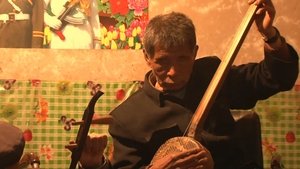
Li Shouwang is the leader of a blind storytellers team, learned storytelling at the age of 19. His childernare living hard in other cities. Li's money amost goes to his children's pocket every year. But with urbanisation, the storytellers have lost almost all their audience. As the conflict between the storytelling team and the village team intensified, his son, who was far away from home, became the only spiritual sustains... When he was excited that his son would be taking his family home for Chinese New Year, what's await is a sigh.
2014
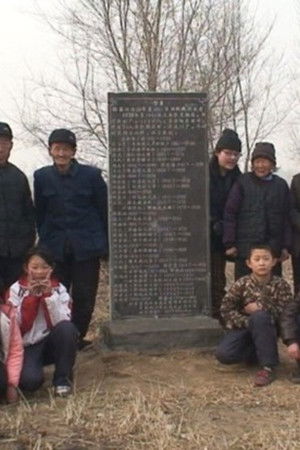
Children's Village
Zou Xueping continues to interview old people in her village, this time with the help of local children. They start collecting names and money to erect a memorial for the victims of the famine.
2012
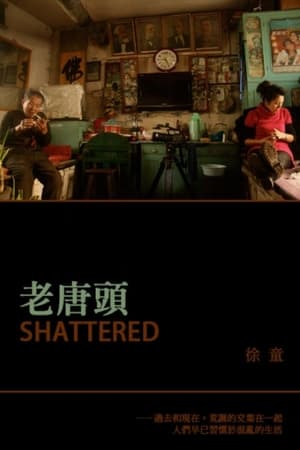
Shattered
A microcosm of China past and present flows through Xu Tong’s intimate docu “Shattered,” in which the maverick indie filmmaker continues to refine his techniques and concerns shown in his previous “Wheat Harvest” and “Fortune Teller.”
2011
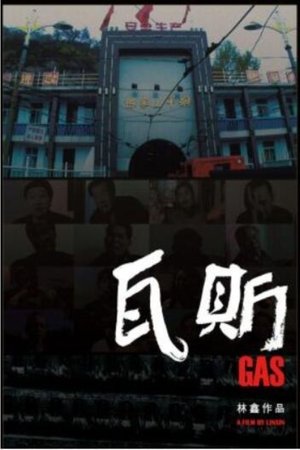
Gas
On April 6, 2001, a gas explosion occurred in the Chenjiashan Coal Mine of the Tongchuan Mining Bureau in Shaanxi Province, killing 38 people. On November 28, 2004, a gas explosion occurred in the Chenjiashan coal mine, and 166 people were killed. Five years later, Lin Xin, the son of the miners, filmed this film about mine disasters. Through the oral interviews of more than 20 people, such as miners and family members of the victims, and random interviews on the street, the film presents the real life of the miners and the cruel and complicated social reality behind the mine disaster from different angles. This film is the end of Lin Xin's "Trilogy of Survival".
2010
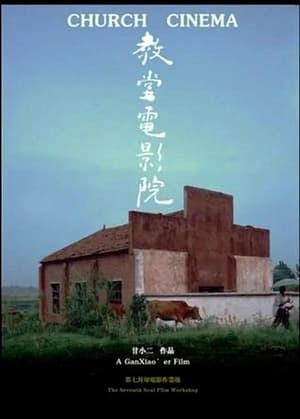
Church Cinema
In the summer of 2007, Gan Xiaoer led an independent film projection team, using projectors and self-made screens, to tour villages in Henan province to show his feature film "Raised from dust" for 8 times, and recorded the process. The 81-minute version of Church Cinema records only one stop, the Qiliying Church, where "Raised from dust" was shot.
2009
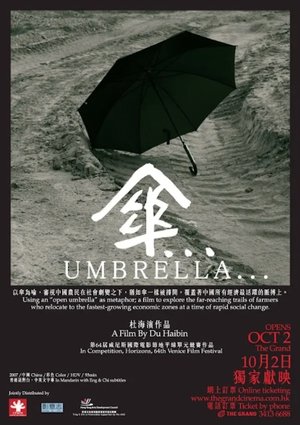
Umbrella
Workers, peasants, soldiers, students and merchants were five groups of Chinese society in the 1950s, after the so-called elimination of the exploited class. Borrowing this concept, the umbrella is taken as the clue to rediscover changes in various social classes after the economic reform, and to analyze the social problems in China. Workers making umbrellas, merchants selling umbrellas, students looking for jobs in the rain. Umbrella is used as a metaphor that can be seen everywhere. As the raindrop, what we see is sometimes clear, sometimes untraceable.
2007
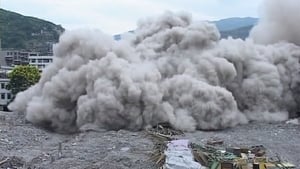
Before the Flood
Before the Flood is a study of the final weeks of a dying city, as thousand-year-old Fengjie on the Yangtze River is reduced to rubble and its inhabitants uprooted to make way for the new Three Gorges Dam that will flood the entire valley.
2005
Carriage
2004
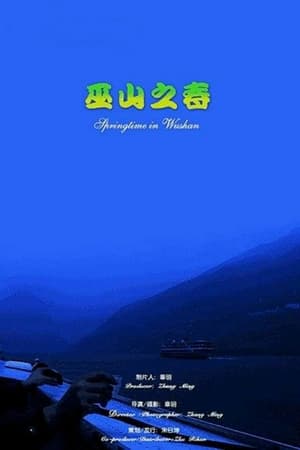
Springtime in Wushan
Zhang Ming went back to his hometown Wushan to record the last images before it being changed forever by the upcoming Three Gorges Dam.
2003

Baby
The baby is a temporary floating population. He works diligently, from a small restaurant owner to a tea shop manager to a bar manager. This film records the survival state of children centered and gay comrades: trivial, messy, boring, and entertaining themselves. The camera calmly captures every bit of their daily life for more than two years, and as time goes by, the changes the baby presents are more ordinary. The film calmly explains the relationship between "comrades" and "society", and the various small details interpenetrated in the film also metaphorically reflect the changes of today's society
2003